

Russia Backs India for Permanent UNSC Seat, Opposes More Western Members
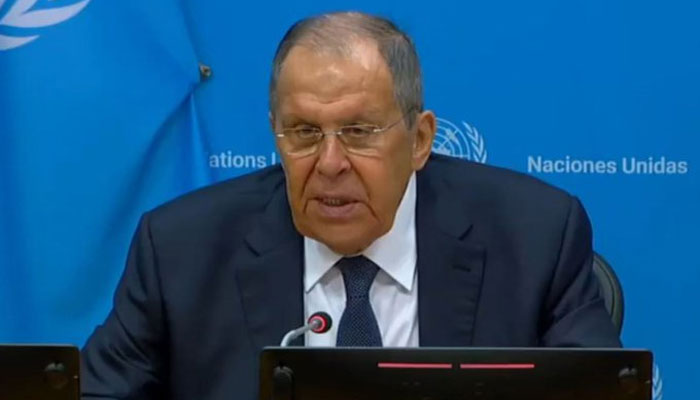
Russia has renewed its support for India’s long-standing bid for a permanent seat on the United Nations Security Council, with Foreign Minister Sergey Lavrov calling for greater representation of Asia, Africa and Latin America.
Addressing the 81st UN General Assembly in New York on Saturday, Lavrov said Moscow supports permanent membership for both India and Brazil. At the same time, he opposed adding more Western countries to the permanent category, specifically referring to Germany and Japan.
Lavrov argued that any expansion of the Security Council should strengthen representation from the Global South. He also said reforms should not dilute the existing powers of the five permanent members, including their veto authority. Russia has previously backed an expansion of permanent membership while insisting that the current veto system be retained.
Mauritius Also Backs India
India received support from Mauritius during the UNGA debate as well.
Mauritian Foreign Minister Dhananjay Ramful said his country supported the positions of the G4 and L69 groupings on Security Council reform and reiterated its backing for India’s candidature for a permanent seat.
“We support the positions of the G4 and of L69 on Council reform, and we reiterate our support for India’s candidature for a permanent seat, commensurate with its constructive role in global affairs,” Ramful said.
Portugal has also expressed support for India’s permanent membership during the current General Assembly session.
Why Germany And Japan Are Significant
Russia’s position creates a notable distinction within the G4, the grouping of India, Brazil, Germany and Japan that jointly campaigns for Security Council reform.
The four countries met on the sidelines of the UNGA on September 22 and reiterated their call for expansion of both permanent and non-permanent membership. They also called for greater representation of regions that remain under-represented or unrepresented, including Africa, Asia-Pacific and Latin America and the Caribbean.
Lavrov’s remarks, however, indicate that Moscow supports India and Brazil while opposing additional permanent seats for Germany and Japan.
How The UNSC Is Structured
The Security Council currently has 15 members. Five are permanent members with veto power — China, France, Russia, the United Kingdom and the United States — while 10 non-permanent members are elected for two-year terms.
Any change to the Council’s composition would require an amendment to the UN Charter. That process requires approval by two-thirds of the General Assembly and ratification by two-thirds of UN member states, including all five permanent members.
Reform Push Remains Stalled
Despite renewed calls for reform and growing support for expanding the Council, negotiations remain difficult.
The G4 has criticised the slow progress of the intergovernmental negotiations and called for text-based discussions on a reform model.
Russia’s backing gives India’s campaign another high-profile endorsement, but securing a permanent seat would still require agreement on the broader composition of an expanded Council and, ultimately, the consent of all five existing permanent members.
Comments are closed.