

Election Commission’s 9 New Decisions: What Changes and What Remains Unresolved
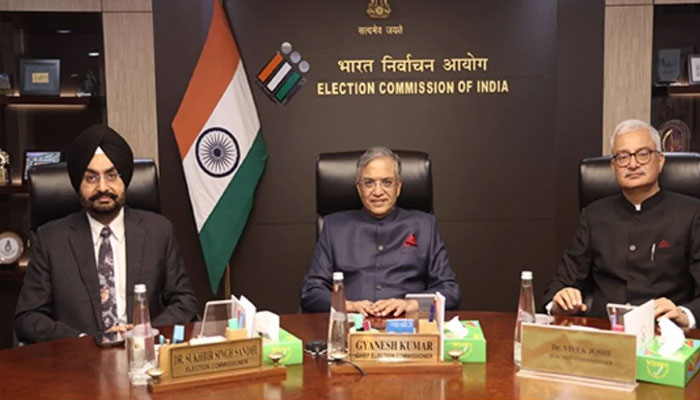
Three days after The Indian Express reported that Election Commissioners Sukhbir Singh Sandhu and Vivek Joshi had recorded objections to several decisions concerning electoral rolls and the Commission’s IT systems, the three-member Election Commission met on Saturday and announced a series of changes.
The Commission had earlier described the objections as routine suggestions and inputs, maintaining that all major decisions taken over the past year had the unanimous approval of all three Commissioners.
But the nine decisions announced after Saturday’s meeting directly address several issues highlighted in the objections.
What Has Changed?
The Commission has decided that agendas will be circulated before every meeting and minutes will be issued afterwards. Foreign travel by senior officials will require the Commission’s approval, while new IT modules and portals will first be examined by a committee of officers before being placed before the full Commission.
The EC also ordered a review of ECINET, its unified digital platform for election-related applications. The review committee will be headed by a Senior Deputy Election Commissioner and include an independent expert from an IIT or IIIT to examine whether the system complies with relevant laws and rules.
The Commission further said field officers would be given any additional flexibility required in carrying out their statutory responsibilities and that directions issued by Election Commissioners to officers would be complied with.
These measures correspond to several concerns reportedly raised by Sandhu and Joshi over the past 10 months, including the circulation of meeting agendas, issuance of minutes, foreign travel by officials, development of IT modules and access to electoral-roll systems.
Goa Voters: Action Ordered
The Commission has also responded to an issue highlighted in Goa, where 97 voters whose inclusion had reportedly been cleared by local electoral officers were not reflected in the final roll.
The EC said 81 of those voters have since submitted Form 6 and directed the Chief Electoral Officer to facilitate their inclusion.
The episode had raised questions over the extent to which field-level decisions could be implemented through the centralised electoral-roll software.
What About Form 6?
This is where the Commission’s latest announcement leaves important questions open.
The EC said that the Form 6 prescribed under the Registration of Electors Rules, 1960, would be used outside the SIR period. It also said the Supreme Court had upheld the declaration attached to Form 6 for the SIR exercise.
However, the objections raised by Joshi concerned a specific online version of Form 6 available on ECINET. According to The Indian Express, that version contained an additional question relating to the applicant’s parents and prevented applicants from proceeding without answering it.
The Commission’s latest note does not specifically address whether that online question has been removed or explain who authorised its introduction.
Questions Still Unanswered
The Commission’s announcement also leaves other issues raised in the reported objections unresolved.
One such question concerns West Bengal, where questions have been raised over appeals filed against voters whose inclusion had reportedly been ordered by judicial officers.
The key issue is who authorised those appeals, whether they were filed on behalf of the Election Commission and, if so, under whose authority.
The latest decisions do not address those questions.
What Does It Mean?
The Commission’s nine decisions represent changes in procedures governing meetings, official travel, technology systems and access for field officials. They also include a review of ECINET involving an independent technical expert.
At the same time, the announcement does not resolve every issue raised in the objections recorded by Sandhu and Joshi. The EC continues to maintain that decisions taken over the past year, including those related to the Special Intensive Revision, were approved unanimously by the full Commission.
The result is a set of concrete administrative changes alongside several questions about specific past decisions that remain open.
Comments are closed.