
42 Former Judges’ Open Letter Raises Alarm Over ‘Vote Theft’ Allegations

A group of 42 former judges has stepped into the escalating row over.
The Election Commission and voter-list revision, issuing a strongly worded open letter cautioning against allegations of “vote theft” and attempts to discredit constitutional institutions.
The signatories, including former Supreme Court judges Justice Hemant Gupta and Justice Pankaj Mittal, said sustained attacks on the Election Commission, judiciary and other statutory bodies could weaken public confidence in the democratic process. They argued that allegations against constitutional authorities must be backed by evidence and pursued through established legal channels.
“We write because, in moments like these, silence is no longer a neutral choice. Our concern is grave. India’s constitutional bodies are under sustained attack,” the former judges said in the letter.
They specifically questioned claims of “vote theft” that, according to them, have been made publicly without supporting evidence. The judges warned against repeatedly describing constitutional authorities as “thieves” or “compromised”, saying such rhetoric risks eroding trust in institutions.
“Criticism of institutions is a democratic right. Denigration is not,” the letter said.
‘WHEN THE BALLOT LOSES MEANING, THE STREET GAINS IT’
The former judges also warned about the broader consequences of weakening faith in electoral institutions.
“Trust is the currency of democracy,” they said, cautioning that efforts to delegitimise elections could create space for unrest and fringe groups.
“Unrest begins with a narrative. Anarchic and fringe elements then occupy the vacuum. Some are homegrown. Some take their cues from beyond our borders,” the letter stated.
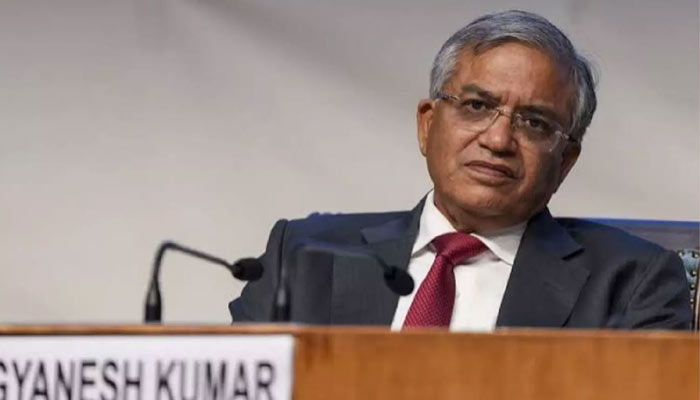
The intervention comes amid protests by Opposition parties against Chief Election Commissioner Gyanesh Kumar and the Election Commission’s handling of the Special Intensive Revision (SIR) of electoral rolls. The former judges defended SIR as a legally established exercise intended to maintain accurate voter lists.
‘ALLEGATIONS ARE MADE AT PRESS CONFERENCES, NOT BEFORE COURTS’
The letter also directly addressed claims surrounding alleged irregularities in elections and electronic voting machines.
The former judges argued that allegations of “vote theft” are often raised at press conferences rather than tested through sworn evidence before courts. They also questioned why electronic voting machines are challenged after electoral defeats while victories secured through the same system are not subjected to similar criticism.
They further alleged that repeated litigation without supporting proof can turn court proceedings into a political platform, particularly when judgments do not favour those bringing the cases.
The judges said legitimate criticism should remain part of democratic debate, but urged political actors to use constitutional and legal mechanisms to establish their claims rather than undermine institutions publicly.
JUDICIAL VIEWS ARE NOT UNIFORM
The intervention by the 42 former judges comes as the Election Commission’s SIR exercise faces criticism from other members of the legal fraternity.
Former Supreme Court judge Justice Rohinton Fali Nariman has raised serious concerns about the functioning of the Election Commission, arguing that the right to vote is at significant risk. He has also called for Supreme Court intervention over the voter-roll revision.
Supreme Court Justice Ujjal Bhuyan, meanwhile, has said that a process resulting in the loss of voting rights for a large number of citizens would amount to a negation of the constitutional order.
The contrasting interventions underline the sharp legal and institutional debate surrounding SIR. While the 42 former judges have defended the Election Commission and warned against unsupported allegations, other judicial voices have called for greater scrutiny of the electoral-roll revision.
With the dispute now playing out across political protests, courts and public debate, the central issue remains how electoral grievances should be investigated while preserving public confidence in India’s constitutional institutions.
Comments are closed.