
Climate Change Costs Island Its Title as World’s Largest Penguin Colony

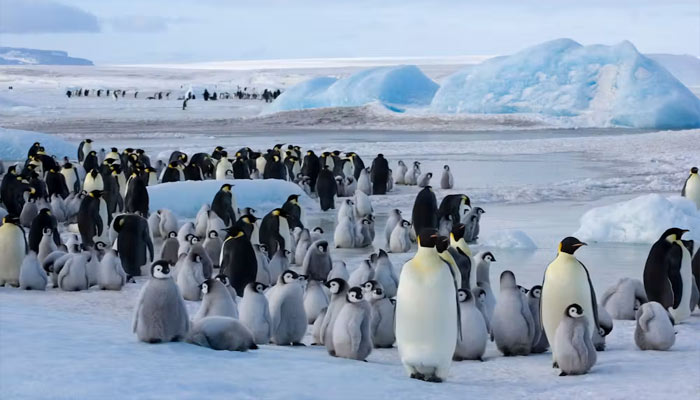
A remote volcanic island near Antarctica has lost its status as home to the world’s largest penguin colony after a dramatic collapse in its chinstrap penguin population, a new study has found.
Researchers from the British Antarctic Survey (BAS) estimate that Zavodovski Island lost more than 680,000 chinstrap penguins between 2011 and 2025 — a decline of about 63 per cent.
The island had around 1.09 million breeding chinstrap penguins in January 2011. By 2025, that figure had fallen to roughly 402,000.
“That’s a very rapid loss,” said Norman Ratcliffe, lead author of the BAS study published in Current Biology.
The scale of the decline has raised concerns about chinstrap penguins across the South Sandwich Islands, which account for around 38 per cent of the species’ global population.
Researchers believe the findings could warrant a reassessment of the species’ conservation status. They have suggested that chinstrap penguins should be considered for an “endangered” classification by the International Union for Conservation of Nature (IUCN), a significant change from their current “least concern” status.
VOLCANO NOT THE MAIN CULPRIT
Zavodovski’s penguins have previously faced concerns over volcanic activity. Mount Curry, the island’s volcano, erupted in 2016, raising fears that the ash and other effects could devastate the colony.
However, researchers found no evidence that the eruption caused the population collapse.
Satellite and drone observations showed that the decline had already begun before the eruption and continued at a similar pace afterward. The volcanic ash was also carried northeast, away from the areas occupied by the penguins.
“We don’t think the volcano is implicated or it’s not the main driver of the population decline because what we see is a linear decline in the chinstrap penguins,” Ratcliffe said.
Instead, the scientists point to changes in the ocean ecosystem.
CLIMATE CHANGE AND THE KRILL PROBLEM
The researchers believe declining access to krill may be the main reason behind the collapse.
Krill are tiny shrimp-like crustaceans and a crucial part of the chinstrap penguin diet. As ocean temperatures rise, krill have shifted further south towards colder waters, making them less accessible to chinstrap penguins.
“We think that climate change operating through food webs is probably the main driver,” Ratcliffe said.
The chinstrap population on Zavodovski has been declining by around 7 per cent each year.
The contrasting fortunes of two penguin species on the island further strengthen the researchers’ argument.
While chinstrap numbers plunged, macaroni penguins increased from approximately 338,000 in 2011 to around 433,000 in 2025.
Macaroni penguins have a broader diet and can feed on a wider variety of prey, potentially giving them an advantage as the marine ecosystem changes.
MACARONI PENGUINS OVERTAKE CHINSTRAPS
The result is a dramatic shift in the island’s penguin population.
Chinstrap penguins were once the dominant species on Zavodovski. They have now been overtaken by macaroni penguins, with the two species together numbering more than 835,000.
Researchers described the change as the most striking recorded shift in penguin community composition at a single Antarctic location.
“The most plausible explanation for the observed patterns of population change is that a climate-induced regime shift has occurred that has been detrimental to the maritime Antarctic chinstraps but has favoured the subantarctic macaronis,” the study said.
The decline also means Zavodovski is no longer home to the world’s largest penguin colony.
Researchers said the title now belongs to the Adélie penguin colony at Cape Adare on the opposite side of Antarctica, which numbered more than one million birds in 2018.
A WARNING FOR CHINSTRAPS
The findings are particularly concerning because earlier surveys conducted in 2011 had suggested that chinstrap populations across the South Sandwich Islands were stable.
The latest research paints a very different picture.
Zavodovski is home to a substantial share of the world’s chinstrap penguins, meaning the island’s collapse could signal a much broader problem for the species.
For the researchers, the rapid decline demonstrates how climate change can affect wildlife not only through direct temperature increases but by disrupting the food chains on which entire species depend.
The changing fortunes of Zavodovski’s chinstrap and macaroni penguins offer a stark example: as warming oceans reshape the availability and distribution of marine prey, some species may struggle to adapt while others gain an advantage.
Comments are closed.