
China Factor Looms as Arunachal’s Mega Hydel Project Faces Fresh Protests

Arunachal’s 11,200-MW Siang Dam Project Faces Fresh Protests Amid China’s Hydropower Push
Opposition to the proposed 11,200-MW Siang Upper Multipurpose Project in Arunachal Pradesh continues to intensify, with fresh demonstrations, arrests and clashes highlighting growing tensions between the state government and indigenous Adi communities. The project, which has gained strategic importance amid China’s expanding hydropower plans upstream, has raised concerns over displacement, livelihoods, environmental damage and the rights of local residents.
On October 14, four protesters were detained under the Arunachal Pradesh Unlawful Activities (Prevention) Act, 2014, prompting demonstrations in Geku in Upper Siang district. Protesters demanded their release, while the Youth Wing of the Siang Indigenous Farmers’ Forum (SIFF) called for a boycott of government consultations on the project.
For the Adi community, whose cultural identity and livelihoods are closely connected to the Siang River and ancestral lands, the deployment of security personnel and the detention of protesters have deepened apprehensions. The controversy has escalated since security forces entered the Ugeng-Komkar area in September to facilitate surveys and drilling for the project’s pre-feasibility report.
Tensions had already flared during Chief Minister Pema Khandu’s visit in late September, when protesters attacked a local MLA’s residence and set a police vehicle on fire. Further clashes were reported on October 4 amid allegations of arson and excessive use of force.
Amid the escalating standoff, Union Minister Kiren Rijiju on October 8 called for dialogue with senior members of the Adi community, emphasising the need for discussions to resolve the differences.
Political positions shift over the years
The Siang dam controversy has witnessed significant political reversals over the past decade and a half. In August 2010, anti-dam activist Ojing Tasing, then chairman of the Siang Peoples’ Forum, met the UPA government’s Environment Minister Jairam Ramesh in New Delhi after police raided his residence in Itanagar. Tasing sought the scrapping of hydropower projects in the Siang basin.
The then Congress-led government subsequently held consultations in Guwahati. Ramesh acknowledged that arguments regarding the strategic importance of the projects had failed to convince everyone, with some activists warning against turning Arunachal Pradesh into a pawn in the India-China rivalry.
Resistance to large dams also received support from BJP leader and former Rajya Sabha MP Tarun Vijay. In 2012, Vijay questioned suggestions that China might be instigating local opposition, arguing that the government had an even greater responsibility to engage with protesters if such allegations were true.
During his campaign in Pasighat in February 2014, Narendra Modi also acknowledged opposition to large dams and advocated exploring smaller hydropower projects while protecting the environment.
The political landscape has since changed. Arunachal Pradesh Chief Minister Pema Khandu is now a prominent supporter of the Siang Upper project. On September 21, he said he had directed the Chief Secretary to take action against government employees opposing the project.
One of the most striking shifts has been that of Ojing Tasing, who is now an Arunachal Pradesh minister overseeing Rural Development and Panchayati Raj. Having previously led opposition to the dam, Tasing now argues that India must develop its own storage capacity to counter potential risks from China’s upstream dam infrastructure.
Attempts to contact Tasing regarding his changed position were unsuccessful.
China’s massive hydropower project raises strategic concerns
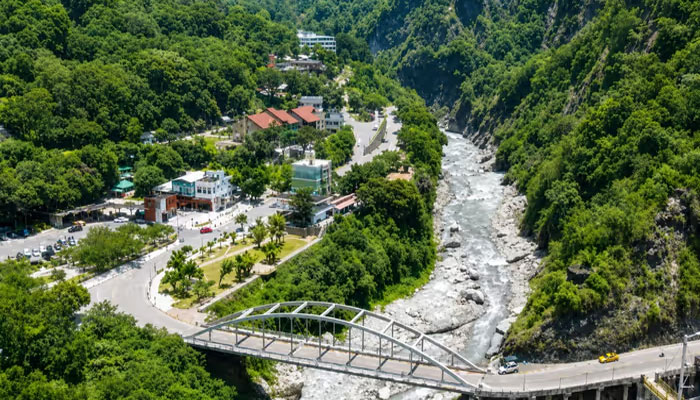
The debate over the Siang project has increasingly centred on China’s plans to harness the Yarlung Tsangpo, the river known as the Siang after it enters India and eventually becomes the Brahmaputra in Assam.
India’s efforts to develop the river’s hydropower potential date back to 1982, before China’s upstream projects became a central part of the debate. In 2002, India and China established a mechanism for sharing hydrological information during the flood season.
In 2003, India launched a nationwide initiative to develop 50,000 MW of hydropower, with approximately 27,000 MW envisaged from Arunachal Pradesh. Subsequent Chinese projects on the Yarlung Tsangpo prompted New Delhi to underline the importance of developing downstream water resources.
In 2017, NITI Aayog proposed consolidating the planned Siang Upper Stage-I and Stage-II projects into a single large storage project. The proposal eventually evolved into the 11,200-MW project now facing opposition.
China’s plans advanced further in December 2024, when Beijing approved a 60,000-MW hydropower project on the lower Yarlung Tsangpo. The project envisages five cascade hydropower stations exploiting a steep descent near the Indian border, where the river drops nearly 2,000 metres over a 50-kilometre stretch.
These developments have intensified concerns in India over possible changes in downstream water flows and the risk of sudden water releases. Supporters of the Siang project argue that a large storage facility could help India manage such risks while expanding its hydropower capacity.
However, water-policy experts have questioned whether building a dam is the most effective response. Himanshu Thakkar, coordinator of the South Asia Network on Dams, Rivers and People, argues that India should seek greater transparency from China and push for joint impact assessments rather than imposing a large project on its own population without adequately addressing local concerns.
Adi communities fear displacement and loss of cultural identity
For the Adi people, opposition to the project extends beyond environmental and seismic concerns. Their relationship with the Siang is deeply connected to their traditions, ancestral land and collective identity.
Village affairs are traditionally discussed through a kebang, a council led by elders. A larger body, the Bogum Bokang Kebang, brings together Adi clans to address matters of collective importance. In August 2025, the council convened at Geku after a gap of 25 years to oppose the proposed dam and its pre-feasibility studies.
According to SIFF, the proposed reservoir could submerge 27 villages, affect dozens of others and displace between 1 lakh and 1.5 lakh indigenous people.
The potential consequences include the loss of fertile agricultural land, paddy fields, jhum cultivation areas, orchards and other sources of livelihood. Community members also regard the land and river as integral to their spiritual and cultural heritage, associating them with Abo Tani, their primordial ancestor, and Ane Siang, the mother figure who shapes their identity.
A veteran energy researcher who has worked with the community said fears about losing traditional ways of life and the right to self-determination are central to the opposition, alongside ecological and seismic risks.
A former member of the Adi Students’ Union similarly questioned who would bear the costs of national security and who should determine the meaning of development for communities living along the river.
Key milestones in the Siang dam project
1982: The Brahmaputra Board proposes a dam on the Siang.
1990s: Plans emerge for upper, middle and lower Siang dams.
2008: The 9,500-MW Siang Upper project is declared a National Project.
2009: NHPC divides the project into two stages of 6,000 MW and 3,750 MW to reduce submergence.
2017: NITI Aayog proposes consolidating the two stages into a single 10,000-MW project.
2025: The state government pushes for memorandums of understanding with local communities, while opposition continues.
2026: Protests intensify as the state deploys security personnel to facilitate pre-feasibility surveys.
The standoff over the Siang Upper Multipurpose Project underscores the difficult balance between India’s strategic concerns over China’s upstream hydropower expansion and the rights of indigenous communities facing the prospect of large-scale displacement. While the government views the project as important for water security and energy development, protesters continue to demand meaningful consultation, transparency and respect for their ancestral lands.
Comments are closed.