
Democrats Capture US Senate, End Republican Dominance as Voter Anger Over Trump Fuels Election Upset

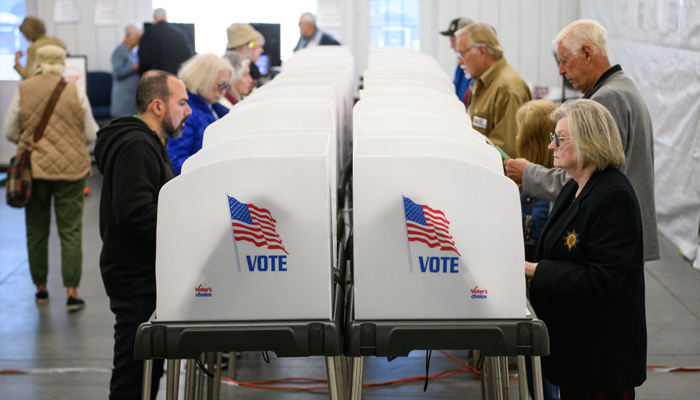
US Midterm Elections: Democrats Regain Senate Control, Deliver Major Setback to Trump and Republicans
Democrats have reclaimed control of the US Senate, marking a significant political setback for President Donald Trump and the Republican Party. The election outcome is expected to reshape the balance of power in Washington and make it considerably harder for Trump to advance his legislative agenda during the final two years of his presidency.
The midterm elections, which concluded on Tuesday, reflected widespread voter dissatisfaction over rising living costs, the US war in Iran and concerns about government corruption. While control of the House of Representatives remained undecided, Democrats had already flipped several Republican-held seats, strengthening their prospects of securing a majority in the chamber.
The Senate victory followed a series of unexpected Democratic wins in traditionally conservative states. Josh Turek defeated Republican Representative Ashley Hinson in Iowa, while Adam Hamilton unseated Senator Roger Marshall in Kansas. In Texas, James Talarico defeated Ken Paxton, while Annie Andrews secured a surprise victory in South Carolina.
Democrats also registered important victories in Ohio, where Sherrod Brown defeated Senator Jon Husted, and North Carolina, where Roy Cooper won an open Senate seat.
Meanwhile, Democratic Senator Jon Ossoff retained his seat in Georgia by defeating Representative Mike Collins. In New Hampshire, Chris Pappas defeated former Senator John Sununu to succeed retiring Democratic Senator Jeanne Shaheen.
DEMOCRATS MAKE GAINS IN HOUSE RACES
The battle for the House of Representatives also witnessed significant Democratic gains. The party defeated several Republican incumbents, including Tom Kean in New Jersey and Ryan Mackenzie, Scott Perry and Rob Bresnahan in Pennsylvania.
Democrats also captured open seats in North Carolina and Kentucky, moving closer to the majority required to take control of the chamber.
Republicans had entered the election hoping their financial advantage and an aggressive redistricting strategy would protect their congressional majority. However, the results indicated that voter dissatisfaction was overcoming those efforts in several key battlegrounds.
In Florida, Republicans had hoped to gain additional seats through redistricting, but Democratic candidates remained competitive. Representatives Jared Moskowitz, Debbie Wasserman Schultz and Kathy Castor secured victories despite the party’s efforts to redraw congressional boundaries.
RISING COSTS AND TRUMP’S POLICIES DOMINATE VOTER CONCERNS
Economic dissatisfaction emerged as one of the defining themes of the election. According to the AP Voter Poll, around three-quarters of voters described the economy as either not very good or poor.
Approximately eight in 10 voters said inflation had caused moderate or severe financial difficulties for their households. Concerns about government corruption and the rising cost of living also played a major role in determining voting preferences.
Around three-quarters of voters expressed anger or dissatisfaction with the country’s direction. Nearly six in 10 believed Trump was prioritising his personal interests over those of the nation.
The findings highlighted the challenges facing Republicans as voters assessed the administration’s performance midway through Trump’s second term.
TRUMP REJECTS RESPONSIBILITY FOR REPUBLICAN LOSSES
Trump had urged Republican supporters to treat the midterm elections as though he himself were on the ballot. However, as Democratic victories began emerging, he sought to distance himself from the disappointing results.
“I wasn’t on the Ballot and if I was, we would have won IN A LANDSLIDE!” Trump wrote on his social media platform.
Republicans had also struggled to overcome historical trends, as the party controlling the White House frequently loses congressional seats during midterm elections.
GOVERNOR RACES PRODUCE MAJOR SURPRISES
Democrats also performed strongly in several gubernatorial contests. Josh Shapiro in Pennsylvania, JB Pritzker in Illinois, Wes Moore in Maryland, Maura Healey in Massachusetts and Kathy Hochul in New York secured re-election.
In Texas, Gina Hinojosa defeated Republican Governor Greg Abbott in a major upset. Georgia Democrat Keisha Lance Bottoms won the governorship, becoming the first Black woman elected governor of a US state.
In Florida, Republican Byron Donalds made history by becoming the first Black Republican elected governor in the country.
Ohio also witnessed a closely watched contest in which Democrat Amy Acton defeated Republican Vivek Ramaswamy.
WHAT SENATE CONTROL MEANS FOR TRUMP
The Democratic takeover of the Senate is expected to significantly complicate Trump’s legislative priorities. With Republicans previously exercising considerable control over Congress, the administration had faced fewer obstacles in advancing its policies.
Democratic control opens the door to greater congressional scrutiny, investigations and potential impeachment proceedings involving members of the administration.
House Democratic Leader Hakeem Jeffries has outlined an ambitious 100-day agenda focused on reducing living costs and increasing oversight of the Trump administration. If Democrats also secure the House majority, Jeffries could become the first Black Speaker of the US House of Representatives.
The election outcome could also influence the political ambitions of potential presidential candidates ahead of the next presidential contest. For Republicans, the results may complicate the political prospects of Vice President JD Vance and other leaders seeking to build their futures around Trump’s political legacy.
With Democrats gaining control of the Senate and continuing to contest the House, Washington is heading towards a significantly different political landscape for the remainder of Trump’s second term.
Comments are closed.