
Election Commission Revises Form 6, Removes SIR Declaration Clause After Commissioner Flags It as ‘Illegal’

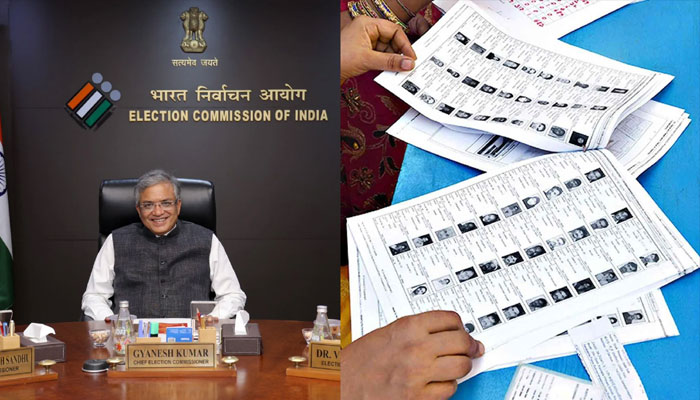
ECI Removes SIR Declaration From Form 6 After Commissioners Raise Legal Objections
The Election Commission of India (ECI) has removed the Special Intensive Revision (SIR)-related declaration from the online version of Form 6 on its ECINet portal in states where the voter revision exercise is still underway. The move marks a reversal of an earlier decision that had drawn objections from Election Commissioners Sukhbir Singh Sandhu and Vivek Joshi.
The declaration, previously placed between Sections J and K of Form 6, required new voter applicants to provide information about whether their names or those of their parents or grandparents appeared in electoral rolls during the previous SIR exercise conducted in the early 2000s.
Applicants were required to select one of three options before proceeding with their registration. The declaration has now been separated from the statutory voter enrolment form and is available as an independent document.
Commissioners Had Questioned Legality of the Change
The decision follows objections raised by Election Commissioners Sandhu and Joshi over the inclusion of the additional declaration in Form 6.
In a note dated May 16, Joshi stated that the prescribed form could not be modified without a formal legal amendment. Sandhu, in his August 13 communication, described the change as “unauthorised/illegal” and called for its immediate removal.
According to the ECI’s counter-affidavit submitted to the Supreme Court on October 26, the Electoral Roll Division decided on October 21 to separate the SIR declaration from Form 6.
The Commission explained that the declaration had initially been integrated into the online application to allow applicants to complete the process using a single OTP and one e-signature instead of two separate authentication procedures.
However, following further deliberations, the Commission decided that online applications would also follow the two-part arrangement used for physical submissions.
Third Change in Six Weeks Completes the Reversal
The latest decision represents the third change in the Commission’s position on Form 6 within approximately six weeks.
On September 23, an investigation reported that Sandhu and Joshi had objected to the inclusion of the declaration, arguing that Form 6 is prescribed under the Registration of Electors Rules, 1960, and can only be amended by the Central Government.
On September 26, the full Commission stated that the SIR declaration would remain applicable during the ongoing revision exercise, while the prescribed statutory form would be used outside the SIR period.
Following that decision, the declaration was removed from Form 6 in states where the SIR had been completed but continued to appear in states where the exercise was ongoing.
On October 12, the Supreme Court clarified that it had neither approved nor disapproved the modified version of Form 6.
The October 21 decision subsequently led to the declaration being removed from the online Form 6 across the board.
ECI Maintains That Form 6 Was Never Legally Amended
In its affidavit before the Supreme Court, the Commission maintained that it had not formally amended Form 6 through its SIR orders.
However, it acknowledged that the way the declaration was displayed on the online platform could create the impression that the statutory form had been modified. The affidavit reiterated that any amendment to Form 6 could only be made by the Central Government.
Other Objections Raised by Commissioners Also Led to Changes
The Form 6 issue is part of a wider series of objections reportedly raised by Sandhu and Joshi. According to the investigation, the two Commissioners had recorded at least 14 objections over 10 months concerning electoral roll management, administrative decisions and the functioning of the Commission.
Several subsequent changes have addressed issues highlighted in their communications.
These include advance circulation of agendas and preparation of minutes for Commission meetings, mandatory approval for official foreign travel, and additional scrutiny of new IT systems and portals.
The ECI also constituted a committee on October 14 to examine ECINet’s compliance with applicable laws and rules. The committee includes senior election officials and independent experts from IIT Bombay and IISc Bengaluru.
Changes have also been introduced to provide greater discretion to field-level election officials in handling voter records, document verification and cases involving discrepancies.
The Commission has additionally directed the inclusion process for 97 voters in Goa whose names could not be restored through the ECINet system despite clearance by local electoral registration officers.
While the ECI continues to maintain that its major decisions were taken unanimously, the latest Form 6 revision marks another significant development in the ongoing debate over the Commission’s administrative and legal processes.
Comments are closed.