
Bomb Threats Disrupt 16 Flights Across Europe, Force Emergency Landings and Diversions

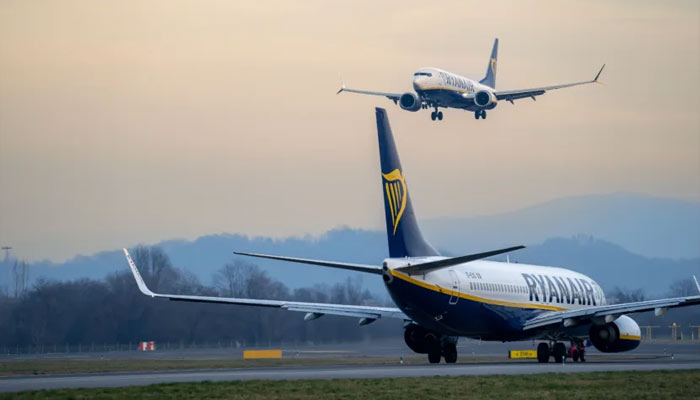
Bomb Scares Disrupt European Air Travel as Multiple Flights Face Threats, Diversions and Security Checks
Air travel across several European countries faced disruption on Thursday after a fresh series of bomb threats targeted multiple flights, forcing airlines and aviation authorities to implement emergency security measures. Several aircraft were diverted, delayed or escorted by fighter jets, while passengers were evacuated or transferred to other planes as a precaution.
The incidents affected flights operated by airlines including LOT Polish Airlines, Aer Lingus, Finnair and Wizz Air. Security agencies in Poland, the Czech Republic, Bulgaria, France, Finland and Italy responded to the alerts.
The latest developments have heightened concerns about possible hybrid attacks and sabotage operations targeting critical infrastructure across Europe. Russia and Iran have previously faced accusations of involvement in such activities, although both countries have rejected the allegations. Authorities have not identified any country or organisation responsible for Thursday’s bomb threats.
Multiple Incidents Involving European Airlines
Polish airline LOT reported two separate security incidents. A flight travelling from Warsaw to Brussels landed safely, after which security personnel conducted inspections and found no suspicious objects.
In another incident, a LOT aircraft scheduled to depart for Paris was stopped while taxiing towards the runway. Passengers were transferred to another aircraft as a precaution while security procedures were carried out.
The Czech Republic also received bomb threat reports involving four aircraft heading towards Prague. Police described the warnings as having low credibility but confirmed that arrangements were being made to inspect the aircraft after they arrived.
Bulgaria faced three separate incidents. According to the country’s interior minister, two aircraft arriving from Copenhagen and Madrid landed in Sofia. Another flight travelling from London was diverted to Plovdiv, local media reported.
Aer Lingus Flight Diverted to France
An Aer Lingus service operating between Dublin and Rome was diverted following a security alert.
Flight EI402 landed safely at Evreux airport in France, approximately 100 kilometres west of Paris. The airline confirmed that the diversion was a precautionary measure taken in response to the reported threat.
Finnair also confirmed two security-related incidents. An aircraft travelling from Helsinki to Rome was escorted by Italian Air Force fighter jets before landing safely.
Another service departing Helsinki for Vienna, operated by Jettime, received a bomb threat but continued its journey and landed normally, according to the Finnish airline.
Separately, Italian media reported that a Wizz Air flight travelling from Milan to Warsaw was diverted to Vienna following a bomb threat.
Fresh Alerts Follow Similar European Security Scare
Thursday’s incidents came just days after another wave of security alerts on Tuesday, when at least seven flights and a cruise ship reportedly received bomb threats.
The earlier warnings disrupted operations at several locations across Europe. However, subsequent inspections did not uncover any explosive devices.
The repeated incidents have raised questions about the vulnerability of European aviation networks and the ability of authorities to identify and prevent coordinated security disruptions.
Experts Warn of Wider Disruption Campaign
Concerns have also emerged over suspected cyberattacks targeting essential services. Unidentified hackers reportedly disrupted refrigeration systems at supermarkets in several European countries during the same week.
Eliran Almog, chief executive of aviation cybersecurity company Cyviation, said the repeated aviation threats could be intended not only to interrupt travel but also to examine how airlines, airports and national authorities respond to emergencies.
He pointed to the timing of the aviation alerts alongside reported cyberattacks on supermarket refrigeration systems, suggesting that both developments warranted attention.
Security experts have warned that fabricated bomb threats and cyber incidents can be relatively inexpensive ways to create widespread disruption, even when no physical attack takes place.
With investigations continuing across multiple countries, European aviation authorities face the challenge of maintaining passenger safety while limiting the disruption caused by repeated security alerts.
Comments are closed.