
Israel’s Eisenkot Invites Netanyahu’s Likud Party for Talks on Forming New Government

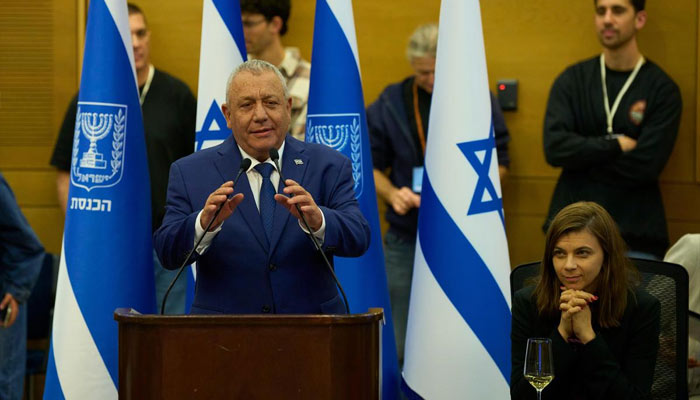
Eisenkot Reaches Out to Netanyahu’s Likud as Israel Faces Crucial Coalition Negotiations
Israel’s political landscape has entered a significant phase of negotiations after Gadi Eisenkot, leader of the Yashar Party and the country’s designated prime ministerial candidate, invited Benjamin Netanyahu’s Likud party for discussions on forming the next government.
Yashar confirmed on Saturday that it had approached Likud, along with other political groups, to explore possible coalition arrangements. The negotiations are scheduled to begin on Sunday, November 22, as Eisenkot works to secure enough parliamentary support to establish a new administration.
Eisenkot received a 28-day mandate from the Israeli president beginning November 8 to form the government, with an additional 14 days available if required.
The October 27 election failed to give any political party a clear parliamentary majority, making negotiations between rival political groups essential. Eisenkot has expressed his intention to establish the broadest possible government rather than limit discussions to traditional political allies.
In a statement, Yashar said Eisenkot had directed the party’s negotiating team to invite Likud representatives for an intensive round of discussions, beginning with a meeting already scheduled for Sunday.
Eisenkot faces challenge of securing parliamentary majority
Eisenkot received recommendations from 67 lawmakers to form the next government, including 48 representatives from his own political bloc and 19 members belonging to Arab parties.
His position received another boost on November 17 when Yashar’s Matan Kahana was elected speaker of the Knesset with support from the Arab political groups.
However, the possibility of bringing Arab parties into a formal governing coalition remains complicated. Eisenkot has avoided making a firm commitment on their direct participation while exploring alternative arrangements.
One possibility under consideration is a minority government that could rely on external parliamentary support from Arab parties to survive confidence votes and pass legislation.
According to Israeli media outlet Haaretz, the Ra’am party, led by Mansour Abbas, has indicated that its eight lawmakers could support a Yashar-led government in parliament without formally joining the coalition.
The Joint List, which has 11 lawmakers, has reportedly taken a different position, favouring formal participation in a coalition despite having supported Yashar in parliamentary proceedings so far.
‘No intention of allowing negotiations to drag on’
Despite the political challenges, Eisenkot has indicated that he wants to complete the government formation process without unnecessary delays.
In a message posted on X, he said he would present a new government to the Knesset for approval when the circumstances were appropriate.
Eisenkot also raised concerns about the country’s political and security situation, accusing the outgoing prime minister of allowing political considerations to influence military priorities and operational timelines.
He warned that Israel was entering dangerous territory and argued that national security decisions should not be dictated by the political calendar.
The Yashar leader also placed responsibility on individual lawmakers, saying they would have to decide whether to support a change of government or risk another election while Netanyahu continued as caretaker prime minister.
Eisenkot rules out government partnership with Netanyahu
Despite inviting Likud for coalition discussions, Eisenkot has maintained that he is not willing to serve in a government coalition alongside Netanyahu.
The invitation is therefore being viewed as an attempt to explore every possible parliamentary arrangement rather than an indication that the two leaders are preparing to share power.
With the government formation deadline approaching, the coming negotiations could prove decisive for Israel’s political future. Whether Eisenkot can secure sufficient support without entering a direct alliance with Netanyahu remains the central question facing the country’s political establishment.
Comments are closed.