
After Ajit Pawar’s Plane Crash, DGCA & States Set To Jointly Oversee 400 ‘Uncontrolled’ Airstrips

The Civil Aviation Ministry has initiated a nationwide review of nearly 400 “uncontrolled” airstrips to introduce uniform operating standards.
And a joint oversight mechanism involving the Directorate General of Civil Aviation (DGCA) and state governments, officials said. The review will examine gaps in basic infrastructure, communication systems, firefighting preparedness, and coordination with district and local authorities. Most of these airstrips are owned by state governments and currently lie outside the DGCA’s routine surveillance framework, resulting in limited regulatory oversight, according to a report by Hindustan Times.
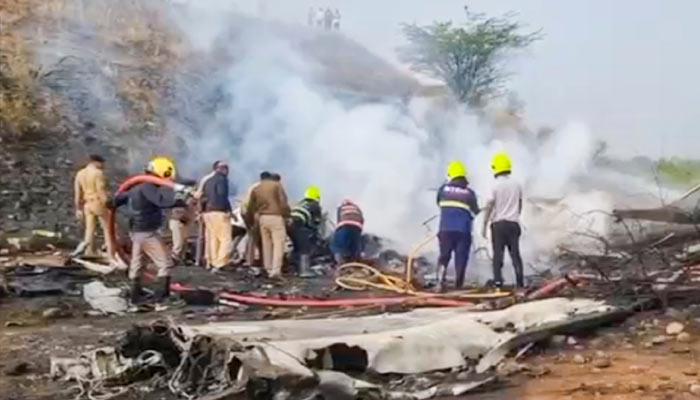
The move follows the January 28 aircraft crash at Baramati involving a plane linked to Maharashtra Deputy Chief Minister Ajit Pawar, which brought renewed attention to safety concerns at non-ATC airfields.
DGCA teams have begun inspections at Category A airports—uncontrolled airstrips that operate without air traffic control services and are managed by state authorities, private operators, or flight training organisations. India has around 400 such facilities, widely used by charter operators, political flights, and flying schools, but many lack standardised procedures for runway maintenance, emergency response, and aircraft movement coordination.
A senior official cited by HT said existing guidelines governing these airstrips do not fall under DGCA jurisdiction, prompting the need for a new framework developed jointly with states. The aim is to ensure better visibility of operational status and safety compliance. Another official confirmed that inspection teams include personnel from the flight safety, airworthiness, and operations directorates.
Categories of airports in India
DGCA officials classify Indian airports into four categories. Category A airports operate without ATC services. Category B airports offer limited control through partial ATC or Aerodrome Flight Information Service (AFIS), such as Chhatrapati Sambhaji Nagar and Jalgaon. Category C airports function under procedural ATC, where aircraft separation is managed without radar, as at Pune. Category D airports are fully controlled, radar-equipped hubs like Mumbai and Delhi.
Several prominent but uncontrolled airstrips include Baramati, Karad, and Chandrapur in Maharashtra; Ujjain and Chhindwara in Madhya Pradesh; Bhagalpur and Begusarai in Bihar; Alwar in Rajasthan; Sultanpur and Saifai in Uttar Pradesh; and Hassan in Karnataka.
Aviation experts say strengthening basic safety infrastructure at such facilities would require relatively low investment. Mark Martin, founder of aviation advisory firm Martin Consultancy, noted that even remote or unpaved airstrips should have essentials such as windsocks, basic weather monitoring, CCTV coverage, and routine inspections.
He added that monthly safety audits by state authorities and daily online publication of weather data could significantly improve oversight at non-ATC airfields, where pilots currently rely largely on self-coordination. According to Martin, these measures could be implemented at a cost of under ₹2 lakh per airstrip.
Comments are closed.