
Scientists Propose 150-Metre Barrier to Slow Melting of ‘Doomsday Glacier’

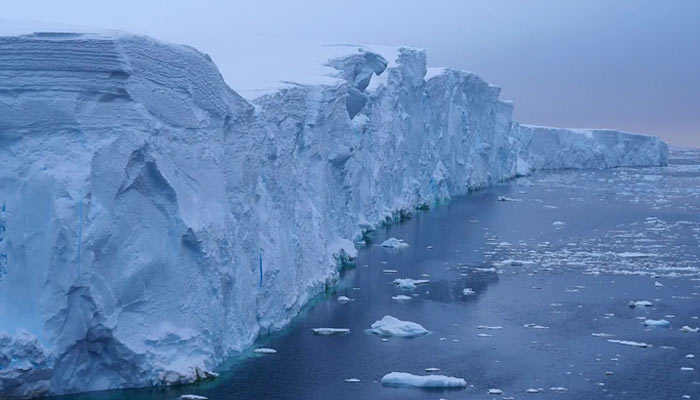
Scientists have renewed warnings over Antarctica’s Thwaites Glacier—widely known as the “Doomsday Glacier”
As it continues to melt rapidly due to human-driven climate change, raising concerns of a major rise in global sea levels. Thwaites Glacier currently contributes about 4% of annual global sea-level rise. Scientists warn that its collapse could destabilise the West Antarctic Ice Sheet, potentially triggering a sea-level increase of up to 65 centimetres, putting millions of people in low-lying coastal regions at risk of flooding. Researchers have been drilling into the glacier to study how warm ocean water is accelerating melting beneath the ice.
To slow the process, scientists and engineers are proposing an ambitious intervention: constructing a 150-metre-high underwater wall to block warm ocean currents from reaching the glacier, according to a report by Euronews.
The proposal, known as the Seabed Anchored Curtain Project, involves installing an 80-kilometre-long barrier across the seabed in front of Thwaites Glacier. The structure is designed to reduce the flow of warm water under the ice, potentially slowing melting and improving the glacier’s stability. The plan includes a three-year research and testing phase, with an estimated budget of $10 million.
Supporters of the project say the approach could buy valuable time as the world works to cut greenhouse gas emissions. “Sea-level rise is one of the most serious climate risks facing humanity this century,” said Sasha Post, Director of Outlier Projects, stressing the need to accelerate research into large-scale mitigation ideas.
However, scientists also acknowledge significant challenges. The proposed wall would need to withstand extreme Antarctic conditions, strong ocean currents and long-term exposure to ice and saltwater. Experts caution that the project remains experimental and there is no guarantee it would succeed at the scale required.
While the idea is still in early stages, researchers say the accelerating melt of Thwaites Glacier highlights the urgency of exploring unconventional solutions alongside global efforts to address climate change.
Comments are closed.