
After Bihar, SIR Phase 2 to Cover 51 Crore Voters Across 12 States and UTs

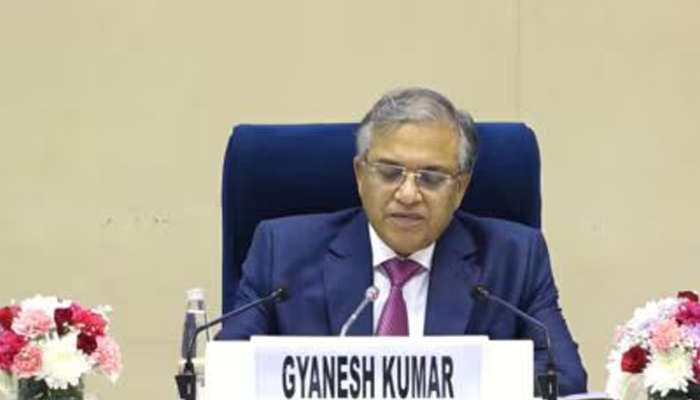
Election Commission Launches Phase 2 of Voter Roll Revision in 12 States and UTs, to Cover 51 Crore Voters.
The Election Commission of India (ECI) will launch the second phase of the Special Intensive Revision (SIR) of electoral rolls across 12 states and Union Territories, covering nearly 51 crore voters, Chief Election Commissioner (CEC) Gyanesh Kumar announced on Monday.
The exercise will take place in Andaman and Nicobar Islands, Lakshadweep, Chhattisgarh, Goa, Gujarat, Kerala, Madhya Pradesh, Puducherry, Rajasthan, Tamil Nadu, Uttar Pradesh, and West Bengal.
Among these, Tamil Nadu, Kerala, Puducherry, and West Bengal are due for Assembly elections in 2026. Kumar added that the SIR process in Assam will be announced separately due to the state’s ongoing citizenship verification programme under Supreme Court supervision.
Timeline and Process
The enumeration process for the second phase will begin on November 4 and continue till December 4, 2025.
- Draft rolls publication: December 8, 2025
- Claims and objections: December 9, 2025 – January 8, 2026
- Hearing of claims: Till January 31, 2026
- Final rolls publication: February 7, 2026
Kumar said the ECI has directed election officials in all 36 states and UTs to ensure the revision process is “transparent, inclusive, and error-free.”
“The success of the Bihar SIR, which covered 7.5 crore voters across 90,000 polling stations with zero appeals, has set a benchmark. We bow before the voters of Bihar and now aim to replicate that success nationwide,” Kumar said.
Voter Lists to Be Frozen Tonight
Kumar announced that the voter lists in all participating states and UTs will be frozen at midnight tonight, after which Booth Level Officers (BLOs) will begin distributing Unique Enumeration Forms to every household.
“These forms will be pre-filled with existing voter details,” he said. “Voters can verify their data and cross-check it with older records, including the 2003 voter list. Those whose names, or their parents’ names, appeared in earlier rolls will not need to submit fresh documents.”
The ECI will also make historical voter lists from 2002–2004 publicly available on voters.eci.gov.in, allowing citizens to verify their details online.
Door-to-Door Verification and Training
Every BLO will visit households three times to verify details. Training for polling officials begins Tuesday to prepare them for the door-to-door exercise.
“To address issues of migration, voters can now submit their enumeration forms online as well,” the CEC said. He directed all Chief Electoral Officers and District Electoral Officers to meet political parties by Wednesday to brief them on the process and ensure full transparency.
Clarifications and Inclusion Measures
Kumar clarified that Aadhaar cards may be used as identity proof during the exercise but are “not proof of citizenship, date of birth, or domicile.”
On concerns regarding cooperation from states, particularly West Bengal, Kumar said there was “no confrontation.”
“The Election Commission will do its duty, and state governments will do theirs. States are legally bound to provide personnel for electoral roll preparation,” he said.
The SIR has also been launched in Kerala, where local body elections are yet to be notified.
Why the SIR Is Needed
Explaining the rationale behind the large-scale revision, Kumar said, “The SIR ensures no eligible voter is left out and no ineligible voter remains on the rolls. Migration, duplication, non-removal of deceased voters, and wrongful inclusion of foreigners are issues that must be corrected.”
This is India’s ninth Special Intensive Revision since Independence, following eight previous exercises held between 1951 and 2004 — the last conducted 21 years ago.
Building on the Bihar Model
The ECI said the second phase aims to build upon the successful Bihar model, ensuring a clean, accurate, and inclusive voter roll across participating states and UTs. Each BLO will handle around 1,000 voters, supervised by Electoral Registration Officers (EROs) and Assistant EROs.
“The concerns raised by political parties about voter roll quality are legitimate,” Kumar said. “The SIR is our answer — a comprehensive, transparent, and technology-backed process to strengthen the foundation of India’s democracy.”
Comments are closed.