
After Hayli Gubbi’s Awakening, Here Are Five Other Volcanoes That Stirred After Centuries

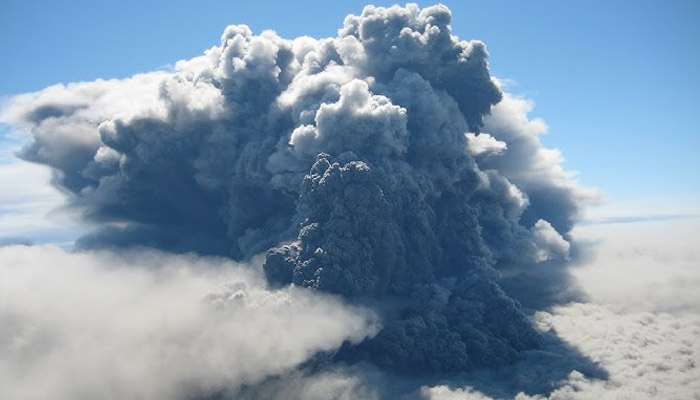
Ethiopia’s Hayli Gubbi volcano has erupted for the first time in an estimated 10,000–12,000 years, sending thick columns of smoke and ash into the sky and even affecting flight operations.
As far away as India. The volcano lies within Ethiopia’s Erta Ale Range. In contrast, Indonesia’s Mount Lewotobi Laki-Laki—despite multiple powerful eruptions in 2025—was never considered long-dormant.
The rare reawakening of Hayli Gubbi has raised questions:
Can a volcano stay dormant for thousands of years? What exactly is a dormant volcano, and have such long gaps been recorded before?
What is a volcano?
A volcano is an opening in the Earth’s crust through which magma (molten rock), volcanic gases, and ash escape. Repeated eruptions can build cone-shaped mountains around the vent.
What is a dormant volcano?
A dormant volcano is one that has not erupted in a long time—decades, centuries or even millennia—but still retains the potential to erupt again. These volcanoes may have active magma systems beneath the surface, and changes in tectonic activity can trigger renewed eruptions.
Volcanoes that erupted after centuries of dormancy
Nabro Volcano (Eritrea–Ethiopia border)
Erupted: June 2011
Dormant for: ~10,000 years
The eruption produced a 13 km-high ash plume that spread across East Africa and the Arabian Peninsula. It caused dozens of deaths, displaced thousands and disrupted air travel across the region.
Chaitén Volcano (Chile)
Erupted: May 2008
Dormant for: ~9,000 years
The eruption forced the evacuation of more than 4,000 residents of Chaitén town. A 17 km-high ash plume and clogged rivers caused damage worth billions of dollars.
Fourpeaked Volcano (Alaska, USA)
Erupted: September 2006
Dormant for: Over 10,000 years
The eruption generated large ash clouds detected by satellites, leading to aviation alerts across the North Pacific.
Cerro Hudson (Chile)
Major eruption: August 1991
Dormant for: ~3,000 years
A massive 30 km-high ash column caused widespread ashfall, agricultural losses, livestock deaths and water contamination. Thousands were evacuated.
Mount Pinatubo (Philippines)
Erupted: June 1991
Dormant for: ~600 years
One of the largest eruptions of the 20th century, it resulted in more than 800 fatalities. Global temperatures dropped by around 0.5°C for a year due to the huge volume of ash (35 km-high plume) injected into the atmosphere.
Comments are closed.