
Antarctic Waters Released Vast Stores of Ancient Carbon as Ice Age Ended, Study Finds

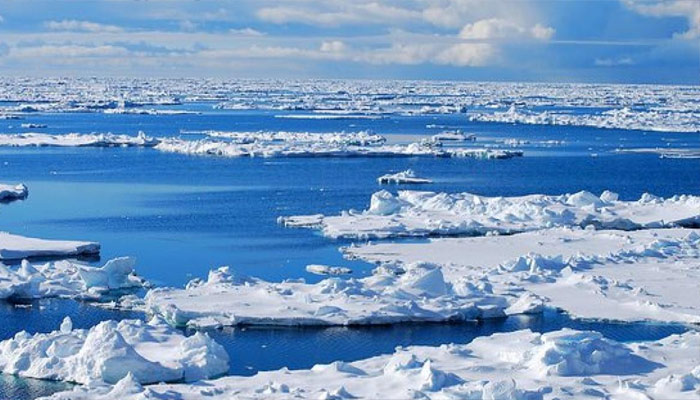
As the last Ice Age drew to a close around 12,000 years ago, a major shift in Antarctic deep-ocean circulation triggered.
The release of vast amounts of ancient, carbon-rich water into the atmosphere — a process that helped warm the early Holocene, according to new research. Scientists say the expansion of Antarctic Bottom Water (AABW) displaced long-isolated deep waters, unlocking carbon that had been stored in the abyss for thousands of years.
How Antarctic circulation unlocked stored carbon
In a recent study published in the journal Nature, researchers analysed nine sediment cores collected from the Southern Ocean at depths ranging from 2,200 to 5,000 metres across the Atlantic and Indian sectors. Using neodymium isotopic signatures, which serve as fingerprints for tracing the origins and movement of ancient water masses, the team reconstructed changes in ocean circulation spanning 32,000 years.
Their findings show that during the Ice Age, deep waters in the Southern Ocean were largely stagnant, allowing carbon to accumulate and remain trapped far below the surface. As global temperatures rose and ocean circulation intensified, these immobile waters were gradually replaced by newly formed AABW — a turnover that released the long-buried carbon back into the atmosphere, contributing to the planet’s rapid post-glacial warming.
Comments are closed.