
Atlantic ‘Cold Blob’ Explained: Why This Mysterious Cooling Spot Has Scientists Worried

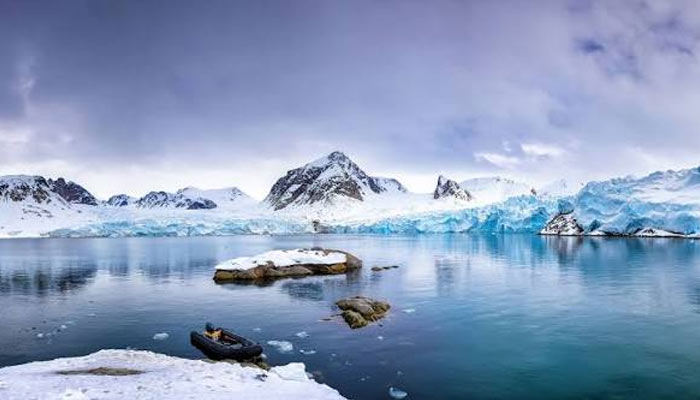
Scientists are closely monitoring an unusually cold patch of water in the North Atlantic, located south of Greenland.
The region, often referred to as the Atlantic “cold blob”, has cooled by roughly 1°C over the past century even as ocean temperatures elsewhere have generally risen. The unusual cooling has drawn attention because researchers believe it could be linked to changes in the Atlantic Meridional Overturning Circulation, or AMOC — one of the major systems responsible for transporting heat around the planet.
What Is the Atlantic Cold Blob?
The Atlantic cold blob is an area of unusually cool water in the subpolar North Atlantic. Its behaviour contrasts sharply with the broader trend of ocean warming caused by rising global temperatures.
At the heart of the phenomenon is the AMOC, a vast system of ocean currents that moves warm, salty surface water from tropical regions towards the North Atlantic.
As the warm water reaches the waters around Greenland, it releases heat into the atmosphere and becomes colder and denser. The dense water then sinks into the deep ocean and travels southward, helping maintain the circulation that redistributes heat across the Atlantic and beyond.
Why Is the Cold Spot Forming?
One major concern is the growing amount of freshwater entering the North Atlantic.
Melting ice from Greenland, along with increased rainfall, is adding large quantities of freshwater to the ocean. Because freshwater is less dense and less salty than seawater, it can make it harder for surface water to become dense enough to sink.
A slowdown in this sinking process can weaken the AMOC. With less warm tropical water being transported towards the north, the subpolar Atlantic can become cooler, contributing to the formation and persistence of the cold blob.
Observations from recent decades, including atmospheric and satellite measurements, have strengthened the case that the cooling is connected to changes in ocean circulation rather than simply increased heat loss from the ocean surface.
Iceland’s climate minister Johann Pall Johannsson has warned that governments should prepare for potential risks rather than wait for absolute scientific certainty.
“This is not about panic or alarmism. It’s just responsible governance,” he said, according to POLITICO.
What Happens If the AMOC Weakens Further?
A significant slowdown in the AMOC could have consequences well beyond the North Atlantic, potentially altering weather patterns across several parts of the world.
Europe: The circulation helps transport heat towards Europe. A major weakening could result in colder winters in parts of northern Europe and disrupt established rainfall patterns, potentially creating challenges for agriculture.
Tropical rainfall: The AMOC also influences the position of the Intertropical Convergence Zone (ITCZ), a major global belt of rainfall. A substantial slowdown could shift the rain belt southward, increasing drought risks in some tropical regions while changing rainfall patterns elsewhere.
Sea levels: A weaker AMOC could also contribute to additional sea-level rise along parts of the eastern coast of North America and areas of western Europe, on top of the rise caused by global warming.
Climate-risk expert Laurie Laybourn has warned that the effects could emerge progressively rather than only after a complete collapse of the circulation.
“Bits of the AMOC could begin collapsing on the journey to the full collapse,” Laybourn said, according to POLITICO, adding that disruption could occur along the way.
How Could It Affect India?
Changes in the Atlantic’s circulation can influence weather patterns far beyond Europe and North America, including the Indian monsoon.
A substantial weakening of the AMOC could alter global atmospheric circulation and potentially affect the strength, timing and distribution of India’s summer monsoon rainfall.
For India, the concern is not necessarily simply less rainfall, but greater unpredictability. Monsoon seasons could become more irregular, with longer dry spells in some regions followed by short periods of intense rainfall.
Such changes could create additional pressure on agriculture, water resources and food security, given the importance of monsoon rainfall to India’s farming sector.
Scientists continue to study the strength and stability of the AMOC. While the Atlantic cold blob is an important indicator of changes in the climate system, its presence alone does not mean an imminent collapse of the entire circulation. The key concern is what continued warming, ice melt and freshwater input could mean for the system over the longer term.
Comments are closed.