

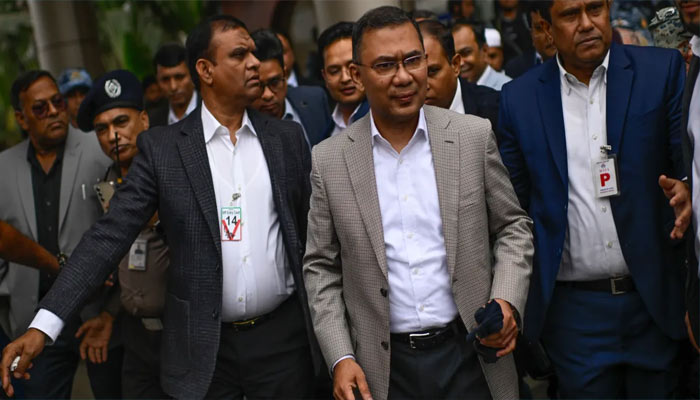
Ending a two-decade wait, the Bangladesh Nationalist Party (BNP) is set to return to power after crossing the majority mark in Bangladesh’s 13th general elections, signalling a major political shift in the country.
Led by Tarique Rahman, the party — which last won a national election in 2001 — declared victory as early counting trends pointed to a sweeping mandate. With coalition partners, the BNP comfortably crossed the 151-seat threshold required for a simple majority in the 300-member Jatiya Sangsad.
Local media reports indicated that by early morning, the BNP alliance had secured 209 constituencies. While counting continued in some seats, trends suggested little likelihood of dramatic changes to the overall outcome.
In contrast, Jamaat-e-Islami Bangladesh trailed significantly, winning 56 seats as per early figures. Party chief Shafiqur Rahman signalled acceptance of the results, stating that his party would pursue “positive politics” rather than opposition for its own sake.
Referendum Signals Reform Backing
Alongside the parliamentary vote, unofficial results indicated strong support for the July Charter — a reform document that emerged from the 2024 political upheaval and proposes sweeping constitutional changes.
According to The Daily Star, approximately 72.9 per cent of counted votes supported the charter, while 27.1 per cent opposed it. However, the Bangladesh Election Commission has yet to release the official results.
Violence Mars Poll Day
Despite initial descriptions of a largely peaceful process, election day witnessed sporadic violence. More than 70 people were reportedly injured in clashes across multiple districts.
The worst incident occurred in Hatiya, Noakhali district, where 31 people were hurt in a confrontation between BNP supporters and activists of the National Citizen Party. Police detained at least nine individuals in connection with election-day unrest.
Turnout and Security Measures
Voting began at 7:30 am and continued for nine hours. Citizens cast ballots for both the parliamentary election and the referendum, using separate ballot papers at over 42,000 polling stations nationwide.
Polling was held in 299 constituencies, with voting in Sherpur-3 postponed following the death of a candidate.
According to the Election Commission, voter turnout stood at 60.69 per cent, while postal ballot participation reached 80.11 per cent. Authorities reported no fatalities linked to the violence.
Security was extensive, with nearly one million personnel — including members of the armed forces, Border Guard Bangladesh and police — deployed nationwide. CCTV surveillance was implemented at most polling centres to enhance transparency and voter confidence.
A Turning Point
This election marks the first national vote since the political upheaval of 2024 and the first in three decades without the participation of the Awami League.
With a commanding majority, the BNP now stands poised to form the next government, ushering in a new chapter in Bangladesh’s political landscape after 20 years out of power.
Comments are closed.