
Bengal’s New Power Centre: How Suvendu Adhikari Engineered the State’s Biggest Political Upset

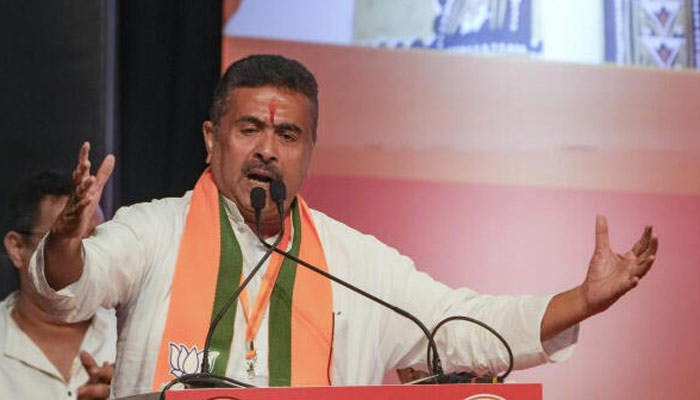
For years, Suvendu Adhikari was regarded as one of the most powerful figures within All India Trinamool Congress and, at one stage, even seen as the political successor to Mamata Banerjee. On Saturday.
The former TMC strategist took oath as the chief minister of West Bengal after leading the Bharatiya Janata Party to a landmark victory that brought an end to the TMC’s 15-year rule in the state.
The BJP secured 206 of Bengal’s 294 Assembly seats in the 2026 elections, while the TMC was reduced to 80 seats. Yet beyond the scale of the victory, the biggest political headline came from Bhabanipur, where Adhikari defeated Mamata Banerjee in her long-time political bastion by more than 15,000 votes.
The win marked the second consecutive Assembly election in which Adhikari personally defeated Banerjee. In 2021, he had narrowly beaten her in Nandigram even though the BJP failed to form the government. Five years later, he not only repeated that feat but also spearheaded the BJP’s first-ever rise to power in Bengal.
From TMC Organiser To Bengal’s BJP Face
Adhikari hails from the politically influential Adhikari family of Kanthi in Purba Medinipur district. His father, Sisir Adhikari, was a veteran Congress leader and later served as a Union minister in the government led by former prime minister Manmohan Singh. His brothers, Dibyendu Adhikari and Soumendu Adhikari, are also active in Bengal politics.
The family has long wielded considerable influence across Purba Medinipur and is associated with the region’s nationalist legacy during the freedom movement. According to accounts linked to the family’s political history, members of the family were involved in anti-British activities and faced imprisonment during colonial rule.
Adhikari began his political career through student politics during the Left Front era before joining the Congress in the 1990s. Around 2000, he and his father shifted to the TMC soon after Mamata Banerjee founded the party.
At the time, the TMC was still emerging as a challenger to the CPI(M)-led Left Front, and the Adhikari family’s organisational strength in Contai and neighbouring regions played a major role in expanding the party’s grassroots presence.
Nandigram And The Rise Of Suvendu Adhikari
Adhikari’s rise accelerated dramatically during the 2007 anti-land acquisition movement in Nandigram, which became one of the defining political moments in modern Bengal politics.
As protests intensified against the Left Front government’s land acquisition plans, Adhikari emerged as one of the key organisers of the resistance movement. The agitation is widely viewed as the turning point that weakened the Left Front’s decades-long dominance and paved the way for the TMC’s victory in 2011.
Within the TMC, Adhikari’s stature rose rapidly after Nandigram. He was increasingly seen as both an effective election strategist and a powerful grassroots organiser capable of mobilising cadre networks across districts.
Over the years, he expanded his influence beyond Purba Medinipur into regions such as Jangalmahal — including Bankura, Purulia and Paschim Medinipur — along with parts of Malda and Murshidabad, where the TMC increasingly relied on his organisational skills.
In 2009, Adhikari defeated CPI(M) heavyweight Lakshman Seth from the Tamluk Lok Sabha seat and retained it again in 2014. After the TMC returned to power in 2016, Mamata Banerjee inducted him into her Cabinet, where he handled key portfolios including transport and irrigation.
By then, Adhikari was widely seen as one of the TMC’s most influential leaders after Mamata Banerjee herself.
The Split With Mamata Banerjee
Relations between Adhikari and the TMC leadership deteriorated gradually, particularly after the rise of Abhishek Banerjee within the party structure.
Political observers had long viewed Adhikari as Mamata Banerjee’s de facto number two, but tensions reportedly intensified as Abhishek Banerjee’s influence within the organisation grew.
In December 2020, Adhikari resigned from the Mamata Banerjee Cabinet and quit the TMC in one of Bengal’s biggest political shocks. Days later, he joined the BJP in the presence of Union Home Minister Amit Shah.
The split triggered an intense political confrontation. Adhikari targeted Abhishek Banerjee during rallies with the slogan “tolabaj bhaipo hatao”, while Mamata Banerjee accused the Adhikari family of betrayal and referred to them as “Mir Jafars”.
Defeating Mamata Banerjee — Twice
The rivalry reached its peak in the 2021 Assembly election when Mamata Banerjee chose to contest directly against Adhikari in Nandigram.
Adhikari defeated her by 1,956 votes, delivering one of the most symbolic blows of her political career. However, despite the personal victory, the BJP managed to win only 77 seats and failed to dislodge the TMC government.
That period nevertheless proved crucial in shaping Adhikari’s standing within the BJP.
As the party struggled to maintain momentum in Bengal after 2021, Adhikari remained one of its most active leaders on the ground, travelling extensively across districts and helping consolidate the BJP’s organisational structure.
Several BJP leaders later credited him with strengthening the party’s grassroots network ahead of the 2026 elections — groundwork that ultimately helped the BJP register its biggest breakthrough in Bengal.
This time, Adhikari not only defeated Mamata Banerjee again — now from Bhabanipur — but also led the BJP to its first government in the state.
After the results, Adhikari described the outcome as a “victory for Hindutva” and said defeating Mamata Banerjee was politically significant.
From Opposition Leader To Chief Minister
Following the BJP’s defeat in 2021, Adhikari was appointed Leader of the Opposition in the West Bengal Assembly, effectively becoming the party’s principal face in the state.
Over the next five years, he emerged as the BJP’s most visible Bengal leader as the party worked to expand beyond its traditional support bases.
Within BJP circles, several leaders began comparing his role in Bengal to the organisational influence wielded by Himanta Biswa Sarma in Assam.
By the final phase of the 2026 election campaign, Adhikari had become central to the BJP’s Bengal strategy. His consecutive victories over Mamata Banerjee — first in Nandigram and then in Bhabanipur — further elevated his stature inside the party.
Now, with the BJP ending the TMC’s 15-year rule and forming its first government in Bengal, Adhikari’s political journey — from Congress worker to TMC organiser to BJP’s dominant Bengal face — has culminated in the state’s top office.
Comments are closed.