

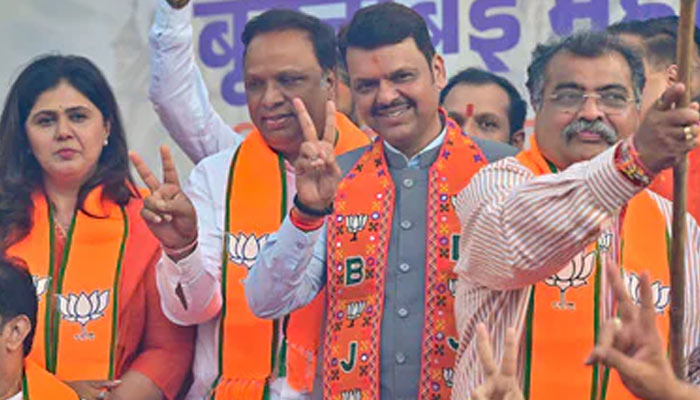
BJP-Shiv Sena Alliance Sweeps BMC, Ending Thackerays’ 28-Year Mumbai Stronghold.
The BJP-Shiv Sena alliance’s commanding victory in the BMC elections has brought Asia’s richest civic body under new leadership, ending the Thackeray family’s 28-year dominance. Chief Minister Devendra Fadnavis emerged as the clear political victor, consolidating his authority in Maharashtra.
Under his leadership, the BJP won 89 of the 227 wards—surpassing its previous high of 82 in 2017—while its Mumbai ally, the Shinde-led Shiv Sena, claimed 29 seats. Together, the alliance reached 118 seats, comfortably crossing the halfway mark of 114.
The Thackerays’ Uddhav faction won 65 seats, a decline from 84 in 2017, signaling a significant erosion of their urban base. Raj Thackeray’s MNS managed only six seats, while the Sharad Pawar faction of the NCP secured a single seat.
The election highlighted a clash between Hindutva politics and Marathi identity. Despite attempts by the Thackerays to revive sons-of-the-soil rhetoric and stoke fears of a threat to Marathis, the electorate appeared to reward governance and development messaging over identity politics.
State BJP leaders credited their strong showing to Hindutva outreach combined with a focus on development. Nitesh Rane hailed the results as a mandate for the alliance’s ideological and governance model, while Fadnavis stressed that Hindutva and development go hand-in-hand.
Other parties struggled to make an impact. Congress, allied with Prakash Ambedkar’s Vanchit Bahujan Aghadi, won just 26 seats, while AIMIM increased its tally from two to eight wards.
The BMC verdict redraws Mumbai’s urban political map. While the Thackerays retain a measure of relevance, the results firmly establish the BJP-led alliance as the dominant force in city politics. For Fadnavis, the victory strengthens his influence ahead of future state-level contests, showing that organisational strength, development focus, and ideological clarity can outweigh traditional identity politics.
Comments are closed.