
Daughter Wins World Championships Medal, But Gopichand Stays in Coach Mode

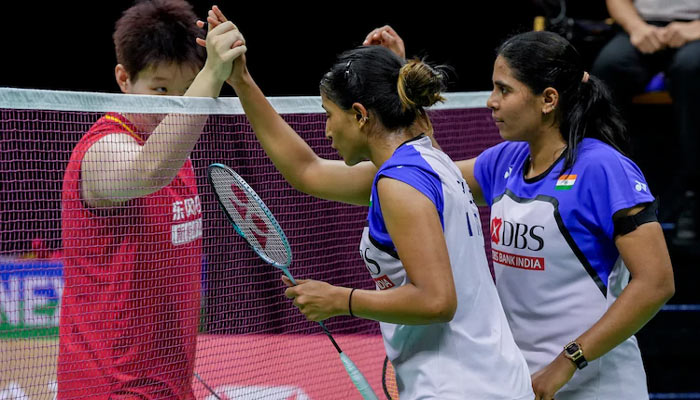
Gopichand Keeps Coach’s Hat On as Daughter Gayatri Secures Historic World Championships Medal
Pullela Gopichand was clearly delighted on Saturday at New Delhi’s Indira Gandhi Stadium, but even in a moment that was deeply personal, India’s celebrated badminton coach remained characteristically measured.
Gopichand was speaking to the media after Gayatri Gopichand and Treesa Jolly secured India’s first women’s doubles medal at the World Championships in 15 years. Usually restrained and focused when discussing badminton, Gopichand appeared more relaxed than usual. He smiled, joked with reporters and willingly stayed back to answer questions about the pair’s tactics, their next challenges and the broader state of Indian badminton.
The occasion was understandably special. Gopichand has coached World champions and Olympic medallists, but this was the first time a World Championships medal had entered his own household through one of his children. His daughter Gayatri was now a World Championships medallist.
Yet when asked about the emotions of watching his daughter achieve the feat, Gopichand instinctively answered like a coach rather than a father.
“To be honest, I don’t know if I can articulate it in that sense, but I think whenever my players have played, I think I’ve always had the same feeling, and there’s no extra for Gayatri more than I’ve had for any of my players.”
It was a typically composed response. But moments later, the father in him emerged.
Gopichand admitted he was proud of Gayatri’s achievement and highlighted the rarity of having two Arjuna Awardees in the family.
“I’m very proud of what she has achieved. By God’s grace, we have two players in the family who are both Arjuna Awardees. That is quite rare.”
He also praised her performance, results and conduct throughout the tournament, while expressing gratitude for the opportunity she had received.
A career-changing decision
Gayatri’s route to the World Championships podium was far from straightforward.
She initially pursued singles and showed promise as a junior, but recurring injuries interrupted her progress. Eventually, she approached her father about switching to doubles. Gopichand backed the decision.
Looking back, he had little doubt that it was the right move.
The partnership with Treesa Jolly took shape in 2021, soon after the Covid-19 disruption. At the time, four players were being considered for different combinations. With Rutaparna Panda already established, Gopichand was keen to avoid any controversy involving his daughter. Tanisha Crasto was paired with Rutaparna, leaving Treesa and Gayatri together.
The combination also made sporting sense. Treesa initially offered strength and comfort in the backcourt, while Gayatri was naturally effective at the front of the court.
The partnership, however, required patience.
Injuries and inconsistency interrupted their progress, while Gayatri also had to cope with the expectations attached to being Gopichand’s daughter. Treesa, meanwhile, had risen from a modest background in Kerala and carried the hopes of her family on her shoulders.
Gradually, their games began to complement each other. Gayatri grew increasingly comfortable playing from the back, while Treesa became more effective around the net.
45 days of preparation
Their preparations for the home World Championships were hardly ideal. Treesa’s injury kept the pair away from competitive badminton for almost three months and caused their ranking to slide.
The duo returned to Delhi after an intensive 45-day training block under Gopichand and coach B Sumeeth Reddy. The workload was demanding, with the pair sometimes going through two or three sessions in a day.
That preparation paid off when they faced Jia Yifan and Zhang Shu Xian in the quarter-finals.
The Chinese pair had beaten them in all three previous meetings. Matters appeared to be heading the same way when Gayatri and Treesa fell 0-6 behind in the opening game.
Instead, they produced a remarkable turnaround.
When they won the decisive point, the emotion was unmistakable. Treesa immediately ran towards Gopichand and hugged him. Gayatri first crossed the court to acknowledge her Chinese opponents before joining Gopichand and Sumeeth.
Gopichand kissed his daughter on the forehead.
‘You’ve done it, Bhaiya’
Sumeeth understood exactly what the moment represented.
After the quarter-final, with the medal secured, he turned to Gopichand and told him: “You’ve done it, Bhaiya.”
For 45 days, Gopichand had pushed the pair relentlessly. The sessions continued even when fatigue set in, because there was always another aspect of their game to refine.
Sumeeth said the achievement made all that work worthwhile, particularly for someone balancing the roles of father, national coach and mentor.
The medal was eventually confirmed as bronze after Gayatri and Treesa lost their semi-final to top seeds Tan Ning and Liu Sheng Shu on Saturday.
But the colour of the medal could not diminish its significance.
For India, it was the country’s first women’s doubles World Championships medal since 2011. For Gopichand, it was another landmark achievement from two of his wards.
And for the first time, one of those wards happened to be his daughter.
Even then, Gopichand chose to remain the coach first and the father second.
Comments are closed.