
Nepal’s Young PM Balen Shah Is Falling Back on Old Political Fault Lines

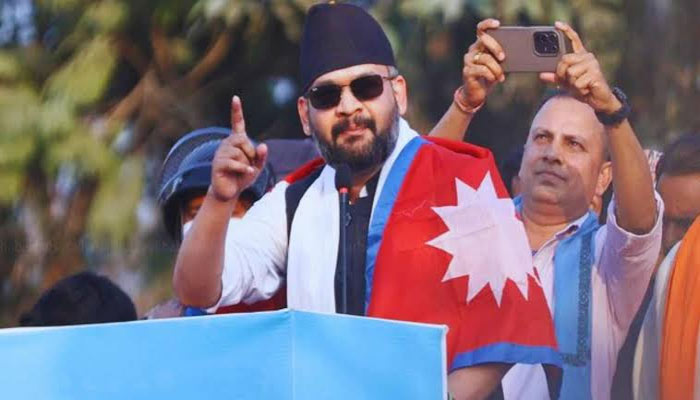
Nepal’s Young PM Balen Shah Faces Questions Over Democratic Norms and Judicial Independence
Two decades after Nepal’s political leadership promised to make democracy a permanent feature of governance following the ouster of King Gyanendra, the country is once again facing questions over democratic accountability, institutional independence and the separation of powers. Prime Minister Balendra Shah’s approach to Parliament and a widening investigation involving former Chief Justice Cholendra Shumsher Rana have brought these concerns into focus.
During his first six months in office, Shah reportedly attended Parliament only four times, spoke on two occasions and once left the House while the President was still present at a joint session. He has also not paid a visit to the President, according to the account.
However, the current government’s conduct is not entirely different from that of previous administrations led by the Maoists, the Nepali Congress and the Communist Party of Nepal (UML). Over the past 20 years, these parties have also been accused of treating the legislature as a rubber stamp and restricting lawmakers’ ability to propose amendments, including during the constitution-making process.
Former Chief Justice’s Arrest Triggers Controversy
On September 27, police arrested former Chief Justice Cholendra Shumsher Rana without a warrant. He was released approximately 12 hours later after a letter was obtained stating that his detention had been at his own request for personal protection.
Less than a week later, Rana’s relatives and close associates reportedly came under investigation and surveillance over a range of allegations. These include attempts to influence cases under judicial consideration and conspiring to undermine the Shah government in collaboration with leaders from both the ruling party and the Opposition.
Home Minister Sudhan Gurung is personally overseeing the surveillance and investigation. However, the government’s decision not to inform Parliament about the alleged conspiracy has raised questions about transparency and accountability.
Nepal’s deeply polarised political environment has also shaped public perceptions of the case, with Shah continuing to enjoy considerable support while Rana faces criticism.
Investigation Could Have Wider Political Implications
Gurung’s warning that the misuse of information obtained through official positions would not be tolerated has offered some indication of the government’s approach to the investigation. Although few details have been made public, the inquiry could extend to growing dissent within the ruling Rastriya Swatantra Party (RSP) and criticism from lawmakers aligned with party leader Rabi Lamichhane.
Meanwhile, UML chief and former prime minister K P Sharma Oli has demanded the restoration of Parliament, which was dissolved on September 12 last year after he was forced to resign amid the Gen Z anti-corruption protests.
The alleged conspiracy appears to involve several political dimensions, and the government’s actions suggest an effort to connect them. This could bring prominent political figures, including Lamichhane, Oli and Maoist leader Pushpa Kamal Dahal ‘Prachanda’, into the broader political debate surrounding the investigation.
However, the allegations remain subject to investigation, and the available information does not establish the involvement of these leaders in any conspiracy.
Nepal’s Troubled History of Judicial Independence
Concerns over the relationship between political power and the judiciary are not new in Nepal. Following the political upheaval of 2006 that led to the removal of the monarchy, the incoming government asked Supreme Court judges to take a fresh oath. The move was viewed by critics as an attempt to secure judicial loyalty to the new administration.
The Maoists subsequently proposed making the judiciary answerable to Parliament, but the proposal failed to gain support from other political parties.
In 2013, then Chief Justice Khil Raj Regmi became prime minister, with cabinet nominees drawn from the country’s four major political parties. The arrangement raised concerns about the separation of judicial and executive powers and the independence of the judiciary.
The appointment of retired Chief Justice Sushila Karki as prime minister last year further intensified the debate. The move drew attention to constitutional restrictions concerning judges assuming political or constitutional positions, including after retirement.
These developments have blurred the boundaries between the judiciary and political leadership, encouraging concerns that institutional independence has been weakened by political ambitions and unconventional appointments.
Electoral Victory Does Not Guarantee Political Stability
Shah’s party secured a landslide victory last year, an unusual outcome in Nepal’s often fragmented political landscape. The result offered the prospect of a more stable government after years of political uncertainty.
Yet an electoral mandate alone may not guarantee lasting stability. Democratic governance also depends on respect for parliamentary procedures, judicial independence, constitutional safeguards and accountability in the exercise of executive power.
As the investigation involving Rana develops and political divisions deepen, Shah’s government faces a test of whether it can deliver on expectations of change without repeating the institutional practices that have undermined previous administrations.
Nepal’s experience over the past two decades suggests that the strength of democracy depends not only on who wins elections, but also on how those in power respect the institutions designed to hold them accountable.
Comments are closed.