
Delhi Chokes as AQI Stays ‘Very Poor’ Ahead of Diwali, 22 Monitoring Stations Record Over 400

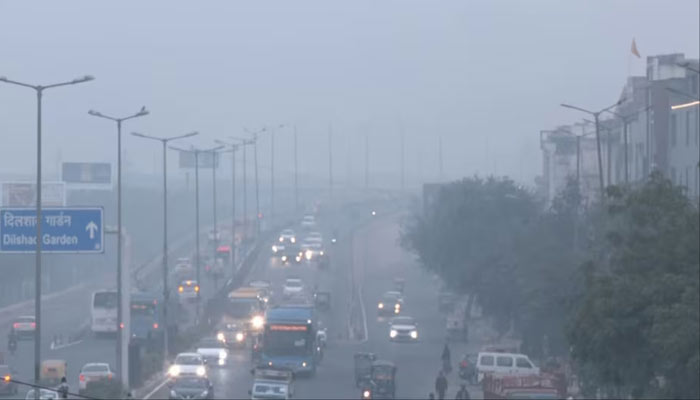
Delhi Continues to Battle Severe Pollution as 22 Monitoring Stations Record AQI Above 400
Delhi’s pollution crisis has shown little improvement, with the national capital continuing to experience ‘Very Poor’ air quality despite the enforcement of Stage-III restrictions under the Graded Response Action Plan (GRAP). The city’s average Air Quality Index (AQI) stood at 366, highlighting the persistent threat posed by rising pollution levels.
The situation was even more alarming in several parts of the capital, where 22 air quality monitoring stations recorded AQI levels above 400, placing them in the ‘Severe’ category.
IIT Delhi emerged as one of the worst-affected locations, recording an AQI of 442. Punjabi Bagh followed with 433, while Vivek Vihar registered 427. Jahangirpuri recorded 421 and Rohini reported 418.
Other areas facing severe pollution included Bawana with an AQI of 411, DTU and Narela at 408 each, and Alipur at 402.
Pollution levels also remained elevated across neighbouring NCR cities. Gurugram recorded an AQI of 355, followed by Faridabad at 347. Noida and Ghaziabad reported readings of 284 and 286, respectively.
GRAP-III RESTRICTIONS TO CURB POLLUTION
With air quality remaining hazardous in several areas, authorities have intensified anti-pollution measures under Stage III of GRAP. The restrictions are intended to control emissions from vehicles, construction activities, industrial units and road dust.
Construction and demolition activities, except those falling under permitted categories, have been prohibited. Restrictions have also been imposed on older BS-III petrol and BS-IV diesel vehicles to reduce vehicular emissions.
Stone crushers and mining operations across the affected region have been ordered to remain closed or suspended under the applicable restrictions.
To tackle dust pollution, authorities have been directed to increase mechanical road sweeping and water sprinkling. Additional restrictions have also been introduced on the movement of non-essential medium and heavy diesel goods vehicles entering Delhi.
Interstate diesel buses that do not meet BS-VI emission standards or operate on cleaner fuels are also subject to restrictions. Non-compliant brick kilns and hot-mix plants have been barred from operating.
SCHOOLS AND CHILDREN’S EXPOSURE UNDER REVIEW
The pollution-control measures also include provisions to reduce children’s exposure to unhealthy outdoor air. Local authorities may consider shifting primary school classes to online learning, depending on the prevailing pollution situation.
The continued deterioration in air quality has raised concerns about the effectiveness of existing measures, particularly as Delhi-NCR approaches the festive period, when pollution levels can rise further.
With the average AQI remaining in the ‘Very Poor’ category and multiple monitoring stations reporting severe readings, the immediate challenge for authorities is to ensure strict implementation of pollution-control measures and prevent further deterioration in the capital’s air quality.
Comments are closed.