

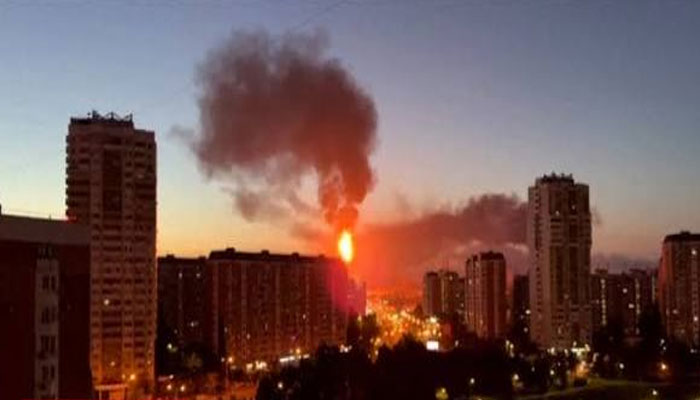
Moscow Drone Attack Disrupts Air Travel, Over 400 Flights Delayed
More than 400 flights were delayed across Moscow’s four main airports on Sunday after authorities temporarily restricted aircraft movements as the Russian capital and surrounding areas came under a large-scale drone attack.
The restrictions affected Sheremetyevo, Vnukovo, Domodedovo and Zhukovsky airports, forcing airlines to alter their schedules. Several flights were delayed or cancelled, while some aircraft were diverted to other airports.
Although the restrictions were subsequently lifted, the airports continued to operate under revised schedules as airlines worked to clear the backlog.
Sheremetyevo Faces Major Disruptions
Sheremetyevo experienced some of the heaviest disruption. According to figures from its online flight board cited by RBC, 121 incoming flights and 126 departures were delayed.
Around 35 flights were cancelled, while several aircraft scheduled to land at Sheremetyevo were diverted to airports in Nizhny Novgorod, Kazan, Cheboksary and St Petersburg.
The airport later said flight operations had resumed, but arrivals and departures were being handled according to an adjusted schedule.
Vnukovo, Domodedovo Also Hit
Vnukovo reported delays involving 69 arriving flights and 60 departing flights. Eleven flights were cancelled, while more than 10 aircraft bound for the airport were redirected to alternative airfields during the restrictions.
At Domodedovo, 27 arriving flights were delayed and one was cancelled.
Zhukovsky reported four delayed arrivals and three delayed departures, along with two cancellations.
Airlines including Aeroflot and Pobeda changed their schedules in response to the restrictions and advised passengers to check their flight status before travelling.
Restrictions Later Removed
Russia’s aviation authorities later lifted the temporary restrictions at all four Moscow airports.
Vnukovo, Domodedovo, Zhukovsky and Sheremetyevo subsequently resumed normal aircraft arrivals and departures, although the earlier disruption continued to affect schedules.
The restrictions had been introduced as a precaution while Russian authorities dealt with the drone threat over Moscow and the surrounding region.
Moscow Reports Large-Scale Drone Attack
The disruption to air travel came amid what Moscow Mayor Sergei Sobyanin described as the most extensive drone attack on the Russian capital.
Sobyanin said Russian air-defence systems had intercepted more than 1,600 drones across defensive lines since Saturday, including around 450 that were heading towards Moscow.
Authorities said several drones reached the capital and reported damage to an oil refinery and an apartment building.
The wider Moscow region also reported casualties and damage to residential structures. Reuters reported that three people had been killed in the region and that an oil refinery in Moscow was damaged.
Russian authorities attributed the attack to Ukraine. Ukraine had not publicly commented on the allegations at the time of the Reuters report.
The temporary airspace restrictions triggered widespread disruption across Moscow’s aviation network. Even after the measures were lifted, airlines faced the task of managing delayed, cancelled and diverted flights and clearing the resulting backlog.
Comments are closed.