

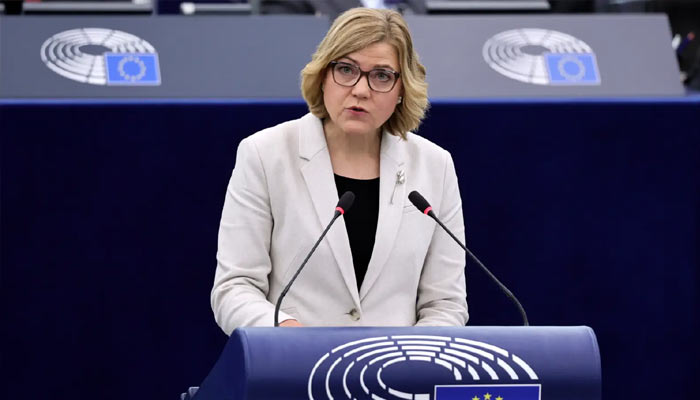
EU Tech Chief Warns Against Overreliance on US Firms, Pushes for Digital Sovereignty
Europe must reduce its dependence on foreign technology providers, particularly American companies, in critical sectors such as artificial intelligence, cybersecurity and defence, European Union technology chief Henna Virkkunen has said.
Speaking at Web Summit Rio in Brazil on Thursday, Virkkunen warned that Europe’s heavy reliance on technologies developed outside the continent poses strategic risks and highlighted the need to strengthen the EU’s own technological capabilities.
“The current situation is that around 80 per cent of our technologies come from outside Europe,” she said while addressing journalists on the sidelines of the event. “We do not want to be dependent only on third countries or only on US companies when it comes to critical technologies.”
Europe Pushes for Digital Independence
Virkkunen stressed that the European Union’s efforts to achieve greater technological self-reliance should not be interpreted as a move towards protectionism or isolation.
Instead, she said, the bloc is seeking to ensure that it possesses the capacity to develop and maintain key technologies independently, particularly as artificial intelligence becomes increasingly central to economic growth and national security.
According to Virkkunen, the EU is investing in building AI systems that reflect European languages, culture and values, while also supporting research, innovation and skills development across member states.
The comments come shortly after the European Union unveiled a new strategy aimed at reducing its dependence on technology providers from the United States and Asia, a growing concern among policymakers amid intensifying global competition in advanced technologies.
EU and Brazil Deepen Digital Ties
During her visit to Brazil, Virkkunen also announced that the South American nation will become the European Union’s fifth official digital partner.
Brazil joins Japan, Canada, Singapore and South Korea in a network of countries with which the EU is seeking closer cooperation on emerging technologies and digital governance.
As part of the partnership, Brussels and the government of President Luiz Inacio Lula da Silva are expected to sign an agreement to strengthen collaboration in areas including artificial intelligence, data governance, digital infrastructure, connectivity and online platforms.
Growing Opportunities
Virkkunen described Brazil as an increasingly important player in the global technology landscape, pointing to the country’s large digital economy and rapidly expanding internet user base.
With roughly 160 million internet users and one of the world’s largest technology markets, Brazil presents significant opportunities for cooperation and investment, she said.
The partnership reflects the EU’s broader strategy of diversifying its technological relationships while building stronger domestic capabilities, as governments around the world increasingly view digital infrastructure and artificial intelligence as strategic assets.
As competition for technological leadership intensifies, European policymakers are placing greater emphasis on what they describe as “digital sovereignty”—the ability to develop, control and secure critical technologies without excessive dependence on external providers.
Comments are closed.