

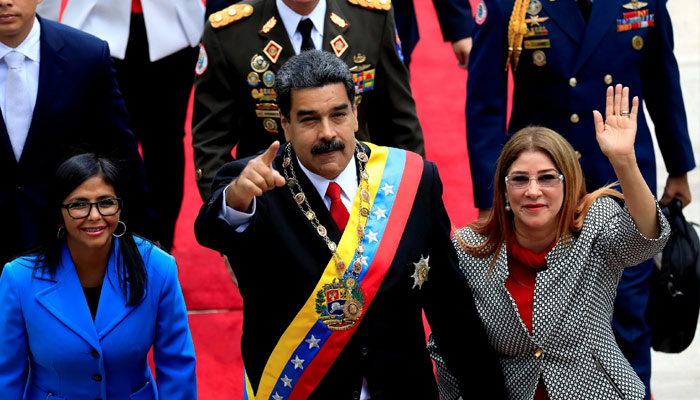
European governments have grown increasingly uneasy over a recent U.S. military campaign targeting alleged Venezuelan drug traffickers.
As well as former President Donald Trump’s refusal to rule out a ground operation against Nicolás Maduro. According to officials cited by AFP, the concerns are serious enough that France, the Netherlands, and the United Kingdom have begun restricting intelligence shared with Washington related to the Caribbean, fearing it could be used to justify actions deemed illegal under their national laws.
The three countries maintain strategically sensitive territories near Venezuela. The UK continues to hold several small overseas territories in the Caribbean, while France administers Martinique, Guadeloupe, and French Guiana as integral parts of the republic. The Netherlands is most exposed geographically: Aruba, Bonaire, and Curacao—collectively known as the ABC islands—sit just 50 kilometres off Venezuela’s coast.
Tensions have intensified as Venezuela accuses the U.S. of pursuing regime change in Caracas, pointing to Washington’s recent deployment of an aircraft carrier group, warships, and stealth jets. The U.S., in turn, alleges that Maduro leads a “terrorist” drug cartel. Since September, American airstrikes in international waters have killed at least 83 people aboard boats labelled as drug-trafficking vessels, though U.S. authorities have released no supporting evidence.
European officials fear escalation. “The Dutch are concerned about their ABC islands… they would find themselves on the front line,” a French military official told AFP. With limited leverage over Washington’s actions, France, the Netherlands, and the UK have opted to halt certain intelligence flows. Dutch intelligence chief Erik Akerboom said agencies remained wary of “politicization” and potential human rights violations. A senior French police official, Dimitri Zoulas, stated that Europe would not provide operational intelligence that could facilitate a U.S. strike.
While French authorities have not formally confirmed this stance, a regional security source said it is “100 percent clear” that Europeans are withholding intelligence that could trigger military action. In the UK, The Times reported that Attorney General Richard Hermer advised ministers to suspend such cooperation over fears that U.S. forces could conduct targeted killings in the Caribbean. U.S. Secretary of State Marco Rubio dismissed this report as “fake news.”
Intelligence veterans say this kind of selective withholding is not unprecedented. Former MI6 chief Richard Dearlove told AFP that these situations arise when an operation may be lawful in the U.S. but not in Europe. “It doesn’t affect the overall intelligence exchange. It’s a local and specific issue,” he noted.
Despite the tension, European services remain mindful of the broader relationship. The U.S. supplies substantial intelligence to its allies, and officials recognize the need to avoid a deeper diplomatic rift. Moreover, former U.S. military personnel and European security sources acknowledge that America’s operational capabilities in the region are robust enough that the temporary reduction in European input makes little practical difference.
Dearlove emphasized that the disagreement is primarily legal rather than strategic, and should not be interpreted as a shift in the fundamentals of transatlantic intelligence cooperation.
Comments are closed.