
Europe’s Wildfires Explained: How Heatwaves and Climate Change Are Fueling the Crisis

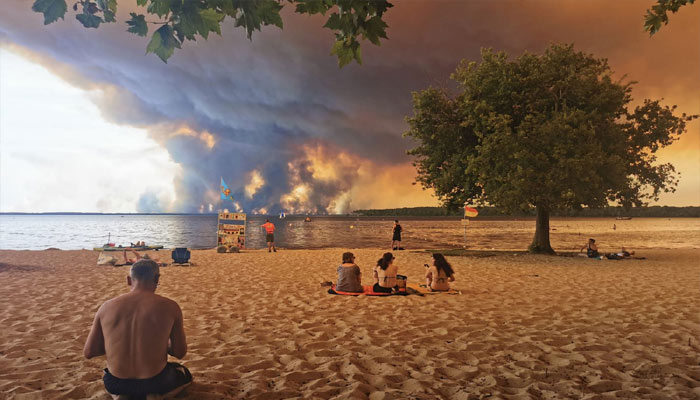
Europe’s Wildfires Explained: How Heatwaves and Climate Change Are Fueling the Crisis
Europe is battling one of its worst wildfire seasons in years, with devastating blazes sweeping across France and Spain, forcing more than 300,000 people to evacuate and leaving behind widespread environmental and economic destruction.
France is experiencing its most severe wildfires in two decades, while Spain has been hit by one of the deadliest fire outbreaks in its recent history. Experts say the fires are being driven by a combination of prolonged heatwaves, drought and increasingly volatile weather patterns linked to climate change.
How Extreme Heat Set the Stage
Weeks of unusually high temperatures dried forests, grasslands and farmland across southern Europe, turning vegetation into highly combustible fuel.
According to Chaitanya Deshpande, a PhD scholar at the Centre for European Studies, Jawaharlal Nehru University, the prolonged heatwave created ideal conditions for the fires to spread rapidly.
“Following the historic heatwave, Europe is now battling intense wildfires that highlight the severe impacts of climate change. Regions that experienced prolonged heat and drought saw vegetation dry out, creating ideal conditions for large-scale fires,” he said.
While the exact cause of ignition remains under investigation, Deshpande noted that the European Union classifies forest fire causes into six categories: unknown, natural, accidental, negligence, deliberate and rekindled fires.
He added that comments from French authorities suggesting action against those responsible for deliberate fires indicate that some recent blazes may not have been caused by natural factors alone.
The Dangerous Rise of ‘Fire Clouds’
One of the most alarming features of the current wildfire season has been the formation of pyrocumulonimbus clouds, often referred to as “fire clouds.”
These towering storm clouds are created by the intense heat generated by large wildfires. They can produce powerful winds, lightning and unpredictable weather, allowing fires to spread rapidly while making firefighting operations significantly more dangerous.
Europe’s Emergency Response
European countries have mobilised extensive firefighting resources under the EU Civil Protection Mechanism, supported by the Copernicus Earth observation programme, which tracks fires using satellite imagery.
The EU has also deployed aircraft and helicopters through its rescEU emergency reserve, allowing member states to share firefighting assets during major disasters.
- Beyond Burned Forests
- The impact of the fires extends well beyond scorched landscapes.
According to Maya Mailer, Co-Director of Our Kids Climate, the wildfires have destroyed homes, farmland and critical ecosystems while exposing millions of people to hazardous air pollution.
“The wildfires tearing across Spain and France are absolutely devastating. They are another stark reminder of climate breakdown, driven primarily by the burning of fossil fuels,” she said.
Wildfire smoke contains fine particulate matter (PM2.5), carbon monoxide and other toxic pollutants that can travel hundreds of kilometres, significantly reducing air quality.
Health experts warn that prolonged exposure can trigger asthma attacks, respiratory illnesses and cardiovascular problems, particularly among children, older adults and people with pre-existing health conditions.
Climate Challenge Meets Policy Dilemma
The crisis has renewed debate over how European governments should balance climate action with economic considerations.
Deshpande said policymakers face a dual challenge: accelerating efforts to reduce greenhouse gas emissions while investing more heavily in climate adaptation and disaster preparedness.
Experts argue that reducing the long-term risk of catastrophic wildfires will require a combination of:
- Faster transition from fossil fuels to renewable energy
- Improved forest management, including controlled burns and vegetation clearance
- Stronger cross-border firefighting coordination
- Greater investment in emergency response infrastructure
- Climate-resilient land-use planning
- A Warning for the Future
Scientists increasingly view Europe’s extreme wildfire seasons as part of a broader pattern of climate-driven weather extremes.
As temperatures continue to rise, longer heatwaves and drier landscapes are expected to increase both the frequency and intensity of wildfires across the continent. Experts say the fires engulfing France and Spain are not isolated disasters but a warning of what could become the new normal unless emissions are reduced and communities become more resilient to a warming climate.
Comments are closed.