
Ex-IMF Director Challenges Pakistan’s ‘Historic Milestone’ Claim Over IMF-World Bank Chairmanship

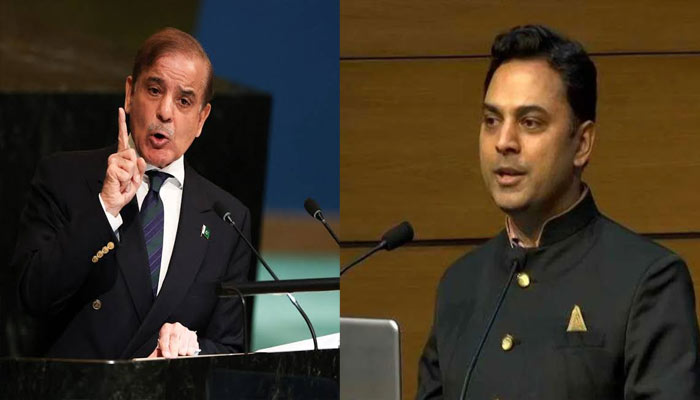
Former IMF Executive Director Challenges Pakistan’s ‘Historic Milestone’ Claim Over IMF-World Bank Chairmanship
Former International Monetary Fund (IMF) executive director Krishnamurthy V Subramanian has challenged Pakistan’s description of its upcoming chairmanship of the IMF and World Bank Boards of Governors as a “historic milestone”, arguing that the position is largely ceremonial and does not confer significant decision-making power.
In a post on X, Subramanian said Pakistan’s role in chairing the 2027 IMF-World Bank Annual Meetings should be viewed as a protocol-based responsibility rather than a return to global financial leadership.
“Claim: ‘Pakistan is heading back to the top table of global finance after 74 years!’ Reality: Pakistan will chair the IMF-World Bank Annual Plenary in 2027. This chair is purely ceremonial and rotates annually,” he wrote, citing Paraguay and Cabo Verde as examples of countries associated with the rotating arrangement.
Pakistan Calls Appointment a Historic Achievement
Pakistan has been named chair of the Boards of Governors of the IMF and the World Bank Group for 2027, marking its return to the position for the first time since 1953.
According to a statement from Islamabad, Pakistan’s Minister for Economic Affairs Ahad Khan Cheema, who also serves as the country’s governor to the World Bank, will assume the role.
Pakistan’s Ministry of Economic Affairs described the appointment as a “historic milestone”, stating that it would give the country an opportunity to participate in global economic and development discussions and encourage constructive dialogue among member nations.
Subramanian, however, argued that chairing the annual meetings should not be equated with exercising substantial influence over the institutions’ policies or decisions.
Subramanian Draws Comparison With India’s G20 and BRICS Presidencies
In a separate post, Subramanian rejected comparisons between Pakistan’s rotating chairmanship and India’s presidencies of the G20 and BRICS groupings.
He said India’s G20 presidency involved setting the agenda for a major international forum on economic cooperation, while its BRICS presidency helped advance discussions among emerging economies.
Pakistan’s role, by contrast, would primarily involve presiding over an annual meeting, he argued.
The distinction centres on the scope of the responsibilities involved: rotating chairmanship of the IMF-World Bank Boards of Governors is different from leading broader international groupings whose presidencies can shape agendas and priorities.
Pakistan Continues to Rely on IMF Financial Assistance
Pakistan’s appointment comes as the country remains engaged with the IMF through two financing programmes.
The country is operating under a USD 7-billion Extended Fund Facility (EFF), which is intended to address balance-of-payments pressures and support economic reforms. It is also covered by a USD 1.4-billion Resilience and Sustainability Facility (RSF), which provides longer-term financing to help address climate-related risks and strengthen economic resilience.
Pakistan is also expected to receive approximately USD 1.2 billion from the IMF, subject to approval by the fund’s Executive Board. The anticipated disbursement follows an agreement between IMF staff and Pakistani authorities on the latest reviews of the two programmes.
The developments highlight the contrast between Pakistan’s upcoming ceremonial role at the IMF-World Bank annual meetings and its continued reliance on international financial assistance to support economic stability and reform.
Comments are closed.