
Trump’s Approval Rating Falls to 33–36%, Lowest of His Second Term Ahead of November 3 US Elections

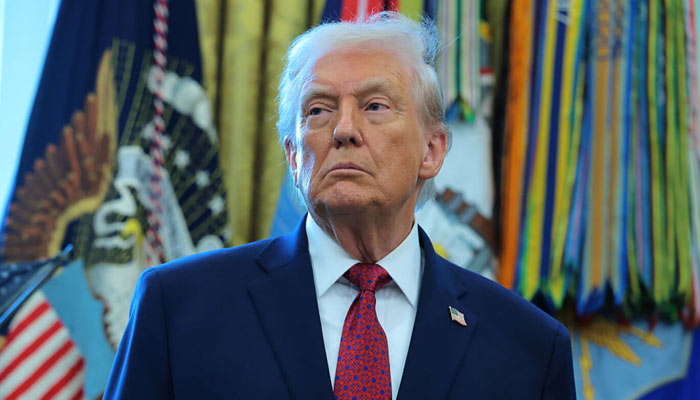
Trump’s Approval Rating Hits Second-Term Low as Economic Concerns Mount Ahead of US Midterms
US President Donald Trump’s approval rating has fallen to between 33 per cent and 36 per cent across multiple national polls, marking the lowest levels of his second term as voters express growing concerns over inflation, the cost of living and his administration’s overall performance ahead of the November 3 midterm elections.
A new NBC News Decision Desk Poll powered by SurveyMonkey placed Trump’s approval rating at 34 per cent among US adults, while 66 per cent disapproved of his performance. The survey also found that 51 per cent of respondents strongly disapproved of his presidency, the highest proportion recorded during his second term in the poll.
A separate Washington Post-ABC News-Ipsos survey, cited by MS NOW, put Trump’s approval rating at 33 per cent, with 66 per cent expressing disapproval. The result represented an eight-percentage-point decline from the same period last year and a four-point drop since July, according to the report.
Meanwhile, a Fox News poll recorded Trump’s approval rating at 36 per cent, its lowest level in the network’s polling across both his presidential terms. His rating had remained at 39 per cent since May before declining in the latest survey.
The findings highlight the challenges facing Republicans as they seek to retain control of Congress in the upcoming midterm elections.
Economic Pressures Weigh on Trump’s Ratings
Economic dissatisfaction emerged as a central theme across the surveys, with household expenses, inflation and financial insecurity weighing on public opinion.
In the NBC News poll, 31 per cent of respondents identified the economy as the most important issue facing the country. When asked about their personal finances, 44 per cent said their situation had deteriorated over the past year, while 18 per cent reported improvement and 38 per cent said there had been little change.
Rising fuel prices were another concern, with 67 per cent describing gasoline prices as a very serious or somewhat serious problem.
The survey also indicated that households were adjusting their spending habits to cope with higher costs. Respondents reported changing grocery purchases, cutting expenditure on essentials, reducing electricity consumption, cancelling or modifying travel plans and postponing major purchases.
The Fox News survey similarly found that six in 10 voters considered the cost of living their biggest economic concern, ahead of government spending, employment, income inequality, tariffs and taxes.
Overall, 74 per cent of respondents rated the economy negatively, while 53 per cent expected economic conditions to deteriorate over the following year. Additionally, 55 per cent said inflation was not at all under control.
Trump received an approval rating of just 22 per cent for his handling of inflation in the Fox News poll, while 77 per cent disapproved. His economic performance also drew criticism, with 70 per cent expressing disapproval of his handling of the economy.
Immigration and Border Security Retain Relative Support
Despite declining overall approval, immigration and border security remained comparatively stronger areas for Trump, although the polls showed differing levels of public support for his policies.
The NBC News survey found that 43 per cent of respondents approved of his handling of immigration and border security. His approval ratings were lower on other issues, including the cost of living at 27 per cent, the war with Iran at 29 per cent and artificial intelligence at 33 per cent.
The Fox News poll placed approval of Trump’s border security policies at 50 per cent, with an equal proportion disapproving. On immigration more broadly, 56 per cent disapproved of his performance.
His handling of other policy areas also attracted substantial criticism. In the Fox News survey, 64 per cent disapproved of his foreign policy performance, while 69 per cent disapproved of his handling of tariffs.
Democrats Lead in Congressional Voting Preferences
The polls also showed Democrats leading Republicans in voter preferences for control of Congress, suggesting that economic concerns and dissatisfaction with the administration could shape the midterm campaign.
According to the NBC News Decision Desk Poll, registered voters favoured Democratic control of Congress by 55 per cent to 45 per cent.
The Washington Post-ABC News-Ipsos survey, reported by MS NOW, found that 52 per cent of likely voters intended to support a Democratic candidate in their congressional district, compared with 44 per cent who preferred a Republican candidate. The Democratic advantage had widened by five percentage points since July, the report said.
The Fox News poll also showed Democrats ahead, with 54 per cent of voters supporting Democratic candidates and 45 per cent favouring Republicans. Among respondents certain to vote, the gap narrowed to 52 per cent for Democrats and 46 per cent for Republicans.
The survey further found that approximately seven in 10 voters wanted their midterm ballot to send a message to Trump. Nearly twice as many respondents said their vote would express opposition to the president as said it would demonstrate support: 47 per cent compared with 25 per cent.
Republican pollster Daron Shaw, who conducts the Fox News survey alongside Democratic pollster Chris Anderson, said Republicans still had an opportunity to improve their position but warned that the available time was diminishing.
“Republicans have time to close these apparent gaps, but it’s getting late,” Shaw said.
Both Political Parties Face Unfavourable Public Opinion
Although Democrats held an advantage in congressional voting preferences, the surveys indicated that neither party enjoyed widespread public favourability.
The NBC News poll found that 43 per cent of respondents viewed the Democratic Party favourably, while 57 per cent held an unfavourable opinion. For Republicans, the corresponding figures were 37 per cent favourable and 63 per cent unfavourable.
The Fox News survey recorded similar results. Democrats received a favourable rating from 42 per cent of respondents and an unfavourable rating from 58 per cent. Republicans were viewed favourably by 38 per cent and unfavourably by 61 per cent.
Concerns about political corruption also featured prominently. In the NBC News poll, 52 per cent of respondents considered Trump’s administration more corrupt than previous administrations. Around one-quarter viewed it as less corrupt, while another quarter said it was about as corrupt as its predecessors.
However, criticism of corruption extended beyond one party. Some 56 per cent said corruption was equally serious in both parties, while 25 per cent viewed it as a bigger problem within the Republican Party and 17 per cent identified Democrats.
The survey also found that 58 per cent believed Trump’s policies were harming the country. By comparison, 28 per cent said his policies were helping the country, while 14 per cent believed they were making no difference.
Trump’s Approval Among Republicans Also Declines
Trump continued to receive substantial backing from Republican voters, but the latest surveys suggested that his support within his own party had weakened compared with earlier stages of his second term.
The NBC News poll recorded his approval rating among Republican adults at 76 per cent, while support among independents stood at 21 per cent. His approval rating was 28 per cent among men under 30 and 31 per cent among Latino respondents.
The Fox News survey also placed his approval among Republicans at 76 per cent. That marked a three-point decline from the previous month, a 12-point drop from September 2025 and a 16-point fall from March 2025, early in his second term.
According to Fox News, the latest decline was driven largely by reduced support among voters younger than 45, households earning less than $50,000 annually, non-White voters and people without a college degree.
The NBC News survey also examined public expectations surrounding Trump’s promise of $5,000 payments if Republicans won the 2026 midterm elections.
Only 14 per cent of respondents said they definitely or probably expected to receive such a payment, while 71 per cent said they definitely or probably did not expect to receive it. Even among self-identified Republicans, 47 per cent did not expect the payment, compared with 28 per cent who did.
With the November 3 elections approaching, the polls point to mounting public concerns over economic conditions and the administration’s performance. However, the surveys represent voter sentiment at the time they were conducted and do not, by themselves, determine the eventual election results.
Comments are closed.