

6 Climate Shocks That Hit India Hard This Year.
India is no stranger to the mounting impacts of climate change. From record-breaking heatwaves to snowless winters, and from devastating floods to rising air pollution, the country is increasingly bearing the brunt of a warming planet. In 2025, six major climate events underscored the urgency for adaptation, resilience, and decisive climate action.
1. A Snowless Winter in Kashmir
The year began with a startling absence of snow in Gulmarg, Kashmir’s famed winter wonderland. Tourists stayed away, but the consequences ran deeper than just lost revenue.
Climate scientists point to warming trends and erratic precipitation patterns as the culprits. Beyond tourism, the snow drought poses serious threats to agriculture and water security. Snowmelt is a vital source of freshwater for the region’s rivers — its absence means drier fields and heightened risk of wildfires.
2. Himachal Pradesh’s Monsoon Disaster
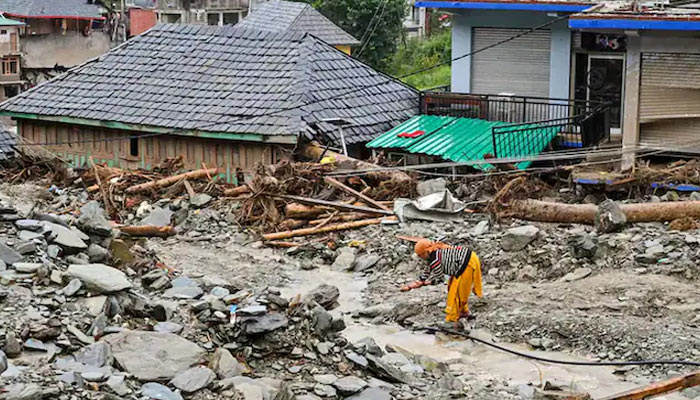
Himachal Pradesh experienced one of its deadliest monsoons in recent memory. Flash floods, cloudbursts, and landslides claimed 109 lives, according to the State Disaster Management Authority. Infrastructure, homes, and farmland were left devastated, with losses crossing ₹883 crore. Livestock deaths added to the economic toll — over 1,200 cattle and 21,500 poultry perished.
With the state’s steep terrain and fragile ecology, experts say unchecked construction and poor planning continue to worsen the impacts of extreme rainfall.
3. Northeast India Overwhelmed by Floods and Landslides
Assam, Arunachal Pradesh, Meghalaya, Tripura, Manipur, and Sikkim witnessed widespread destruction this year, affecting more than 500,000 people. Over 800 landslides were reported — with Mizoram alone accounting for more than half.
Though annual flooding is common in the Northeast, this year’s scale served as a grim reminder of how vulnerable the region remains. Rapid urbanisation, deforestation, and infrastructure development in ecologically sensitive zones are amplifying the risks.
4. Heatwaves Intensify Amid El Niño–La Niña Extremes
India’s rainfall and temperature patterns are growing more erratic under the influence of stronger El Niño and La Niña cycles — both intensified by climate change.
This year, states including Gujarat, Rajasthan, Tamil Nadu, Odisha, and Uttar Pradesh faced a double blow: extreme heat and erratic rainfall. More than 80% of Indian districts could face these dual risks by 2030, according to projections.
Cities are especially at risk. New data shows Mumbai, Delhi, Chennai, Hyderabad, and other metros are likely to see a twofold increase in the number of heatwave days — compounding stress on public health and infrastructure.
5. Heat Stress Reaches Critical Levels
The 2025 summer began in February and refused to let go. Several Indian cities recorded prolonged spells of high heat and humidity, pushing health systems to the brink.
According to a joint study by IPE Global and Esri India, nearly 72% of tier-I and tier-II cities are expected to see a sharp rise in heat stress and extreme weather, including lightning, hailstorms, and storm surges. Cities like Patna, Bhubaneswar, and Surat now routinely clock dangerous “wet bulb” temperatures — a measure of heat plus humidity that can prove fatal.
6. Pollution: India Still Among the World’s Worst
Despite modest improvements, air pollution remains one of India’s most persistent climate-linked threats. According to IQAir’s 2024 World Air Quality Report, India is the fifth most polluted country, and Delhi retains its place as the world’s most polluted capital.
Six of the ten most polluted cities on the planet are in India, with average PM2.5 levels in 2024 still alarmingly high at 50.6 µg/m³ — far above the WHO’s safe threshold of 5 µg/m³. While there was a 7% reduction in particulate matter compared to the previous year, experts say much more is needed in terms of clean energy, transportation reform, and emission controls.
The Bigger Picture
From shrinking winters to lengthening summers, from toxic air to flood-ravaged hillsides, India’s climate reality is no longer tomorrow’s threat — it’s today’s crisis. These six shocks are only symptoms of a deeper, accelerating shift. Without urgent mitigation and adaptation, the cost — in lives, livelihoods, and ecosystems — will keep climbing.
Comments are closed.