

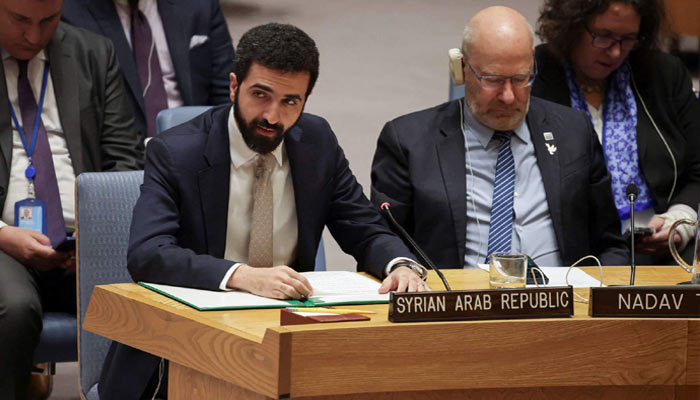
Syria Envoy Blames Israel for Instability as UN Reviews Fragile Political Transition
Syria’s representative to the United Nations has accused Israel of being the primary obstacle to stability in the country, as the UN Security Council reviewed the progress and challenges facing Syria’s post-war political transition.
Addressing the council, Syria’s permanent representative, Ibrahim Olabi, welcomed recent diplomatic efforts aimed at reducing regional tensions but criticized Israel’s continued military presence in Syrian territory. He argued that such actions undermine stability at a time when Syria is attempting to rebuild through dialogue and political reconciliation.
Olabi’s remarks came amid broader discussions on the country’s transition following the fall of the Assad government in late 2024. He said Syria’s new leadership remains committed to uncovering the truth about thousands of people who disappeared during the civil war and advancing a process of transitional justice.
UN Sees Progress Alongside Persistent Risks
Briefing the Security Council, UN Deputy Special Envoy for Syria Claudio Cordone described the transition as being at a critical juncture, with encouraging developments accompanied by significant vulnerabilities.
He noted that Syrian authorities have shown restraint despite ongoing tensions in the south and reiterated UN calls for respect for Syrian sovereignty and existing international agreements. Cordone also highlighted delays in establishing key political institutions, warning that prolonged uncertainty could undermine public confidence in the transition process.
The envoy stressed the importance of inclusive governance and meaningful representation of all communities, particularly women and minority groups, as Syria seeks to build new political structures.
Transitional Justice and Security Challenges
Syria’s representatives outlined several areas where they say progress has been made, including legal proceedings against former regime officials, measures aimed at resolving citizenship issues affecting Kurdish communities, economic partnerships, refugee returns and counterterrorism operations.
Officials also reiterated their commitment to investigating civil war-era crimes and determining the fate of missing persons. The issue remains deeply sensitive for many Syrians, with families continuing to seek answers about relatives who disappeared during years of conflict.
At the same time, UN officials cautioned that accountability efforts must be comprehensive and apply to all perpetrators of serious violations, regardless of affiliation.
Humanitarian Situation Remains Fragile
Despite signs of recovery, humanitarian needs across Syria remain substantial. UN officials reported that millions continue to require assistance, while funding shortages threaten relief operations.
The humanitarian response plan for Syria remains significantly underfunded, prompting renewed appeals for international support. Recent flooding, displacement concerns and ongoing disruptions in several regions have further complicated recovery efforts.
Nevertheless, UN officials pointed to the return of large numbers of refugees and internally displaced people as a positive sign that conditions in parts of the country are gradually improving.
A Delicate Phase Ahead
The Security Council session highlighted both the opportunities and challenges facing Syria as it navigates a complex transition. While political reforms, security cooperation and refugee returns offer reasons for optimism, unresolved regional tensions, institutional delays and humanitarian pressures continue to test the country’s fragile recovery.
With the transition entering a crucial phase, UN officials emphasized that sustained international engagement and support will be essential to ensuring long-term stability and preventing a return to conflict.
Comments are closed.