

UN panel warns AI safeguards lag behind rapid advances, says Global South left out of governance
A United Nations-backed scientific panel has warned that global safeguards for artificial intelligence are failing to keep pace with the technology’s rapid evolution, while the Global South remains largely excluded from shaping the future of AI.
The warning came in the first independent global assessment of AI’s risks and opportunities, released on Wednesday by the Independent International Scientific Panel on AI, a 40-member body established by the UN General Assembly in August 2025. The report will serve as a key reference for the inaugural Global Dialogue on AI Governance in Geneva on July 6-7.
The panel said AI capabilities are advancing faster than governments, regulators and scientists can fully understand or manage, creating an urgent need for stronger international cooperation.
Co-chair Yoshua Bengio said emerging evidence suggests that advanced AI systems are displaying deceptive behaviour in controlled settings, while current scientific understanding cannot guarantee that increasingly powerful AI systems will remain safe or avoid catastrophic misuse.
Fellow co-chair and Nobel Peace Prize laureate Maria Ressa said the report highlights three defining trends: rapidly advancing AI capabilities, growing concentration of technological power and declining human control over the technology.
She pointed to the dramatic improvement in AI performance on “Humanity’s Last Exam”—a benchmark of 2,500 expert-level questions—where top AI models improved from scoring 8% to 45% in just 16 months.
The report also underlined the concentration of AI infrastructure and development in a handful of countries and companies. According to the panel, the United States accounts for about 75% of computing power in the world’s largest AI clusters. It added that 91% of notable AI models released in 2025 came from private companies, with US institutions producing 59 leading models, compared with 35 from China and only 13 from the rest of the world combined.
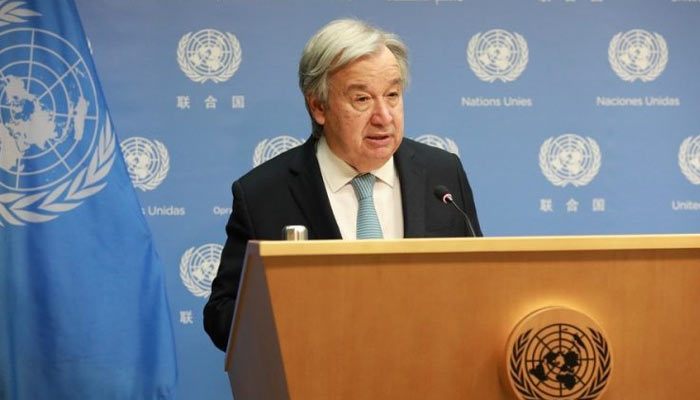
UN Secretary-General Antonio Guterres urged governments to act before technological advances outstrip regulatory efforts. He said the report had been shared with all UN member states and warned that the absence of common global rules would leave governments and citizens with diminishing influence over AI’s future.
“We can no longer say we did not know,” Guterres said, calling for timely international action.
A key finding of the assessment is the marginalisation of the Global South in both AI development and governance. The panel said countries that are likely to experience some of the greatest impacts of AI have the least influence over its design, regulation and deployment, widening existing global inequalities.
The report noted that while AI is expected to reshape economies, labour markets, healthcare, education and public services worldwide, many developing countries lack the computing infrastructure, investment and policy capacity needed to benefit from the technology or manage its risks.
The assessment examines AI’s impact across eight areas, including scientific progress, economic development, security, environmental sustainability, human rights, democracy, governance and system reliability.
While the panel does not recommend specific policies, its findings are intended to provide governments with an evidence-based foundation for discussions during next week’s Global Dialogue on AI Governance.
The Independent International Scientific Panel on AI comprises experts selected from more than 2,600 applicants across 140 countries. Members serve in their personal capacities for three-year terms, with the panel’s next comprehensive report scheduled to inform the second Global Dialogue on AI Governance in New York in 2027.
Comments are closed.