
Himalayan Glacier Research At Risk As Key Facilities Face Closure Amid Rising Climate Threat

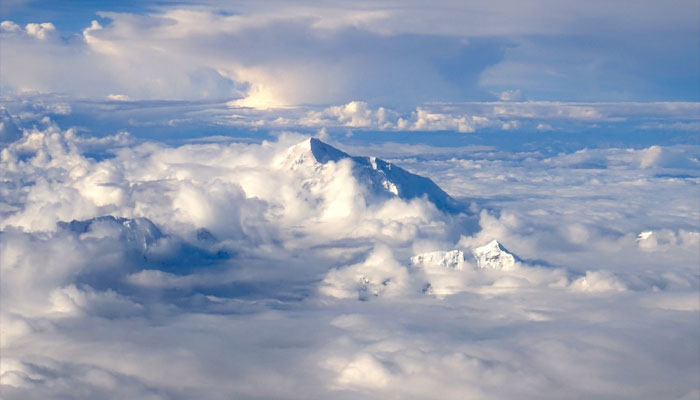
Himalayan Risks Are Rising, But India’s Glacier Research Capacity Is Shrinking
The Himalayas are undergoing rapid environmental change. Glaciers are retreating, glacial lakes are expanding, snowfall patterns are shifting and extreme mountain disasters are becoming increasingly dangerous. Yet, at precisely this moment, India has reduced the institutional focus on specialised glacier and avalanche research.
India’s only dedicated Centre for Glaciology in Dehradun was shut down in 2020, while the Defence Research and Development Organisation (DRDO) merged the country’s specialised Snow and Avalanche Study Establishment (SASE) in Manali with another laboratory, creating a broader geospatial research organisation.
The moves have triggered concerns among scientists who argue that India should be strengthening, rather than weakening, its specialised capacity to understand the Himalayan cryosphere.
“The glacier and cryosphere research is the crying need of the hour, but it seems nobody cares,” said Dr Anil Kulkarni, a glaciologist and former ISRO scientist associated with the Indian Institute of Science, Bengaluru.
Why The Himalayas Matter
Often described as the “Third Pole”, the Himalayas contain the largest concentration of snow and ice on Earth outside the Arctic and Antarctica. The mountain system stretches across several countries and feeds some of Asia’s major rivers, providing freshwater to hundreds of millions of people.
But the same frozen landscape is increasingly being transformed by climate change.
Rising temperatures, changing precipitation patterns, accelerated glacier melt and expanding glacial lakes are altering the stability of the high mountains. The consequences can extend far beyond the glaciers themselves, threatening downstream communities, roads, hydropower projects and other critical infrastructure.
The scale of the challenge is enormous.
According to the Geological Survey of India, around 9,500 glaciers are spread across the Indian Himalayan region, including Jammu and Kashmir, Ladakh, Himachal Pradesh, Uttarakhand, Sikkim and Arunachal Pradesh.
ISRO Data Shows Rapid Expansion Of Glacial Lakes
Satellite observations have provided a clearer picture of how quickly the Himalayan cryosphere is changing.
An ISRO analysis released in April 2024 examined 2,431 glacial lakes larger than 10 hectares identified during 2016-17 using four decades of satellite observations. The study found that 676 of these lakes had expanded significantly since 1984.
India accounts for 130 of those expanding lakes.
They include 65 in the Indus basin, seven in the Ganga basin and 58 in the Brahmaputra basin.
The extent of the expansion is particularly concerning. ISRO found that 601 of the 676 lakes had more than doubled in size over the four-decade period. Another 10 expanded by between 1.5 and two times, while 65 grew by around 1.5 times.
Many are located at extreme elevations. As many as 314 expanding lakes are situated between 4,000 and 5,000 metres above sea level, while another 296 are located above 5,000 metres.
These expanding water bodies are not simply indicators of climate change. Under the right conditions, they can become major disaster risks.
The Growing Threat Of GLOFs
One of the biggest concerns is a Glacial Lake Outburst Flood, or GLOF.
These floods occur when natural barriers containing glacial lakes, often made up of ice or loose moraine, suddenly fail. Huge quantities of water can then rush downstream within a short period.
Avalanches, landslides, earthquakes and intense rainfall can contribute to such failures.
Recent disasters have demonstrated the consequences.
The February 2021 Chamoli disaster in Uttarakhand, the October 2023 South Lhonak Lake GLOF in Sikkim and the latest devastating glacier-related disaster in Nepal have all highlighted the growing vulnerability of Himalayan communities.
The recent Nepal tragedy, in which an enormous mass of ice, rock and debris triggered catastrophic flooding and killed nearly 1,400 people, has once again focused attention on the dangers emerging from a rapidly changing high-altitude environment.
Scientists caution that such events should not be viewed in isolation. They are part of a wider transformation occurring across the Himalayan region.
Snowfall Is Giving Way To Rain At Higher Altitudes
Dr DP Dobhal, a veteran glaciologist and former scientist at the Wadia Institute of Himalayan Geology in Dehradun, has spent decades studying Himalayan glaciers.
He says changes in precipitation patterns are among the clearest signs of climate change in the region.
Areas that historically received snowfall are increasingly experiencing rainfall, while the snow line is moving upward. More intense rainfall events are also being observed.
These changes can accelerate glacier melting while simultaneously affecting the stability of mountain slopes and glacial lakes.
“Nowadays due to climate change, the glaciers are shrinking. There is a change in precipitation pattern,” Dobhal told NDTV, noting that rain is increasingly being recorded at elevations where snowfall was previously more common.
India Once Had A Dedicated Centre For Glaciology
Against this backdrop, questions are being raised about the weakening of specialised research institutions.
The Centre for Glaciology was established in 2009 under the Department of Science and Technology, with the Wadia Institute of Himalayan Geology serving as its nodal agency.
The objective was to create a coordinated national framework for glacier research and eventually develop a dedicated national institute focused on glaciology.
The initiative addressed a longstanding gap in India’s scientific infrastructure. Despite the importance of Himalayan glaciers for water security, disaster preparedness and climate research, the country did not have a dedicated apex institution focused exclusively on glaciology.
The centre helped generate baseline datasets, establish benchmark glaciers for long-term monitoring and train researchers.
According to Dobhal, more than 20 people were trained through the programme, with around 10 researchers earning doctoral degrees. Scientific equipment was installed in difficult mountain environments, while long-term monitoring programmes were initiated.
There were also plans for a national institute on glaciology in Mussoorie, specialised laboratories and greater collaboration with international experts.
- Centre Shut Down In 2020
- Those plans changed in 2020.
The Centre for Glaciology was closed and its activities were merged into the Wadia Institute of Himalayan Geology.
Dobhal recalled receiving a letter in June 2020 informing researchers that the project had been closed and its infrastructure incorporated into the mainstream activities of the Wadia Institute.
“We just received a letter in June 2020. The project is closed and the infrastructure, the whole thing is merged into the mainstream of the Wadia Institute work,” he recalled.
Asked whether he missed the dedicated centre, Dobhal responded: “Of course. This is a big shock for me.”
The issue has gained further significance because Dr Umesh Waghmare, the new Secretary of the Department of Science and Technology, told NDTV that there are currently no plans to establish another dedicated research centre on glaciers.
SASE Merger Changed The Avalanche Research Landscape
Glacier research is not the only area where India’s specialised Himalayan institutions have undergone restructuring.
The Snow and Avalanche Study Establishment, or SASE, was established in Manali in 1969 to conduct research into snow, avalanches and other high-altitude hazards.
Its work has had major implications for the armed forces operating in some of the world’s most difficult terrain, including the Siachen region.
In November 2020, the DRDO merged SASE with the Defence Terrain Research Laboratory. The two organisations were brought together under the Defence Geoinformatics Research Establishment, headquartered in Chandigarh.
Avalanche and terrain research continues under the new organisation. However, critics argue that the merger means India no longer has a standalone apex institution exclusively dedicated to avalanche research.
The concern is particularly significant in a region where avalanches, snow-related injuries and extreme cold remain major risks for personnel operating at very high altitudes.
Scientists Want A National Himalayan Research Centre
For scientists such as Dobhal, the answer is not to reduce specialised capacity but to expand it.
“Of course, there should be a national centre,” he said. “The whole area is very critical.”
He argues that the complexity of the Himalayan environment requires an interdisciplinary approach involving climatology, geology, geophysics, hydrology, chemistry, remote sensing and social sciences.
“Glacial science is the combination of all the sciences,” Dobhal said.
Such an approach could also improve disaster forecasting and preparedness by bringing together satellite observations, field measurements, climate data and hazard modelling.
Himalayan Countries Need Greater Scientific Cooperation
The challenges are not confined by national borders.
The Himalayas stretch across multiple countries, while rivers originating in the region flow across political boundaries. Changes in glaciers, precipitation and mountain stability can therefore have consequences far beyond the location where they begin.
Dobhal has called for stronger scientific cooperation between India, Nepal, Bhutan, China and other Himalayan nations, including greater data sharing and joint research.
The recent Nepal disaster has underlined the importance of such cooperation.
What happens at high altitude can quickly become a downstream emergency. A glacier collapse, avalanche or glacial lake failure can send water, rock and debris through valleys and settlements many kilometres away.
The Third Pole Is Changing
The Himalayas are simultaneously a vital source of freshwater and an increasingly fragile climate system.
Satellite observations are showing expanding glacial lakes. Field studies are documenting shrinking glaciers and changing precipitation. Recent disasters have demonstrated how quickly high-altitude hazards can become large-scale humanitarian crises.
Against this backdrop, the reduction of dedicated institutional capacity raises an uncomfortable question: should India be consolidating specialised glacier and avalanche research at precisely the moment when the Himalayan risks are becoming more complex?
The need is not simply for more data. India needs long-term monitoring, specialised researchers, advanced modelling, international collaboration and institutions capable of bringing different branches of Himalayan science together.
The “Third Pole” is changing before the world’s eyes.
The bigger question is whether India’s scientific infrastructure is changing fast enough to understand those changes — and whether it will be ready before the next major Himalayan disaster strikes.
Comments are closed.