
‘I Don’t Want to Exist Right Now’: Sabalenka’s Emotional Outburst After French Open Exit

‘I Want to Quit Tennis Right Now’: Sabalenka’s Pain Laid Bare After French Open Collapse
The chair arrived before the words did.
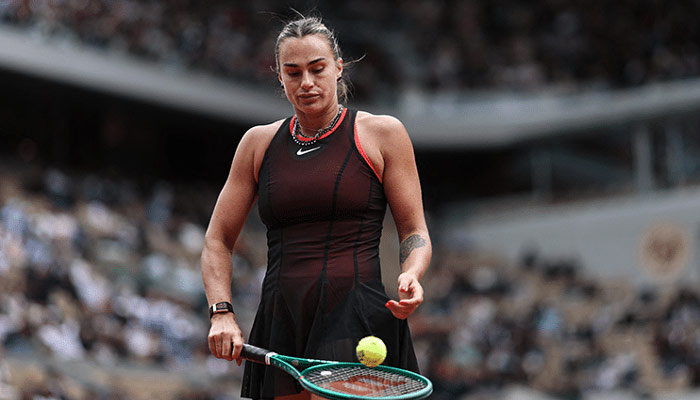
Aryna Sabalenka sat down in the press room at Roland Garros, her expression telling much of the story before a single question had been asked. Minutes earlier, the world No. 1 had watched a commanding position unravel in stunning fashion, surrendering 10 consecutive games in a shocking quarterfinal defeat to Diana Shnaider.
For Sabalenka, another French Open opportunity had slipped away. This one hurt more than most.
“I want to quit tennis right now,” she admitted. “We’ll see in a few days. Hopefully I can get back on track mentally.”
The honesty was striking even by Sabalenka’s standards. Throughout her career, she has rarely hidden her emotions, but this felt different. There was frustration, exhaustion and, above all, disbelief at how quickly the match had escaped her.
The Belarusian appeared to be cruising toward the semifinals after taking the opening set and moving 5-2 ahead in the second. With the draw opened up following several high-profile exits, including that of defending champion Iga Swiatek, the tournament seemed to be moving in Sabalenka’s favor.
Instead, everything changed.
Shnaider, competing in her first Grand Slam quarterfinal, refused to panic. Sabalenka, meanwhile, spiraled. Errors mounted, confidence evaporated and the momentum shifted entirely. By the end of the match, the top seed had committed 57 unforced errors and suffered one of the most dramatic collapses of her career.
“I guess mentally I got into a very deep, deep dark hole out there,” Sabalenka said. “I just couldn’t get back on track mentally.”
The frustration was visible throughout the deciding set. As points slipped away, so did her composure. What had looked like a routine victory transformed into a painful lesson in momentum and mental resilience.
Yet even amid the disappointment, Sabalenka’s personality surfaced.
Asked how she planned to recover from the defeat, she joked that her immediate solution might involve a rage room.
“I figured out how I can overcome it,” she said with a smile. “One of those rooms where you go in and smash everything. I’ll probably spend a whole day there destroying stuff. Maybe it’ll help, maybe not.”
The remark drew laughter, but it also revealed the depth of her frustration.
Beyond the immediate heartbreak lies a larger question that Sabalenka openly acknowledged. Despite winning four Grand Slam titles, all of them have come on hard courts. Success on clay and grass continues to elude her, and she admitted that the pursuit may be creating additional pressure.
“Maybe I’m focusing too much on the fact that I’ve never won a Slam on these surfaces,” she said. “Maybe that makes me overthink things and become too emotional in certain moments.”
The pattern is difficult to ignore. Last year, she let a French Open final slip away. This year, it was a quarterfinal she appeared destined to win. Different opponents, different circumstances, but a familiar outcome.
Sabalenka’s immediate reaction was one of despair, but history suggests she will recover. Few players have demonstrated the resilience she has shown throughout her career, repeatedly rebounding from painful defeats to reach the top of the sport.
Still, this loss felt different.
Not because it ended another French Open campaign, but because it forced one of the game’s most dominant players to confront a recurring challenge she can no longer ignore. The battle for Sabalenka may no longer be about her tennis. It may be about finding a way through the mental barriers that continue to appear when the biggest prizes on clay and grass come within reach.
Comments are closed.