
India–EU Trade Deal Strengthens Long-Term Ties Amid Global Uncertainty: EU VP Kaja Kallas

India and the European Union have concluded their long-pending free trade agreement, often described.
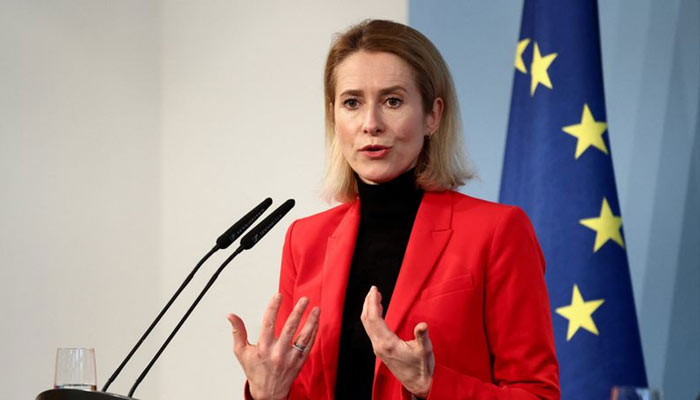
As the “mother of all deals”, marking a significant shift towards stable and reliable partnerships amid global uncertainty. Speaking to India Today, European Commission Vice President Kaja Kallas said the landmark pact reflects a changing geopolitical and economic landscape.
The agreement is expected to lower trade barriers, boost bilateral commerce and deepen economic engagement between India and the EU, though Kallas cautioned that the benefits will not be immediate as the deal must clear formal processes on both sides.
“Of course, it takes a bit of time because we are both democracies, and in democracies there are procedures these deals need to go through,” Kallas said. “But we still hope it goes fast because it’s beneficial for both parties.”
Asked why the agreement came together now after years of slow progress, Kallas pointed to shifting global realities, including trade tensions and geopolitical fragmentation.
“The geopolitical landscape definitely helps with this,” she said. “We had big partners before, but now the landscape is such that we need to build partnerships with countries that believe in free trade.”
She added that reducing overdependence on a small group of partners has become a shared priority. “Diversifying our trade portfolio on your side as well as our side is our mutual interest,” she said.
The deal, announced by European Commission President Ursula von der Leyen at Davos, triggered criticism from parts of the US, with some American leaders accusing Europe of indirectly aiding the Russia–Ukraine war. Kallas rejected the charge, saying trade diversification often unsettles existing partners.
“Countries like America don’t like it if we diversify our trade portfolios,” she said.
On broader geopolitical shifts and questions around reliable allies, Kallas acknowledged that traditional partnerships are under strain. Referring to recent transatlantic disagreements, including discussions over Greenland, she said such episodes had not helped relations.
“The discussions we had over Greenland were not doing any favours to transatlantic ties,” she said, adding that the EU remains focused on cooperation where interests align.
“We are focusing on issues where we can build partnerships with different countries, also with America, where we see eye to eye,” she said.
Kallas rejected suggestions that Europe is more exposed today, arguing that vulnerability stemmed from earlier, unrecognised dependencies—particularly on Russian energy and Chinese technology.
“Now we understand our vulnerabilities,” she said, citing increased defence spending, reduced reliance on Russian oil and gas, diversified trade links and stronger security cooperation with partners such as India.
Addressing the uncertainty generated by global political shifts, including the return of US President Donald Trump, Kallas said unpredictability has become a defining feature of the current order.
“Unpredictability is clearly the word of the day,” she said. “For us, the European Union is predictability. That used to be our weakness. Now it’s becoming our strength.”
She added that this reliability is driving deeper engagement with partners like India. “If we come to an agreement, it may take time, but when we do, we stick to it. We keep our promises,” Kallas said, describing the India–EU trade deal as a clear signal of long-term commitment.
Comments are closed.