

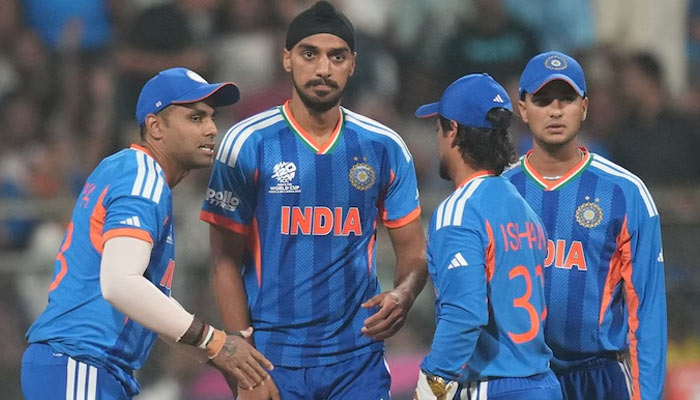
Two wins from two. Top of the table. Net run rate comfortably in the green. On the surface, India’s T20 World Cup 2026 defence is unfolding exactly as planned.
But tournaments are not decided on scorecards alone. Beneath successive victories over the USA and Namibia lies a subplot that refuses to fade — India’s uneasy relationship with spin in the middle overs. With Pakistan next in Colombo, that subplot risks becoming central.
Comforting Results, Lingering Questions
India’s campaign has featured authority and depth. The batting stretches long, the bowling offers variety, and the presence of multiple all-rounders provides tactical flexibility. In familiar subcontinental conditions, the defending champions look structurally sound.
Yet both matches have revealed a recurring pattern.
At the Wankhede Stadium, on a surface offering notable grip, India’s progress against spin was measured rather than fluent. In Delhi against Namibia, five wickets fell to slow bowlers. Even the USA managed to claim three through spin.
Namibia captain Gerhard Erasmus did not overwhelm India with sheer pace or extravagant turn. Instead, he disrupted tempo. Subtle variations, altered angles and changes of speed nudged India into conservative patterns. Too often, batters opted for straight hits against the turn, mistiming strokes they would typically execute with ease.
The victories were still comprehensive — but partly because the supporting attacks lacked sustained discipline. Pakistan are unlikely to be so generous.
The Numbers vs The Narrative
Statistically, the picture is not alarming. Since 2025, Hardik Pandya, Shivam Dube, Suryakumar Yadav and Ishan Kishan have all maintained strike rates in the 140–150 range against spin. On paper, that suggests control rather than concern.
However, the tempo dips for others. Tilak Varma and Sanju Samson hover in the 120–130 bracket against slow bowling — a slowdown that can magnify under knockout pressure. In high-stakes contests, a handful of dot balls can tilt momentum sharply.
Former India opener Aakash Chopra pointed out the trend, noting that improvement is essential if India are to avoid complications later in the tournament.
Technical Tweaks, Tactical Clarity
Dinesh Karthik offered a more technical lens. The issue, he suggested, was less about capability and more about positioning and intent.
India’s batters appeared reluctant to access areas behind square, instead defaulting to down-the-ground strokes. On turning tracks, that linear approach can play into the bowler’s hands. Using the crease, creating angles, and trusting sweeps and ramps — strokes well within this group’s repertoire — may provide the antidote.
The skill set exists. The challenge lies in decision-making under pressure.
Pakistan’s Spin Battery
Colombo promises a sterner examination. Pakistan boast a layered spin attack featuring Abrar Ahmad, Shadab Khan, Mohammad Nawaz, Saim Ayub and Usman Tariq. On a surface that grips, they may even strengthen that combination further.
India–Pakistan fixtures are rarely forgiving. Tactical weaknesses are identified early and probed relentlessly. If Namibia asked polite questions, Pakistan will demand decisive answers.
India remain favourites. Their depth, experience and big-match temperament are proven. But title defences are often shaped by how swiftly teams address subtle flaws.
The wins have come. The table looks healthy. Now comes the real examination.
If India are to stay on track for back-to-back crowns, they must solve the spin equation — before Pakistan turn pressure into opportunity in Colombo.
Comments are closed.