
India Urges Global Action Against Ecosystems Sheltering al-Qaeda, LeT and JeM

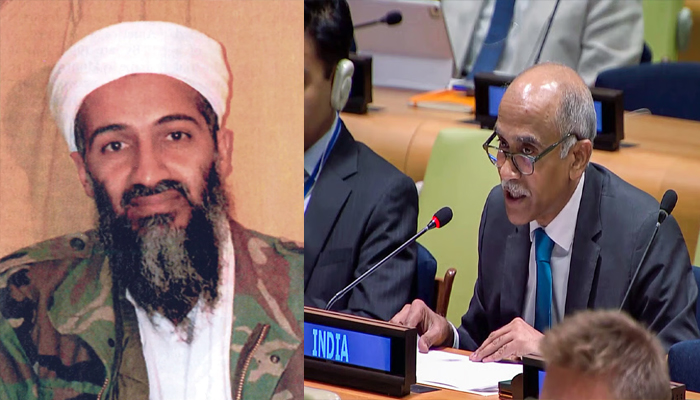
India on Wednesday called on the international community to dismantle the permissive environments that provide shelter, support and protection to transnational terrorist organisations.
Referring to the global campaign against terrorism launched after the 9/11 attacks, New Delhi stressed that the threat posed by al-Qaeda extends well beyond Afghanistan through its affiliated networks.
Addressing a United Nations Security Council (UNSC) meeting, India’s Permanent Representative to the UN, Ambassador Parvathaneni Harish, said the international community had united against terrorism following the September 11, 2001 attacks. However, he cautioned that the terror ecosystem created by al-Qaeda had established strategic depth beyond Afghanistan through its affiliates.
“The international community supported the global campaign to counter terrorism in the wake of 9/11. Let us not forget, however, that Al Qaeda’s terror eco-system established its strategic depth beyond Afghanistan through its affiliates,” Harish said, as quoted by ANI.
He pointed out that the key planners of the 9/11 attacks were not hiding in remote or ungoverned areas when they were eventually located.
Osama bin Laden, who orchestrated and financed the attacks, was tracked down and killed in a fortified compound in Abbottabad, Pakistan, during Operation Neptune Spear.
“Khalid Sheikh Mohammed, the principal architect of the operation, was found sheltering in an ordinary residential house,” Harish said. He added that Ramzi Binalshibh, who coordinated the hijacker cell after being denied a visa to join them, was found sheltering in an urban centre.
The Indian ambassador said these terrorists were not “fugitives hiding in caves or badlands” but individuals who had managed to evade detection while operating from established communities.
“Draining this swamp that provided an enabling environment for such monsters of humankind to prosper is important,” he said.
Harish further argued that similar permissive environments have continued to provide space and support to terrorist organisations and their affiliates.
“The same permissive environment that sheltered the architects of 9/11 has, in the years since, continued to provide space, support, and impunity to affiliates of Al Qaeda such as Lashkar-e-Taiba and Jaish-e-Mohammed and their like,” he said.
He also alleged that some such groups have adopted different identities to evade the UN Security Council’s sanctions framework, while their leadership and terror-training infrastructure have continued to remain protected from consequences.
India Raises Concern Over Afghan Repatriations
India also expressed strong concern over the involuntary return of Afghan nationals from neighbouring countries, highlighting the humanitarian challenges created by large-scale deportations.
The repatriation of Afghans from countries including Pakistan and Iran has increased significantly. According to figures cited by ANI, Taliban and UN reports indicate that more than 617,000 Afghan migrants returned or were forcibly deported during the first half of 2026.
Harish highlighted the scale of the humanitarian situation, saying the UN Secretary-General’s report recorded that 2.9 million Afghans were returned in 2025, while another 1.15 million had returned by August 22, 2026, with most of these returns being involuntary.
“We also reiterate our deep concern at the humanitarian plight of the Afghan returnees,” Harish said.
He questioned the limited international response to the mass returns, arguing that a forced return involving millions of people would ordinarily trigger greater political and humanitarian attention.
“A forcible return of this nature that is neither safe nor dignified, of over 3 million individuals, in any other part of the world would have elicited a political outcry in this Council, urgent provision of large-scale humanitarian support and efforts to ensure better re-integration and assimilation,” he said.
“That there is no such reaction is a sad reflection on the times,” Harish added.
Comments are closed.