
India’s Energy Supplies Continue Through Bab-el-Mandeb Despite Houthi Attacks on Saudi Arabia

India continues to receive energy supplies through the Bab-el-Mandeb Strait despite renewed Houthi attacks in Yemen, as the strategic waterway becomes increasingly important to New Delhi amid disruptions in the Strait of Hormuz.
The Bab-el-Mandeb connects the Red Sea with the Gulf of Aden and serves as a major shipping route for crude and other energy supplies moving from West Asia to international markets. With traffic through the Strait of Hormuz affected by the ongoing US-Iran conflict, the Red Sea route has assumed even greater importance for India.
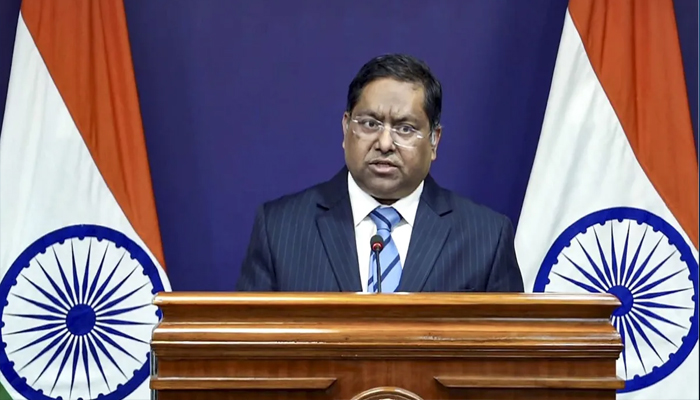
Ministry of External Affairs spokesperson Randhir Jaiswal said India has strongly condemned attacks on Saudi Arabia, particularly strikes directed at civilian infrastructure and economic installations.
Jaiswal said External Affairs Minister S Jaishankar also raised the issue of Houthi attacks during talks with Saudi Foreign Minister Prince Faisal bin Farhan Al Saud on the sidelines of the BRICS Summit.
He said the two ministers discussed a range of regional and international developments, including the situation involving the Houthis and the broader security environment in West Asia.
India has expressed concern over the escalation in the Red Sea and condemned attacks on Saudi sovereign territory, saying such incidents threaten regional stability and the safety of international shipping.
Jaiswal warned that the attacks could undermine freedom of navigation through the Bab-el-Mandeb, calling such actions unacceptable.
India, he said, remains focused on maintaining access to energy supplies from the region.
“We continue to receive energy supplies from that part of the world,” Jaiswal said.
Why Bab-el-Mandeb Is Crucial For India
The strategic importance of Bab-el-Mandeb has increased sharply for India as shipping through Hormuz faces continued disruption.
Data from Kpler indicates that more than half of India’s crude imports now pass through the Red Sea chokepoint, giving India the highest exposure among major Asian energy importers. The Philippines accounts for about 37%, followed by Pakistan at 36%, South Korea at 31% and Japan at 28%.
Any sustained disruption around Bab-el-Mandeb could therefore put additional pressure on India’s crude supply chains, freight rates and overall energy security.
Houthi Attacks Raise Shipping Concerns
The latest escalation follows renewed Houthi activity in Yemen, including attacks targeting Saudi interests and energy-related infrastructure. The developments have heightened concerns about the security of one of the world’s most important maritime corridors.
The Houthis’ presence along Yemen’s Red Sea coastline is particularly significant because vessels using the Bab-el-Mandeb must pass through the narrow strategic passage connecting the Red Sea to the Gulf of Aden.
The renewed violence comes amid Yemen’s prolonged civil war, with the Houthis continuing their confrontation with Saudi-backed forces. Growing instability along the Red Sea coast has added another layer of risk for commercial shipping.
The attacks have also unsettled energy markets. Any threat to Saudi Arabia’s oil infrastructure is closely watched because the country is the world’s largest crude exporter, and disruptions could push up global oil prices.
Yemen’s conflict has already caused a devastating humanitarian crisis, with hundreds of thousands of deaths reported over the course of the war.
The latest Houthi escalation is taking place alongside the wider West Asia conflict, creating additional uncertainty for shipping routes, oil supplies and energy security across the region.
Comments are closed.