
Iran Rejects Trump’s Claim of US Control Over Strait of Hormuz, Says Waterway Under Its Management

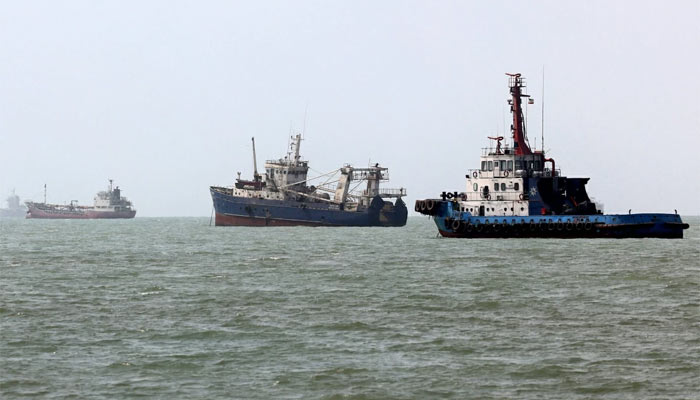
A senior Iranian official on Thursday rejected US President Donald Trump’s claim that Washington controls the Strait of Hormuz, saying the strategic waterway remains under the management and control of Iran.
Hossein Taeb, head of the paramilitary Basij forces affiliated with Iran’s Revolutionary Guards, said Iran continues to operate in the area “in complete security,” according to Iranian state television.
The remarks came as Tehran and Washington remained deadlocked over efforts to reach a permanent agreement to end the conflict in the Gulf. A senior Iranian source said there had been no progress on reviving an interim agreement reached in June or setting a timeline for implementing its provisions.
The June deal called for an “immediate and permanent termination of military operations on all fronts,” but tensions soon resurfaced. Trump declared the agreement “over” on July 7, while Iran’s foreign ministry said a week later that it had been suspended.
Washington has accused Tehran of failing to fulfill commitments to reopen the Strait of Hormuz, a crucial global shipping route. Iran, meanwhile, says the United States has violated its own obligations, including commitments to lift a blockade of Iranian ports and release frozen Iranian assets.
Trump on Wednesday claimed the United States had “total control” of the waterway and said Washington intended to maintain it. He also described the US naval blockade as a “wall of steel.”
The Iranian source said discussions mediated by third parties over returning to the interim agreement and establishing a timetable for implementing commitments had made no progress. Washington did not immediately comment.
No agreement on extending June deal
The June ceasefire arrangement established a 60-day period, which could be extended by mutual consent, for Iran and the United States to negotiate a broader agreement restricting Tehran’s nuclear programme in exchange for sanctions relief.
The Iranian source rejected a report by Turkiye’s Anadolu news agency that Pakistan had indicated the two sides agreed to extend the 60-day period.
“There is no talk of an extension,” the source said, arguing that Iran did not recognize the period as having begun because the United States allegedly violated the agreement shortly after it was reached.
Tensions have intensified in recent days. Iran’s top security official, Mohsen Rezaei, said Tuesday that the Strait of Hormuz would remain closed unless Washington accepted Tehran’s conditions for ending the conflict.
Trump has also demanded that Iran pay compensation for people killed in wars, attacks and protests over the past five decades.
At the same time, Trump has alternated between threats of further escalation and suggestions that a settlement could be reached soon.
Shipping faces fresh attacks
The Strait of Hormuz, located between Iran and Oman at the entrance to the Gulf, carried about one-fifth of global oil and liquefied natural gas supplies before the conflict began.
Concerns over disruptions to Gulf energy shipments have pushed benchmark Brent crude sharply higher since the war began in February. Prices reached a peak of $126 a barrel, about 75% above pre-war levels, amid uncertainty over the security of the waterway and the prospects for a diplomatic settlement.
Fresh attacks on commercial shipping on Tuesday added to those concerns.
In the southern Red Sea, four crew members were killed when Iran-backed Houthi forces attacked a small cargo vessel in the Bab al-Mandab Strait. It was the group’s first deadly attack on shipping since the conflict began.
Separately, the US military said a Navy MH-60 helicopter fired two Hellfire missiles to disable the steering system of a Panama-flagged cargo ship.
US Central Command said the vessel had ignored repeated warnings to stop violating a naval blockade on Iranian ports. Maritime sources said the ship was struck off Pakistan while heading toward the Gulf of Oman.
Comments are closed.