
Kashmir, Himachal Pradesh Witness Season’s First Snowfall; Gurez, Gulmarg Turn Winter Wonderland

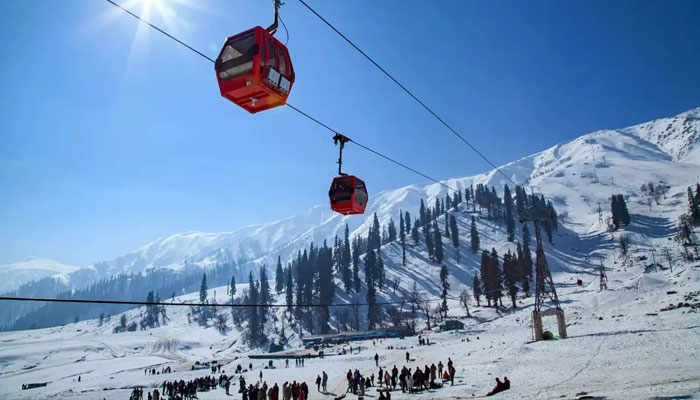
September is generally associated with the retreating monsoon across much of India, making snowfall at this time of year a striking sight.
But this year, parts of Kashmir and Himachal Pradesh have already received fresh snow, offering travellers an early glimpse of winter in the mountains.
On September 17, a light blanket of snow covered the higher slopes of Gulmarg, including areas near Apharwat Peak and Gondola Phase 2. In north Kashmir, snowfall was also recorded in the Gurez sector, including Kabul Gali at around 4,167 metres and parts of the Tulail Valley.
Snow was also reported near Zojila Pass and Zero Point in the Sonamarg region. Lower areas, including Srinagar, experienced rain instead, accompanied by temperatures several degrees below the seasonal average.
Where Can You See the Fresh Snow?
Gulmarg is among the most accessible places for travellers hoping to catch the early snowfall. The upper slopes around Apharwat Peak and Gondola Phase 2 have received a fresh layer of snow.
Further north, Gurez Valley has also turned wintry, with snowfall reported around Kabul Gali and Tulail Valley. Higher elevations near Zojila and Sonamarg have similarly witnessed fresh snow.
Himachal Pradesh has seen a more noticeable spell. Rohtang Pass received roughly four inches of snow, while Baralacha Pass and Shinkula Pass were also covered in white. Snowfall was reported from higher areas of Kullu-Manali, Lahaul-Spiti, Chamba and Kinnaur.
In Uttarakhand, Hemkund Sahib, located above 4,300 metres, recorded the season’s first snowfall, while the Kedarnath area received rain.
Is It a Good Time to Plan a Snow Trip?
For travellers looking to experience the first signs of winter before the peak tourist season begins, destinations such as Gulmarg could provide an early taste of snow-covered landscapes.
The India Meteorological Department’s tourism forecast for Gulmarg indicates minimum temperatures of around 5°C, with relatively cool conditions expected in the days ahead.
However, travellers heading towards high-altitude passes, remote valleys or trekking routes should exercise caution. Early-season snowfall can make roads slippery and conditions can change rapidly.
In Himachal Pradesh, authorities have advised tourists and motorists to check the latest road and weather conditions before travelling across high-altitude routes such as Baralacha and Shinkula.
Does Early Snow Mean an Early Winter Across India?
Not necessarily.
Snowfall at high elevations in September does not by itself indicate that winter has arrived early across the country. The developing El Niño remains an important climate factor, with the World Meteorological Organization expecting the phenomenon to continue through February 2027 and forecasting above-normal temperatures across many land areas during September-November.
At the same time, the WMO has stressed that regional weather patterns are influenced by several interacting climate drivers.
For India, the eventual winter outlook will depend on the interaction between El Niño, Indian Ocean conditions and other atmospheric systems.
So while Kashmir and the Himalayan states may already be offering travellers a preview of winter, the early snowfall should not yet be taken as evidence that India as a whole is heading for an unusually early or warmer winter.
Comments are closed.