
Keir Starmer’s China Visit: What’s at Stake in the First UK PM Trip in Eight Years

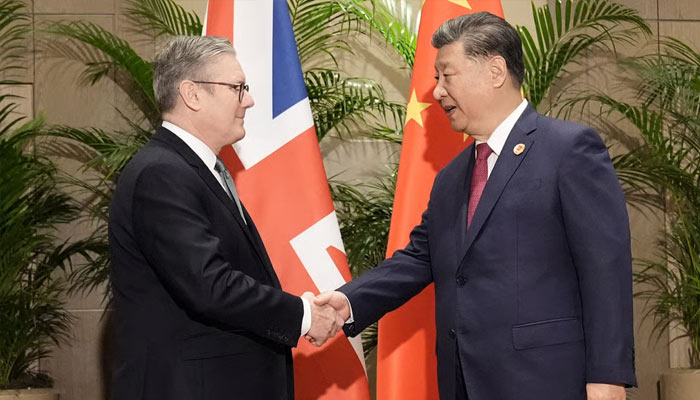
The United Kingdom’s relationship with China has swung sharply over the past decade — from the optimism of a much-vaunted “golden era” to deep suspicion driven by security fears, political differences and unmet economic expectations.
Against this unsettled backdrop, Prime Minister Keir Starmer’s visit to China — the first by a British leader in eight years — marks a cautious recalibration. It comes as both countries seek to stabilise a fraught relationship shaped by mistrust rather than momentum.
Starmer is due to meet President Xi Jinping on Thursday and is accompanied by a delegation of around 60 British business and cultural leaders, including executives from HSBC, GSK and Jaguar Land Rover, as well as representatives from the National Theatre. Beijing has framed the visit as an opportunity to “open a new chapter of healthy and stable development” in bilateral ties, signalling a desire to restart dialogue after years of diplomatic stagnation.
The challenge for Starmer is balancing competing priorities. He wants to revive economic engagement and reopen communication channels weakened since 2020, while remaining mindful of security concerns that now dominate Britain’s China policy. The visit also takes place amid global uncertainty, with US President Donald Trump’s disruptive approach to alliances prompting some Western leaders to reassess their strategic assumptions.
For London, the central question is whether pragmatic engagement with China is possible without diluting national security or political values.
Where Relations Stand
A decade ago, Britain and China openly celebrated a “golden era” of cooperation. That optimism peaked in 2015, when then prime minister David Cameron hosted Xi Jinping on a highly symbolic state visit. London hoped to position itself as China’s preferred economic gateway to Europe, while Beijing viewed the UK as a reliable partner within the Western economic system.
That vision unravelled quickly. Relations deteriorated after Beijing imposed a national security law on Hong Kong in 2020, triggering a crackdown on pro-democracy activists. Human rights concerns, allegations of cyber espionage and China’s perceived backing of Russia in the Ukraine war further eroded trust.
Economic ties weakened alongside political relations. UK exports to China fell 52.6 per cent year-on-year in 2025, according to official data.
Security anxieties intensified during the Huawei debate. Despite years of close oversight through a UK-run cybersecurity evaluation centre, a parliamentary inquiry in 2020 found “clear evidence of collusion” between Huawei and the Chinese Communist Party apparatus. The findings accelerated Britain’s decision to ban Huawei from its 5G networks and mandate the removal of existing equipment.
British intelligence warnings have reinforced the hardening stance. MI5 director Ken McCallum said last year that Chinese state actors pose a national security threat to the UK “every day”, while a 2023 government review labelled China an “epoch-defining challenge”.
Why Visit Now?
Since taking office, Starmer has signalled his intention to place UK–China ties on a more stable and predictable footing. His government commissioned an audit of what it called Britain’s “most complex bilateral relationship”, but much of its findings remain classified, limiting clarity over policy direction.
Momentum toward engagement resumed after Starmer met Xi privately in Brazil and identified climate cooperation as a potential area of alignment. A planned visit to Beijing, however, was delayed by controversy over China’s proposal to build a large new embassy in London, which critics feared could pose security risks.
The project was approved this week after assurances that intelligence agencies could manage any risks, clearing the final obstacle to the visit.
Starmer’s approach is also shaped by strains in the UK’s relationship with the United States under Trump. Episodes such as tariff threats against NATO allies and his attempt to assert control over Greenland have unsettled London’s confidence in Washington.
Starmer has insisted Britain will not be forced to choose between the US and China, arguing that disengaging from Beijing would be unrealistic.
What Beijing Wants
For China, the visit is a chance to show it can rebuild working relationships with major Western economies. It follows visits by leaders including France’s Emmanuel Macron and Canada’s Mark Carney, with Germany’s chancellor expected in Beijing next month.
Chinese officials have emphasised economic cooperation and the resumption of suspended dialogue mechanisms, signalling a preference for pragmatic engagement over ideological confrontation.
Public opinion in Britain may also be shifting. A recent YouGov poll found that the proportion of Britons viewing China as a “friend”, “ally” or “friendly rival” has risen to 27 per cent, up from 19 per cent last year.
What’s on the Agenda
A key focus will be reviving the UK–China CEO Council, which has been largely inactive since relations soured. Its restart would signal London’s willingness to restore commercial ties despite broader geopolitical tensions.
Human rights are expected to feature prominently, including the case of Jimmy Lai, the Hong Kong media figure and British citizen convicted under the national security law.
Global issues such as the war in Ukraine and climate change will also be discussed, though expectations for breakthroughs remain low.
Analysts describe the visit as an exercise in damage control rather than strategic renewal. The goal, they argue, is not a return to the excesses of the “golden era” but a managed form of engagement — one that keeps channels open while acknowledging deep and persistent differences.
Comments are closed.