
New Study Finds Elderly Face Greater Heatwave Risk Than Previously Believed

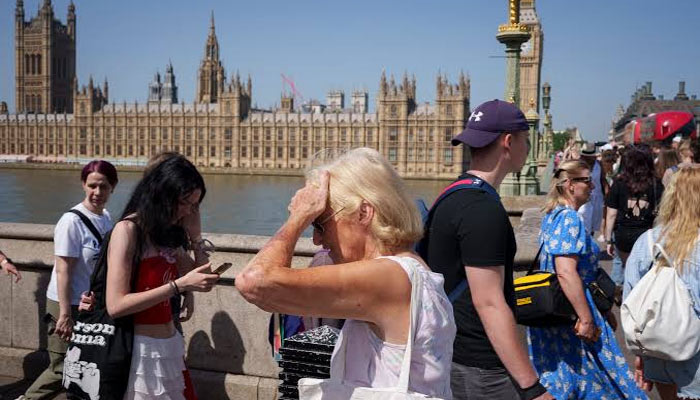
The health risks posed by extreme heat to older people have been significantly underestimated, according to a new US modelling study published in The Lancet Planetary Health.
The research comes amid an exceptionally hot northern hemisphere summer, with prolonged heatwaves breaking temperature records and contributing to tens of thousands of deaths.
Researchers led by a team from Stanford University examined how often human-caused global warming could push temperatures beyond levels that older adults can safely tolerate.
Why Older People Face Greater Heat Risk
Earlier research on extreme heat has often relied on a measure known as wet-bulb temperature, which combines heat and humidity to assess the conditions under which the human body can no longer effectively cool itself.
However, many of the experiments used to establish these thresholds involved young and healthy adults. They therefore did not fully account for the increased vulnerability of older people.
Older adults generally sweat less efficiently and may have weaker cardiovascular systems or existing health conditions, making it harder for their bodies to cope with extreme heat.
For the new study, researchers used data from more recent wet-bulb experiments conducted in the US involving participants over the age of 60. They then combined those findings with projections of population ageing to model heat exposure among three different age groups through 2100 under various levels of global warming.
The researchers concluded that dangerous heat could affect substantially more people, and persist for longer periods, than previous estimates suggested.
South Asia Among Worst-Affected Regions
The study estimated that if global temperatures rise 1.5°C above pre-industrial levels, around 22% of people aged over 60 could experience unsafe heat for at least one month each year.
Every additional degree of warming could expose another billion people to roughly an extra month of heat and humidity beyond what their bodies can safely tolerate.
Under a 3°C warming scenario, older people in some of the most vulnerable regions, particularly South Asia and the Gulf, could face dangerous heat around the clock for as many as three consecutive months each year.
Countries including India, Pakistan, Bangladesh, Myanmar and Niger were identified as particularly vulnerable because of a combination of high heat exposure, poverty and limited access to cooling.
Extreme Heat Could Drive Climate Migration
The researchers warned that increasingly severe heat could have consequences beyond public health.
They said exposure to heat that the human body cannot compensate for could contribute to internal displacement and cross-border climate migration, creating additional humanitarian and policy challenges.
The study called for faster reductions in greenhouse gas emissions to limit future warming. It also urged governments to ensure that heat-response plans specifically address the needs of older people and other vulnerable groups.
The researchers highlighted access to cooling as a key priority, noting that many heat-related deaths occur indoors. Wider availability of air conditioning and other cooling facilities could therefore play an important role in protecting older adults.
The findings come as wildfires, drought and prolonged heatwaves continue to affect parts of Europe during what is expected to be the continent’s hottest summer on record. Researchers also warn that global temperatures could rise further in the years ahead.
Comments are closed.