
Riyadh Airport Set to Resume Flights After Two-Week Shutdown Amid Houthi Threats

Riyadh Airport to Resume Flights After Two-Week Closure as Houthis Issue Fresh Attack Warning
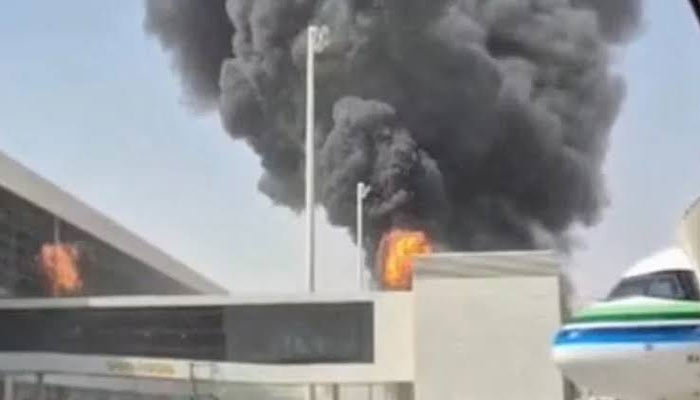
Saudi Arabia’s King Khalid International Airport in Riyadh is preparing to resume flight operations after a two-week shutdown following attacks by Yemen’s Houthi rebels. However, the Iran-backed group has warned that the airport remains a military target, raising fresh concerns over the safety of civilian aviation in the region.
The airport announced on Saturday that operations would resume from Sunday, October 25, with Terminal 1 handling domestic flights and Terminal 2 serving international flights operated by Saudi national carriers.
Flight-tracking platform Flightradar24 showed an aircraft departing Riyadh early Sunday and heading towards Jeddah, suggesting that flight operations were gradually restarting.
The planned reopening comes amid renewed hostilities between Saudi Arabia and the Houthis following the breakdown of a truce that had held for years. The latest developments have heightened concerns about the security situation across the region.
HOUTHIS WARN AIRLINES AGAINST USING RIYADH AIRPORT
Houthi military spokesperson Yahya Saree issued a warning to international and regional airlines, airport employees and passengers, declaring King Khalid International Airport unsafe.
“The Yemeni Armed Forces warn all international, regional, and local airlines — as well as staff and travellers — against using King Khalid Airport in Riyadh, as it is unsafe and serves as a military target for our forces,” Saree said.
He further warned that the Saudi government would be responsible for the consequences of any operations conducted at the airport.
The statement came as Saudi authorities prepared to restore flight services, creating uncertainty for airlines and passengers amid the continuing military confrontation.
The Houthis have carried out multiple waves of attacks targeting the Riyadh airport area. An earlier assault this month reportedly killed 13 people and injured more than 300, making it the deadliest attack in Saudi Arabia in over a decade.
Separately, the Saudi-led military coalition fighting the Houthis said early Sunday that its forces had intercepted and destroyed two drones in the Riyadh area.
The latest interception highlights the continuing security threat as the kingdom prepares to restart civilian air traffic.
SAUDI-HOUTHI HOSTILITIES ESCALATE AFTER TRUCE COLLAPSE
Saudi Arabia supports Yemen’s internationally recognised government in its prolonged conflict with the Houthi movement. The latest attacks mark a renewed escalation following the breakdown of a truce that had helped contain hostilities for several years.
The resurgence of fighting has increased regional tensions and added another dimension to the wider US-Iran conflict, complicating efforts to prevent further escalation.
The Houthis, who control Yemen’s capital, Sanaa, and large parts of the country’s north, have repeatedly used missiles and drones in attacks targeting regional adversaries.
Saudi Arabia’s decision to resume airport operations comes against this backdrop of continuing threats, with the Houthi warning placing renewed attention on the risks facing commercial aviation.
YEMEN’S HUMANITARIAN CRISIS FACES FRESH PRESSURE
The renewed fighting also threatens to worsen Yemen’s long-running humanitarian emergency. Years of conflict have devastated infrastructure, disrupted essential services and left millions of people dependent on humanitarian assistance.
Further escalation could deepen the crisis in one of the world’s poorest countries, while increasing instability across the wider Middle East.
For Saudi Arabia, restoring normal airport operations while managing the threat of further attacks presents a significant security challenge. For airlines and passengers, the competing developments — the planned reopening and the Houthis’ warning — leave uncertainty over the outlook for civilian flights.
The situation remains fluid as regional hostilities continue and authorities work to resume air travel amid heightened security concerns.
Comments are closed.