

Spain has announced temporary border checks on travellers arriving from Italy, escalating a rare dispute between the two European Union and NATO allies over.
Migration following a mass influx into Spain’s North African territory of Ceuta. The checks will begin at midnight on Saturday and remain in place until September 7, Spain’s Interior Ministry said. Madrid said the move was in response to Italy’s decision to introduce similar controls after tens of thousands of migrants crossed into Ceuta from Morocco on July 30-31.
Spain said the measure was being introduced amid “persistent irregular migration pressure” facing Italy.
Spain Accuses Italy Of Undermining EU Unity
Earlier on Friday, Spain had urged Italy to withdraw its border controls and warned that it could introduce reciprocal measures if Rome refused.
Madrid described Italy’s decision to suspend visa-free Schengen arrangements with Spain as “unfair, contrary to the EU’s interests and discriminatory for the Spanish population”.
Spanish Foreign Minister Jose Manuel Albares called the move “a torpedo fired at the hull of European unity”.
“We urge the government of Italy to rectify, put an end to the checks and treat Spaniards like other European citizens,” the Spanish government said.
Madrid had threatened to take “proportional measures” by Sunday if Italy did not lift the restrictions. Instead, Spain announced its own border checks within hours of Rome rejecting the demand.
Italy Refuses To Back Down
Italian Prime Minister Giorgia Meloni’s office said Rome had “no intention of revising the decision” before August 15, when Spanish authorities reportedly expect another possible wave of migration towards Ceuta.
“Italy does not accept ultimatums or impositions from abroad regarding national security and border control,” Meloni’s office said.
Rome said it would reconsider the controls only after authorities were satisfied that there were no security or terrorism risks, no fresh migration wave was developing and no irregular migrants were moving towards European territory.
Italy introduced its controls at airports and maritime entry points for third-country nationals arriving from Spain. Rome described the measure as an “extraordinary” step aimed at protecting national security and preventing possible repercussions for Italy.
- Italy has no land border with Spain.
- Ceuta Migration Crisis Triggers Dispute
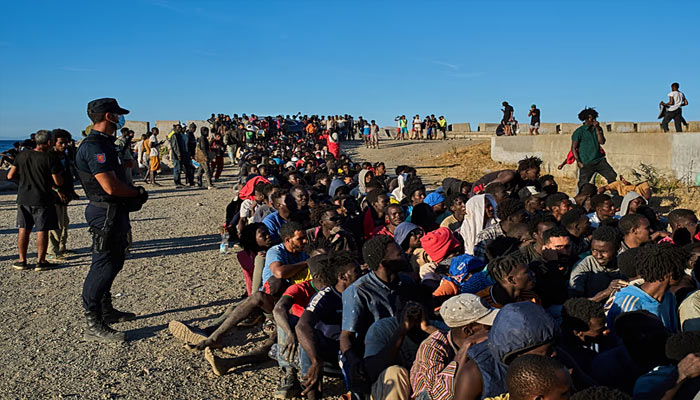
The diplomatic row follows an unprecedented migration rush into Ceuta on July 30 and 31, when tens of thousands of people crossed from Morocco into the Spanish territory.
The incident prompted a strong reaction from EU governments that favour tougher measures against irregular migration, including Italy.
Meloni was among European leaders who called for Spain to be suspended from the Schengen visa-free travel area following the Ceuta crisis, although such a suspension is not legally possible under current EU rules.
Spain has accused Italy of creating unnecessary divisions within Europe.
The Spanish government warned against “creating rifts and sterile conflicts driven by internal electoral motives”, while saying it hoped “pro-European sentiment, common sense and good faith prevail”.
Fresh Migration Fears
Spanish authorities have reportedly been monitoring social media and online rumours about the possibility of another influx into Ceuta in mid-August.
However, authorities have not explicitly confirmed that they expect a repeat of the July rush.
Italy has said its border authorities will seek to minimise disruption for Spanish and other European citizens who are not covered by the restrictions.
The latest measures have raised concerns over the impact of national border controls on the free movement principles underpinning the Schengen area.
- Death Toll Remains Disputed
- The human cost of the Ceuta crossings remains unclear.
Spanish authorities said around 72,000 people entered Ceuta, with approximately 70,000 subsequently returning to Morocco. Spain has reported 80 deaths linked to the crossings.
Moroccan rights groups have put the toll considerably higher. The Moroccan Association for Human Rights and the European Coordination for Human Rights in Morocco said at least 141 people had died, warning that the number could increase.
Morocco’s Interior Ministry has reported 11 deaths on its side of the border, all but one attributed to drowning.
Those who remain in Ceuta, including hundreds of unaccompanied children, are facing difficult conditions, with limited access to food, water and shelter.
The dispute between Madrid and Rome now adds a diplomatic dimension to a migration crisis that has already placed pressure on Europe’s border and asylum policies.
Comments are closed.