

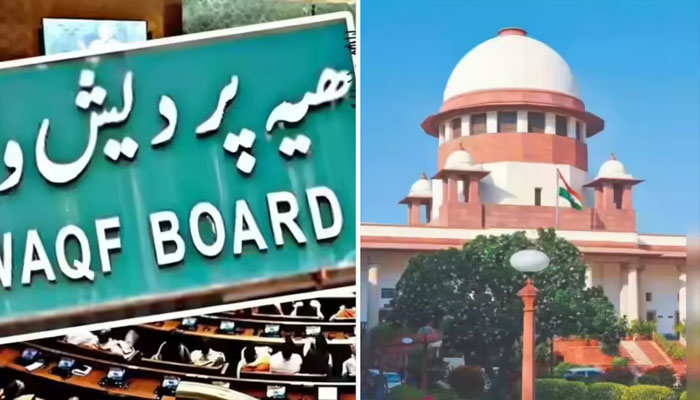
Supreme Court stays key provisions of Waqf (Amendment) Act, 2025, declines blanket suspension
The Supreme Court on Monday put on hold several provisions of the Waqf (Amendment) Act, 2025, granting interim relief to petitioners challenging its constitutional validity, but stopped short of staying the law in its entirety.
A bench led by Chief Justice of India BR Gavai stayed sections dealing with the eligibility to create a Waqf, adjudication of encroachment disputes, and the role of collectors in determining Waqf property rights. However, it refused to suspend the entire Act, saying no case had been made out for a blanket stay.
Key provisions stayed
Five-year practice requirement (Section 3(r)): The rule mandating that only someone who has practiced Islam for at least five years can create a Waqf was stayed until rules are framed to define “practitioner of Islam.”
Encroachment disputes (Section 3C(2)): Waqf property will not automatically be treated as such until a government-designated officer’s report is submitted; this provision has been stayed.
Collector’s adjudication powers (Section 3C(4)): The court barred collectors from deciding ownership disputes, ruling that such powers cannot be vested in the executive as it violates the principle of separation of powers.
The bench also modified provisions on Waqf Board composition, capping non-Muslim members at three and limiting non-Muslim representation in Waqf Councils to four for now. It further clarified that, as far as possible, ex-officio members should belong to the Muslim community.
At the same time, the court refused to interfere with provisions on mandatory registration of Waqf properties, noting that registration has existed under earlier versions of the law as well.
Background
The Act, passed by Parliament in April 2025 and backed by the Centre, faced multiple challenges from community organisations and individuals who argued it undermined religious freedoms and property rights. The government, in a preliminary affidavit, opposed any blanket stay, arguing that the law carried the presumption of constitutionality.
Reactions
Petitioners’ counsel MR Shamshad welcomed the ruling, calling it “reasonably good” and noting that “most of the contentious provisions have been stayed.”
The All India Muslim Personal Law Board also expressed satisfaction. Its member Syed Qasim Rasool Ilyas said, “By and large, many of our points have been accepted.”
Opposition voices hailed the order as a setback for the Centre. Congress MP Imran Pratapgarhi said the verdict reassured donors of Waqf properties who feared government overreach: “The Supreme Court has reined in the Centre’s intentions. This is a relief to those who donate their land.”
Comments are closed.