
Supreme Court Warns Himachal Faces Disappearance Due to Climate Crisis

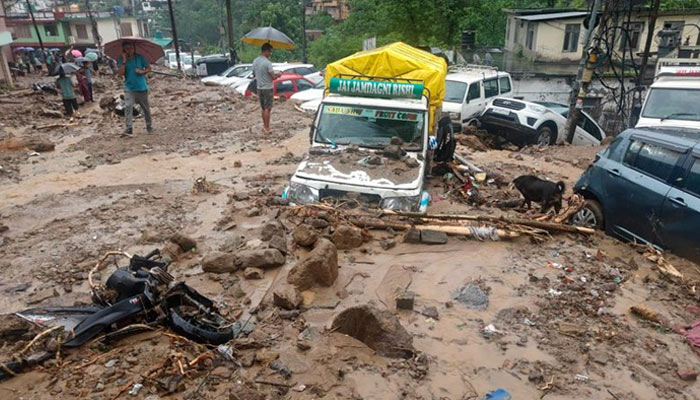
Supreme Court Warns Himachal Pradesh Risks Disappearing Due to Ecological Collapse
The Supreme Court has issued a grave warning over the worsening environmental situation in Himachal Pradesh, cautioning that the state may one day “vanish into thin air” if immediate and concrete action is not taken to reverse ongoing ecological damage.
A bench comprising Justices J B Pardiwala and R Mahadevan made the remarks on July 28 while hearing a petition concerning a June 2025 state notification that classified certain areas as “green zones” to curb unregulated development.
“Earning revenue is not everything,” the bench stated firmly. “Revenue cannot be earned at the cost of environment and ecology.”
The bench expressed deep concern about the accelerating impacts of climate change and human activity on the fragile Himalayan region. “If things proceed as they are now, the day is not far when the entire state of Himachal Pradesh may vanish in thin air from the map of the country. God forbid this doesn’t happen,” the judges remarked.
The petition under consideration had challenged the Himachal Pradesh High Court’s decision to uphold the green zone notification. The Supreme Court dismissed the challenge, affirming that the move was aimed at protecting the region from further ecological harm.
The court placed much of the blame for recent natural disasters in the state — including landslides, infrastructure failures, and erratic weather — on unchecked human activity rather than natural causes.
“The nature is definitely annoyed with the activities going on in Himachal Pradesh,” the bench observed, pointing to multiple expert reports identifying causes such as excessive hydropower development, rapid road construction, deforestation, and the unchecked rise of multi-storey buildings.
With forests covering more than two-thirds of the state’s land area, the court highlighted Himachal Pradesh’s unique ecological richness, now under threat from human-induced stress. It also flagged poorly planned infrastructure projects like tunnels, dams, and highways as having intensified the region’s vulnerability to climate change.
The bench noted increasing average temperatures, unpredictable snowfall, and frequent extreme weather events as signs of a deepening climate crisis in the region.
While acknowledging the importance of hydropower to Himachal Pradesh’s economy, the court warned that large-scale dam construction has come with serious ecological costs. Other concerns included forest fires, land encroachments, overgrazing, and expanding urban areas.
Tourism — a lifeline for the state’s economy — also came under scrutiny. The court warned that uncontrolled tourism could undermine both the environment and social structures in the region. “If left unchecked, the pressure from tourism could severely undermine the ecological and social fabric of the state,” the court said.
Calling for a broader, coordinated approach among Himalayan states, the court stressed the importance of joint planning, resource sharing, and consultation with environmental experts, geologists, and local communities.
“It is high time the state of Himachal Pradesh pays attention to what we have observed and starts taking necessary action at the earliest in the right direction,” the bench concluded, holding both the state and central governments responsible for ensuring sustainable development and preventing further ecological degradation.
Comments are closed.