
Trump announces meeting with China’s Xi in two weeks, calls 100% tariffs unsustainable

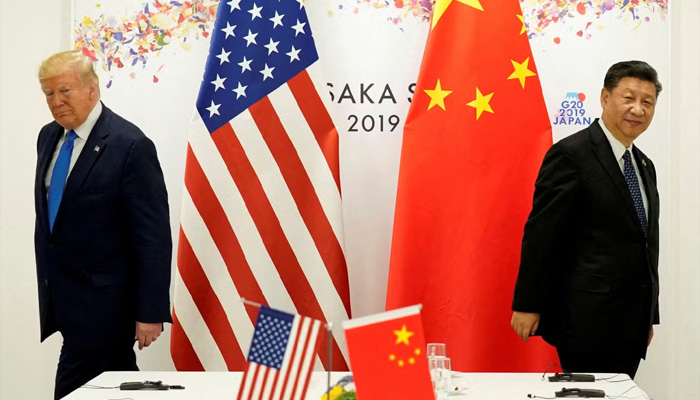
US President Donald Trump has confirmed he will meet Chinese President Xi Jinping in two weeks, marking a potential easing of recent trade tensions between Washington and Beijing.
Trump, who last week announced a 100% tariff on all Chinese imports, acknowledged on Friday that such a measure would not be sustainable in the long term. “It’s not sustainable, but that’s what the number is,” he told Fox Business Network, adding that the decision was forced by Chinese actions.
Despite the recent escalation, Trump expressed optimism about his upcoming meeting with Xi. “I think things will be fine with China. We’re going to meet in two weeks,” he said, signaling a possible opportunity to reset bilateral trade discussions.
The announcement follows a turbulent period in US-China relations. Last week, Trump accused Beijing of trying to “hold the world captive” through new export controls on rare earth materials — key for electric vehicles, semiconductors, and defence systems. He described the move as “sinister and hostile” and initially said there was “no reason” to meet Xi at the upcoming Asia-Pacific Economic Cooperation (APEC) summit.
China responded strongly to the proposed tariffs, calling Washington’s actions “arbitrary double standards” that harm Chinese interests and undermine trade negotiations. “China does not want to fight, but is not afraid to fight,” said the country’s Commerce Ministry, describing the tariff plan as a “classic case of double standards.”
The past week has seen a mix of conciliatory and confrontational messaging from the US. While Trump expressed a desire to maintain a positive relationship, his administration has continued implementing trade restrictions, including new controls on US software exports starting November 1. Vice President JD Vance also urged China to “choose the path of reason,” warning that Washington would defend its interests if necessary.
Trump’s latest remarks suggest an effort to de-escalate tensions, with the planned Xi meeting providing an opportunity for both sides to recalibrate trade discussions amid ongoing strains in US-China economic relations.
Comments are closed.