
Trump to review Iran peace plan, but doubts breakthrough as Tehran warns conflict could resume

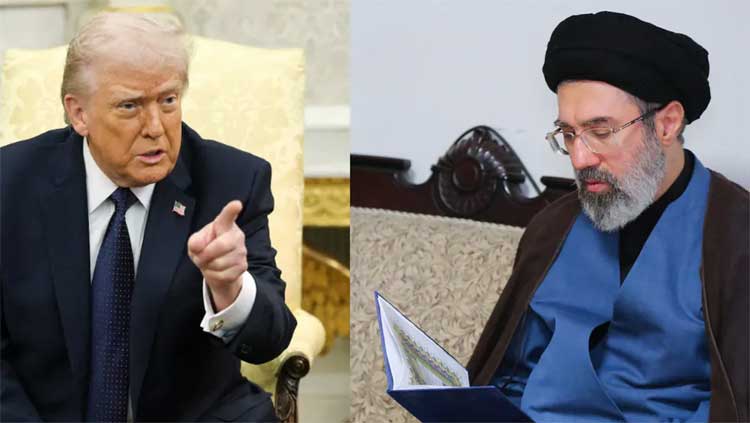
US President Donald Trump said on Saturday that he would review a fresh peace proposal submitted by Iran but expressed deep scepticism over its chances of success, as tensions remained high and senior officials in Tehran warned that renewed fighting was increasingly likely.
The latest diplomatic effort comes after Iranian news agencies Tasnim and Fars reported that Tehran had presented a 14-point peace proposal to Pakistan, which is acting as a mediator in the conflict. According to the reports, the proposal calls for an end to hostilities across all fronts and outlines a new framework for governing the strategically vital Strait of Hormuz.
Trump, however, appeared unconvinced by the initiative.
Posting on Truth Social, the US president said he would soon examine the plan but questioned whether it could be accepted.
“I will soon be reviewing the plan that Iran has just sent to us, but can’t imagine that it would be acceptable in that they have not yet paid a big enough price for what they have done to Humanity, and the World, over the last 47 years,” he wrote.
Speaking later to reporters in West Palm Beach, Florida, Trump refused to rule out renewed military action against Iran. “If they misbehave, if they do something bad, but right now, we’ll see,” he said. “But it’s a possibility that could happen, certainly.”
Fragile ceasefire under pressure
The war, launched jointly by the United States and Israel in late February, has remained paused since April 8 following a ceasefire agreement. However, the truce remains fragile after an earlier round of peace talks in Pakistan ended without a breakthrough.
Iranian military officials signalled that Tehran is preparing for the possibility of another escalation. Mohammad Jafar Asadi, a senior commander in Iran’s central military command, said a renewed confrontation with Washington appeared increasingly probable.
“Evidence has shown that the United States is not committed to any promises or agreements,” he said, according to Fars news agency. Iranian Deputy Foreign Minister Kazem Gharibabadi echoed the warning, telling diplomats in Tehran that Washington now faces a clear choice.
“The ball is in the United States’ court to choose the path of diplomacy or the continuation of a confrontational approach,” he said, adding that Iran was “prepared for both paths.”
Nuclear dispute returns to the forefront
The peace talks are also expected to reopen disputes surrounding Iran’s nuclear programme. US outlet Axios reported earlier this week that Trump’s envoy Steve Witkoff had urged Tehran to place its nuclear activities back on the negotiating table.
Iran swiftly rejected what it described as Washington’s double standards. Iran’s mission to the United Nations accused the US of “hypocritical behavior,” pointing to America’s own extensive nuclear arsenal.
“There is no legal restriction on the level of uranium enrichment, so long as it is conducted under the IAEA’s supervision, as was the case with Iran,” the mission said.
Strait of Hormuz remains flashpoint
The Strait of Hormuz continues to be a central issue in the conflict.
Iran has maintained tight control over the critical shipping route since the war began, significantly disrupting global oil, gas and fertiliser supplies. In response, the United States has enforced a counter-blockade on Iranian ports.
The standoff has driven oil prices roughly 50 percent above pre-war levels, intensifying pressure on global markets.
Ali Nikzad, vice speaker of Iran’s parliament, said draft legislation under consideration would direct 30 percent of toll revenues collected from Hormuz toward military infrastructure, with the remainder allocated for economic development.
“Managing the Strait of Hormuz is more important than acquiring nuclear weapons,” he said.
Regional violence continues
Even as US-Iran tensions dominate the diplomatic agenda, violence continues elsewhere in the region. Israel carried out dozens of strikes across southern Lebanon on Saturday despite an existing ceasefire with Iran-backed Hezbollah.
The Israeli military said the operations targeted Hezbollah positions following evacuation warnings issued to residents in nine villages. Lebanon’s state-run National News Agency reported at least three deaths in the attacks.
Hezbollah claimed multiple retaliatory strikes against Israeli forces. One Israeli strike hit a religious site in Yaroun, damaging a convent affiliated with the Salvatorian Sisters.
French Catholic charity L’Oeuvre d’Orient said the convent had been “destroyed.”
Economic strain deepens in Iran
Inside Iran, the prolonged conflict is exacting a growing economic toll. With oil exports constrained and inflation surging past 50 percent, many Iranians are facing severe financial hardship.
“Everyone is trying to endure it, but they are falling apart,” Amir, a 40-year-old resident of Tehran, told AFP.
“We still have not seen much of the economic effects because everyone had a bit of savings. They had some gold and dollars for a rainy day. When they run out, things will change.” Meanwhile, in Washington, lawmakers remain divided over whether Trump exceeded constitutional limits by continuing military operations without explicit congressional approval.
Administration officials argue that the ceasefire effectively paused the legal countdown requiring congressional authorisation, a claim strongly contested by opposition Democrats.
As diplomatic efforts continue, both Washington and Tehran appear to be preparing for two very different outcomes: a negotiated settlement or a return to war.
Comments are closed.