
After Eventful First 100 Days, Germany’s Merz Grapples With Domestic Discord

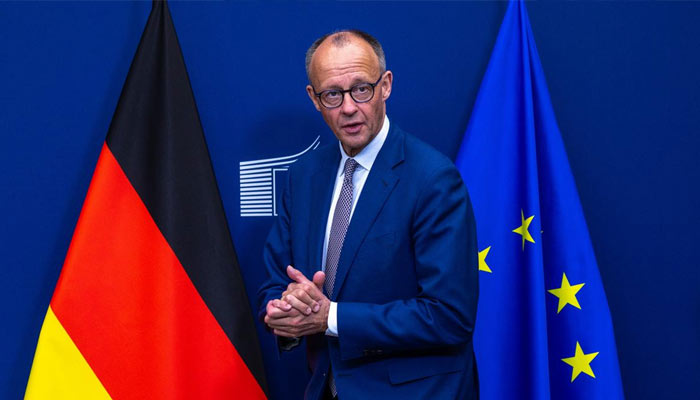
Germany’s Merz Hits 100 Days With Bold Moves Abroad, Growing Tensions at Home.
Chancellor Friedrich Merz has wasted no time reshaping Germany’s security, economic and migration policies in his first 100 days in office — but cracks are widening in his fragile coalition.
Merz, who fulfilled his decades-long ambition to lead Europe’s largest economy at age 69, promised on election night in February to bring a bit of “rambo zambo” to the job — a phrase that can mean both a thrilling ride and potential chaos.
Since then, he has loosened debt rules, unlocked hundreds of billions of euros for the military and infrastructure, vowed to build “Europe’s largest conventional army” in response to Russia, and deepened ties with NATO allies. His approach has pleased Washington — particularly Donald Trump — and kept Germany firmly aligned with Ukraine, Paris, and London.
But Merz has also stirred controversy. His praise for Israel’s strikes on Iranian targets was followed weeks later by a freeze on arms exports to the country over its Gaza offensive. At home, he has cracked down on irregular migration, aiming to stem the rise of the far-right AfD, which scored a record 20% in February’s election.
The result: Merz has been dubbed Germany’s “foreign chancellor” — a leader more at ease on the world stage than in the Bundestag. But his SPD coalition partners bristle at his right-leaning stances, particularly on immigration, welfare cuts, and climate policy. His approval rating has slid 10 points to 32%, and early parliamentary votes revealed quiet resistance from within the ranks.
Coalition infighting peaked over the nomination of SPD judge Frauke Brosius-Gersdorf to the country’s top court, which the CDU/CSU blocked after right-wing media criticism. The row ended only when she withdrew her candidacy. Other flashpoints include conservative calls to cut benefits for Ukrainian refugees — a move strongly opposed by the SPD.
SPD Vice Chancellor Lars Klingbeil has urged restraint, warning that public squabbling could alienate voters and boost the AfD. Still, unresolved disputes are piling up as politicians head into the summer recess.
“Merz thinks in big-picture terms and avoids the small print,” says political scientist Wolfgang Schroeder. “But every major coalition fight so far — from the judge nomination to refugee benefits — has been about the small print.”
Comments are closed.