

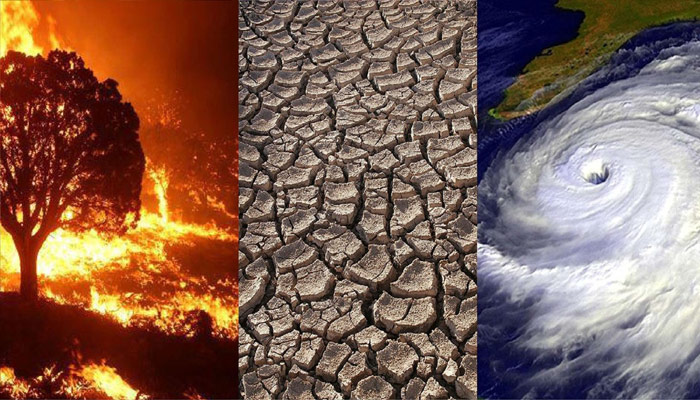
Climate change refers to long-term shifts in global or regional weather patterns, primarily caused by human activities such as burning fossil fuels, deforestation, and industrial emissions.
These activities increase the concentration of greenhouse gases (GHGs) like carbon dioxide (CO₂), methane (CH₄), and nitrous oxide (N₂O) in the atmosphere, trapping heat and causing the planet’s temperature to rise—a phenomenon commonly known as global warming.
Key Impacts of Climate Change
Rising Temperatures: Average global temperatures have increased by approximately 1.1°C since the pre-industrial era, leading to more frequent heatwaves. Melting Ice and Rising Seas: Glaciers and polar ice caps are melting at unprecedented rates, contributing to sea-level rise, which threatens coastal communities worldwide.
Extreme Weather Events: Climate change has intensified storms, hurricanes, floods, and droughts, resulting in significant economic and human losses. Ecosystem Disruption: Many species face habitat loss and extinction due to changing temperatures and weather patterns. Coral reefs, for example, are dying from ocean warming and acidification.
Impact on Agriculture and Food Security: Changes in rainfall patterns, soil quality, and extreme weather events threaten crop yields, increasing the risk of hunger and malnutrition.
Health Risks: Higher temperatures and shifting weather patterns contribute to heat-related illnesses, the spread of vector-borne diseases, and respiratory problems due to pollution.
Global Responses to Climate Change
- Paris Agreement (2015): Nearly 200 countries committed to limiting global warming to well below 2°C, with efforts to cap it at 1.5°C.
- Renewable Energy Transition: Nations are investing in solar, wind, and hydroelectric power to reduce dependence on fossil fuels.
- Carbon Pricing and Emission Reduction Policies: Many countries have implemented carbon taxes, cap-and-trade systems, and regulations to curb industrial emissions.
- Conservation and Reforestation: Projects aimed at preserving forests, restoring ecosystems, and protecting biodiversity are gaining traction.
- Public Awareness and Climate Education: Global movements, youth activism, and campaigns emphasize the need for individual and collective action to mitigate climate change.
Challenges Ahead
Despite global efforts, emissions continue to rise, and many regions remain highly vulnerable. Addressing climate change requires international cooperation, technological innovation, sustainable development, and behavioral change at all levels of society.
Climate change is not just an environmental issue—it is a social, economic, and political challenge. Immediate action is essential to ensure a sustainable and resilient future for the planet and all its inhabitants.
Comments are closed.