

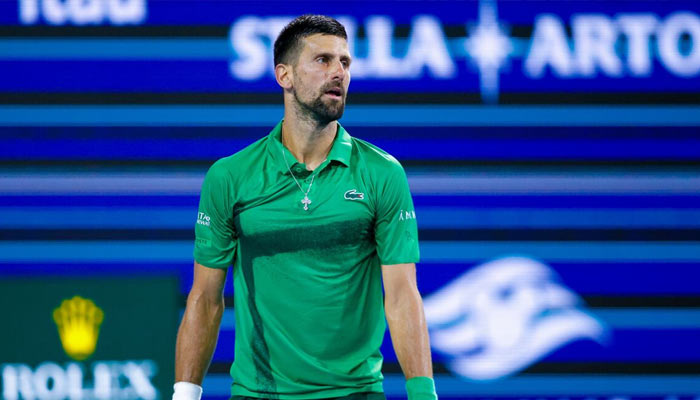
Novak Djokovic has announced a dramatic split from the Professional Tennis Players Association (PTPA), the players’ organisation he helped found six years ago, citing serious concerns over. governance, transparency and the use of his voice and image.
The decision marks a significant moment for the PTPA and raises fresh questions about the future of player representation in professional tennis. In a statement posted on social media late Sunday, Djokovic said he had decided to step away “completely” from the organisation after prolonged unease with its internal functioning.
“After careful consideration, I have decided to step away completely from the Professional Tennis Players Association,” Djokovic wrote. “This decision comes after ongoing concerns regarding transparency, governance, and the way my voice and image have been represented.”
While reiterating pride in the original vision behind the PTPA, the 24-time Grand Slam champion said his values were no longer aligned with the direction the organisation has taken. “It has become clear that my values and approach are no longer aligned with the current direction of the organisation,” he added.
Djokovic, who is preparing to begin his 2026 season at the Australian Open, said he would now focus on “my tennis, my family, and contributing to the sport in ways that reflect my principles and integrity.”
His exit comes at a critical juncture for the PTPA, which has been locked in escalating legal and political confrontations with tennis’s governing bodies, placing the organisation under unprecedented scrutiny.
What is the PTPA?
The Professional Tennis Players Association was co-founded by Djokovic and Canada’s Vasek Pospisil in 2019–20 amid long-standing frustrations among players over governance and revenue distribution in professional tennis. The organisation was conceived as an independent collective voice for players — both men and women — operating outside the structures of the ATP, WTA, International Tennis Federation (ITF) and the International Tennis Integrity Agency (ITIA).
Before launching the PTPA, players were primarily represented through advisory mechanisms such as the ATP Player Council, which functions within the tour’s governance framework. Djokovic stepped down from that council in 2020, arguing that tennis players — as independent contractors — needed a stronger, more autonomous platform to advocate for their interests.
Structured as a non-profit association rather than a formal union, the PTPA set out to push for greater transparency in decision-making, fairer financial models, more balanced scheduling and stronger welfare protections, particularly for players outside the elite tier.
Since its inception, the PTPA has been among the most controversial entities in the sport. Rather than limiting itself to consultative engagement, it pursued an increasingly confrontational strategy aimed at challenging the existing power structures in tennis.
In March 2025, the association filed a sweeping antitrust class-action lawsuit against the ATP, WTA, ITF and ITIA, alleging anti-competitive practices, exploitative financial structures and policies that harmed player welfare. The lawsuit accused the governing bodies of maintaining a system that limits earning potential while enforcing an increasingly demanding calendar.
Alongside the legal action, the PTPA established a player executive committee and launched initiatives offering legal and professional support, attracting hundreds of signatories across the ATP and WTA tours.
The response was swift and critical. Both the ATP and WTA dismissed the lawsuit as unfounded and accused the PTPA of sowing division and distracting from the sport’s development. Within the tennis community, some observers also questioned whether the organisation had overextended itself or lacked the consensus required to drive lasting reform.
Analysts believe Djokovic’s departure reflects deep internal disagreements over strategy and tone, particularly surrounding the PTPA’s legal approach. His absence also removes the organisation’s most influential figurehead, potentially weakening its leverage in negotiations with governing bodies and forcing a reassessment of its leadership and direction.
Comments are closed.