
Sensex rises over 100 points at open, Nifty climbs past 23,400; Asian Paints jumps 4%

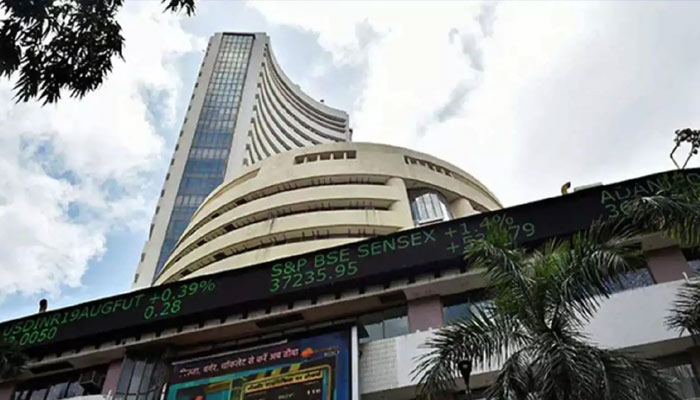
Benchmark equity indices opened on a positive note on Wednesday, attempting to recover after four consecutive sessions of losses.
However, investor sentiment remained cautious amid rising crude oil prices and continued uncertainty surrounding tensions in West Asia. The BSE Sensex slipped 216.67 points to 74,342.57, while the Nifty 50 declined 68.50 points to 23,311.05 at 9:47 am, reversing some of the early gains seen after the opening bell.
According to Dr. VK Vijayakumar, Chief Investment Strategist at Geojit Investments Limited, markets had initially expected a quicker easing of the West Asia conflict and a correction in crude oil prices, but that optimism has now weakened.
He noted that the prolonged geopolitical uncertainty is beginning to affect India’s macroeconomic outlook. Referring to comments made by the Chief Economic Adviser, Vijayakumar said the situation has effectively become a “live balance of payments stress test” for the Indian economy. He also pointed out that the rupee has weakened to a fresh low of 95.63 against the US dollar, increasing concerns over inflation and economic growth.
Among the top gainers in early trade, Asian Paints rose 3.22 per cent, emerging as the strongest performer on the Sensex. Adani Ports and Special Economic Zone gained 2 per cent, while Tata Steel climbed 1.39 per cent. Shares of Bharat Electronics advanced 1.04 per cent, and Bharti Airtel added nearly 1 per cent in opening trade.
On the losing side, Power Grid Corporation of India fell 2.35 per cent, making it the biggest laggard on the Sensex. Titan Company declined 1.49 per cent, while NTPC slipped 1.18 per cent. Bajaj Finance and State Bank of India also traded lower during the session.
Vijayakumar added that foreign institutional investors are likely to remain sellers in the near term, particularly as the global artificial intelligence-driven investment theme continues to attract capital towards overseas markets. He said derivatives data also suggest persistent selling pressure from FIIs.
Given the uncertainty around crude oil prices and global risks, he advised investors to adopt a cautious approach and maintain higher cash positions until market conditions stabilise. He also identified pharmaceuticals as a relatively defensive sector in the current environment, while suggesting that long-term investors could gradually accumulate quality banking stocks during market corrections.
Comments are closed.